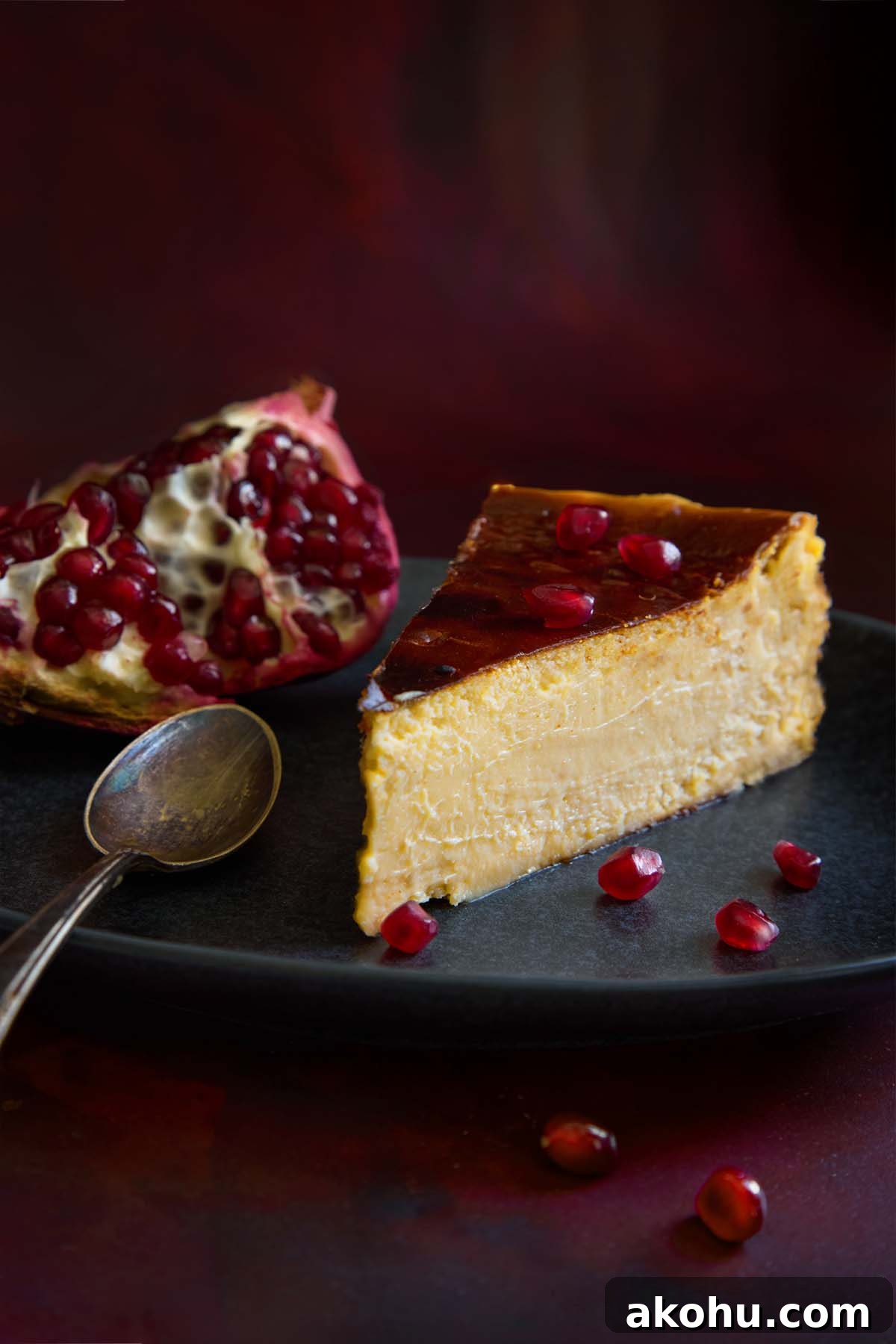
Indulge in the rich, creamy decadence of this burnt Basque cheesecake with pomegranate. A deeply caramelized top gives way to a tangy, ultra-smooth center brightened by pomegranate molasses. This elegant twist on the classic Spanish dessert is impressive yet surprisingly easy to make.
TL;DR (Quick-Answer Box)
- What it is: A crustless Spanish cheesecake with a deeply caramelized top and a custardy interior brightened by tangy pomegranate molasses.
- Why you’ll love it: It looks impressive but comes together easily in one pan with minimal technique.
- How to make it: Process eggs, sugar, cream cheese, flour, and salt until smooth; drizzle in heavy cream and pomegranate molasses and blend. Pour into a parchment-lined pan and bake at high heat until the top is deeply browned and the interior reaches 150°F (65°C). Scatter pomegranate seeds on top and serve.
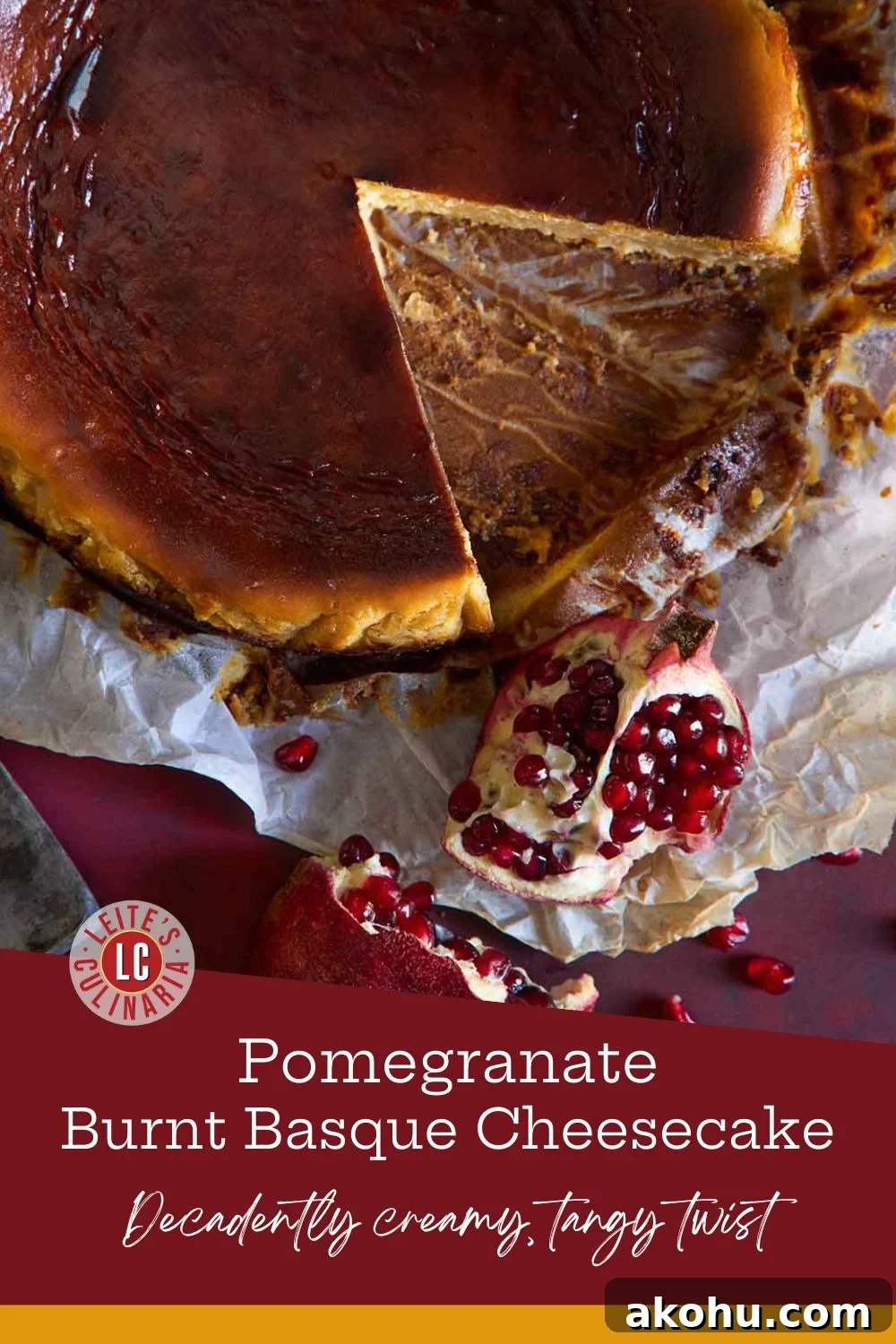
I fell for San Sebastián cheesecake two decades ago. Burnt, caramelized, and lusciously creamy, Basque cheesecake is unlike other cheesecakes—think flan but richer. After many tastings, I wanted something that would cut through the richness and add an unexpected note. Pomegranate molasses does exactly that: a bold, tangy, slightly citrusy flavor that balances the decadent interior.
If you love cheesecake, this should be on your baking list. No crust, no water bath—just a forgiving, golden masterpiece that melts in your mouth. It’s easy to make and hard to mess up, provided you don’t overbake it.
Chow,

What is burnt Basque cheesecake?
Basque cheesecake, from San Sebastián, Spain, is a crustless cake baked at high heat to achieve a signature deeply caramelized top and a custardy interior. The method is simple—no water bath, no crust—and it yields a creamy, almost pudding-like center beneath a smoky, golden exterior.
What’s the difference between New York and Basque cheesecake?
Compared with a dense New York-style cheesecake, Basque cheesecake is silkier and more custard-like. The high-heat bake produces a burnt, caramelized top and an intentionally imperfect, rustic appearance. New York cheesecake, in contrast, is firmer, often has a crust, and is baked more gently.
| Feature | Basque | New York |
|---|---|---|
| Origin | San Sebastián, Spain | New York, USA |
| Crust | No crust, freeform, rustic look | Graham cracker or cookie crust |
| Temp | High (400–450°F) for caramelization | Moderate (325°F) with water bath |
| Texture | Custardy, ultra-creamy | Dense, firm |
| Look | Burnt, deeply golden top, often cracked | Smooth, pale top, no cracks |
| Flavor | Caramelized, slightly tangy, rich | Creamy, rich, vanilla-forward |
| Difficulty Level | Easy—no water bath, forgiving | Moderate—prebaking of crust, water bath |
Featured Review
It was a lovely dessert for our weekly neighborhood get together. It’s rustic and so rich, with the caramelized taste throughout. The texture was like velvet and the extra tang was delightful. In a word, yummilicious!
bbqgoddess

Why this Basque cheesecake recipe works
This pomegranate Basque cheesecake relies on quality ingredients and a straightforward technique. Plenty of cream cheese creates an ultra-creamy, melt-in-your-mouth texture while high heat forms that signature caramelized crust. Pomegranate molasses adds a concentrated sweet-tart brightness that balances the richness. The recipe comes together with just a handful of ingredients and a food processor—minimal fuss, maximum reward.
Notes on ingredients
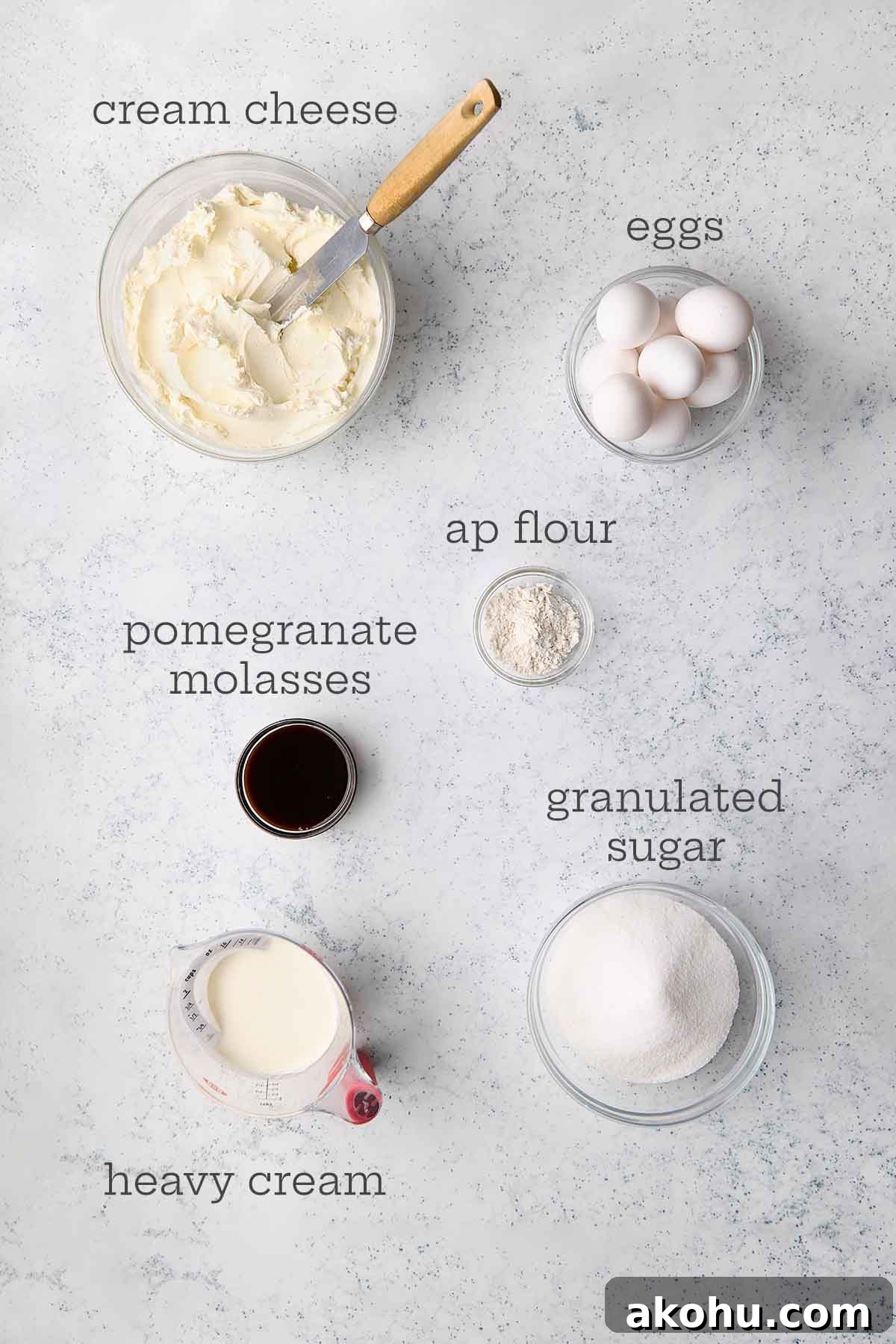
- Pomegranate molasses—A thick, tangy syrup made from reduced pomegranate juice. It contributes concentrated sweet-tart flavor and a lively acidity that complements the rich cheesecake.
- Cream cheese—Use full-fat, block-style cream cheese for the best texture and flavor; room temperature is essential for smooth blending.
- Flour—A small amount of all-purpose flour stabilizes the batter. To make the cake gluten-free, omit the flour.
Visual Step-by-Step Guide: Burnt Basque Cheesecake
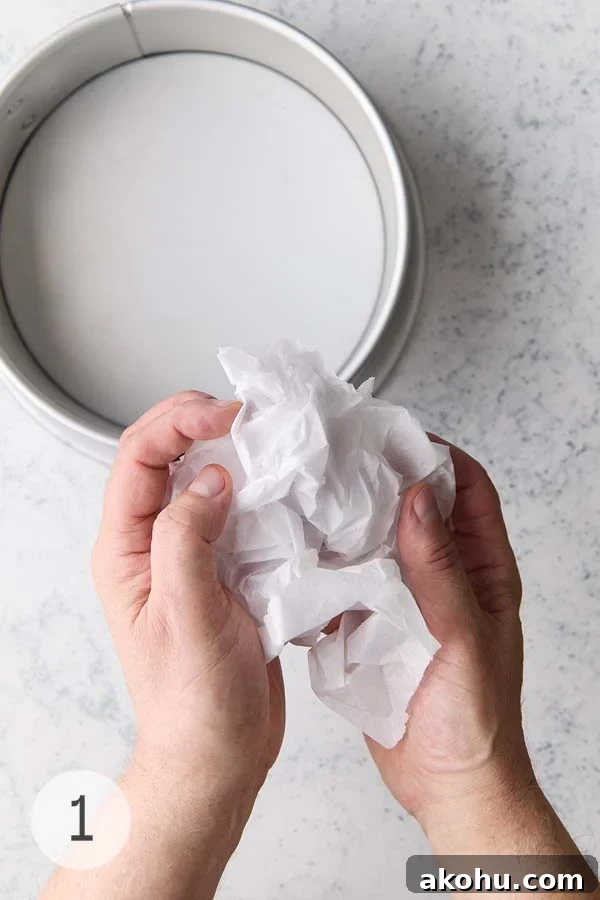
- Crumple a 15-by-15-inch piece of parchment paper, run it under water, then shake off excess water.
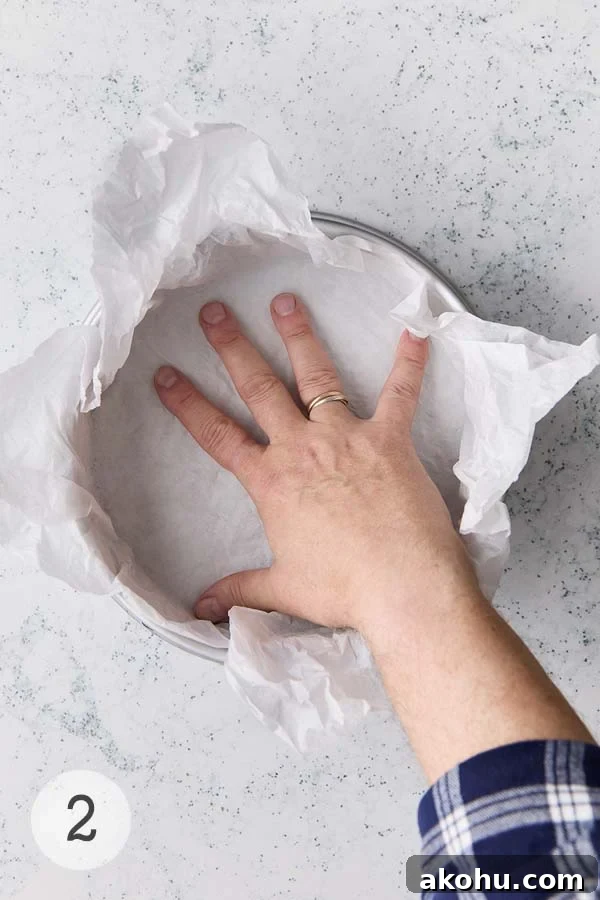
- Press the parchment into a 9-inch springform pan, letting the edges hang over.
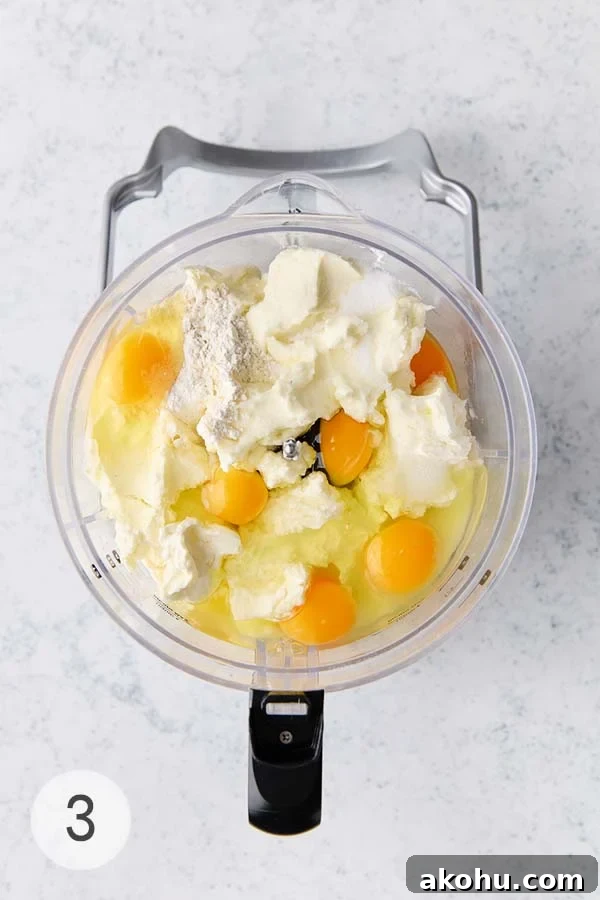
- Place eggs, sugar, cream cheese, and flour into a large food processor.
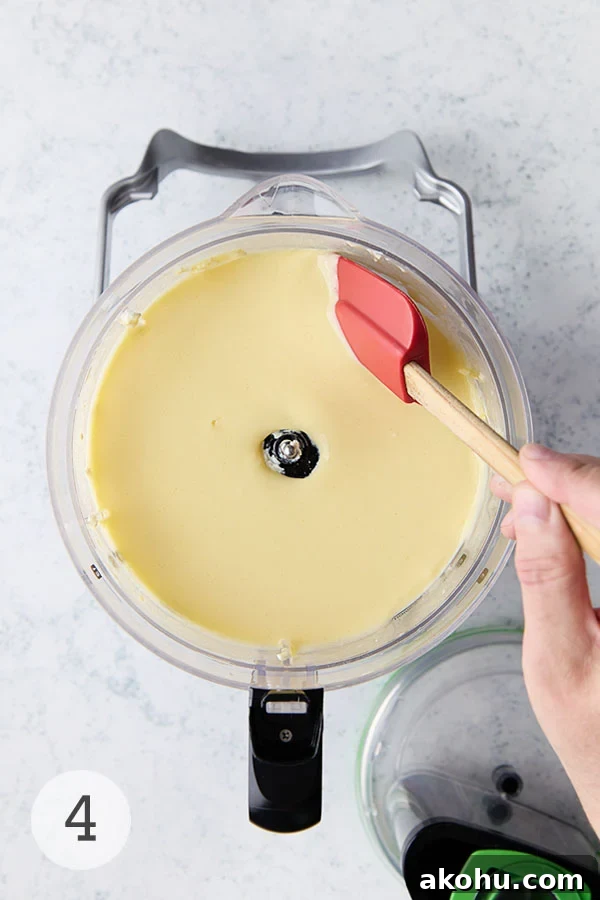
- Process until completely smooth, scraping the bowl as needed.
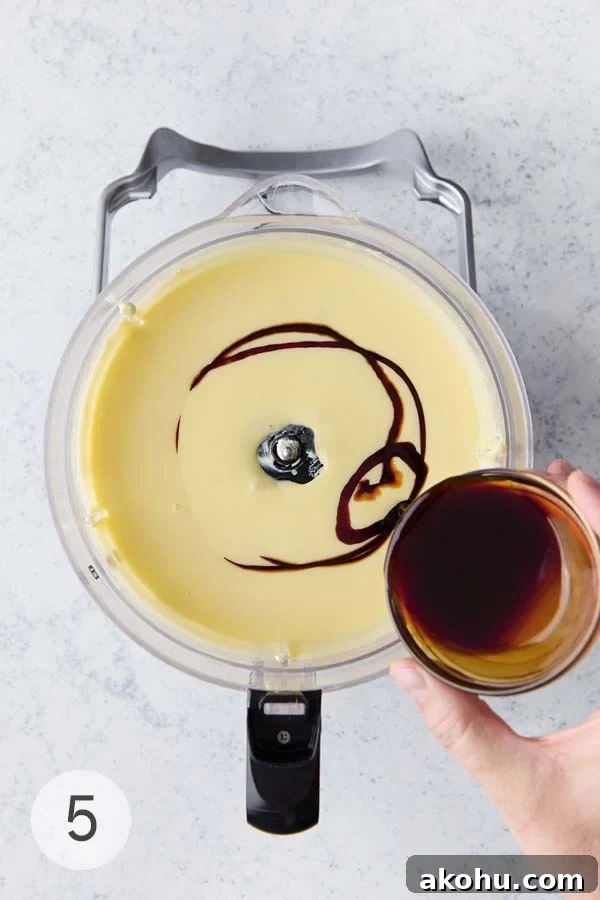
- Drizzle in the heavy cream and pomegranate molasses, then process until integrated.
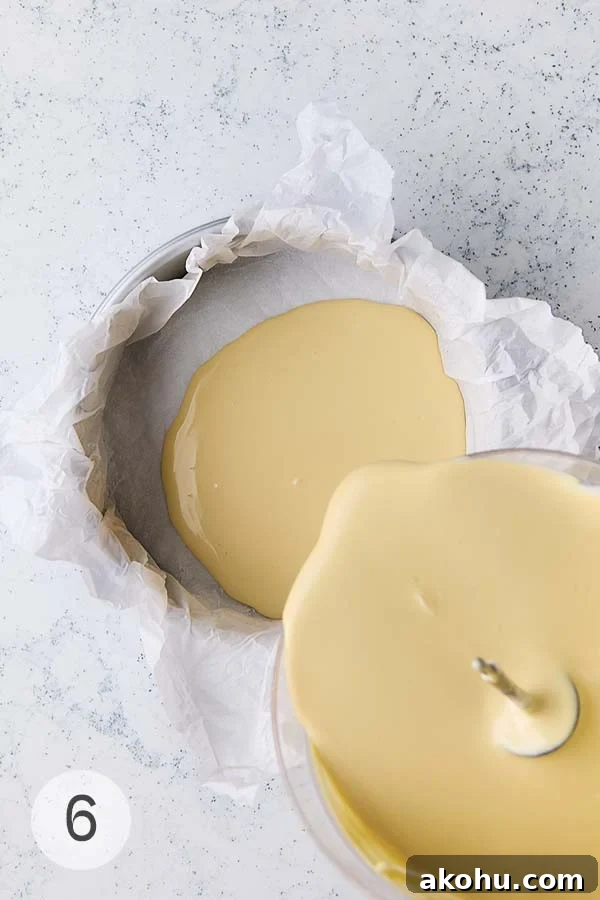
- Pour the batter into the prepared pan and bake at 425°F (218°C) until the internal temperature reaches 150°F (65°C), about 40 to 50 minutes.
- Cool completely in the pan, about 2 hours. Remove the springform, peel away the parchment, and enjoy.
What is pomegranate molasses?
Pomegranate molasses is a concentrated, sweet-tart syrup made by reducing pomegranate juice. Common in Middle Eastern cuisine, it lends a deep, fruity acidity and caramel-like notes that pair beautifully with the richness of cheesecake.
What’s the proper texture of Basque cheesecake?
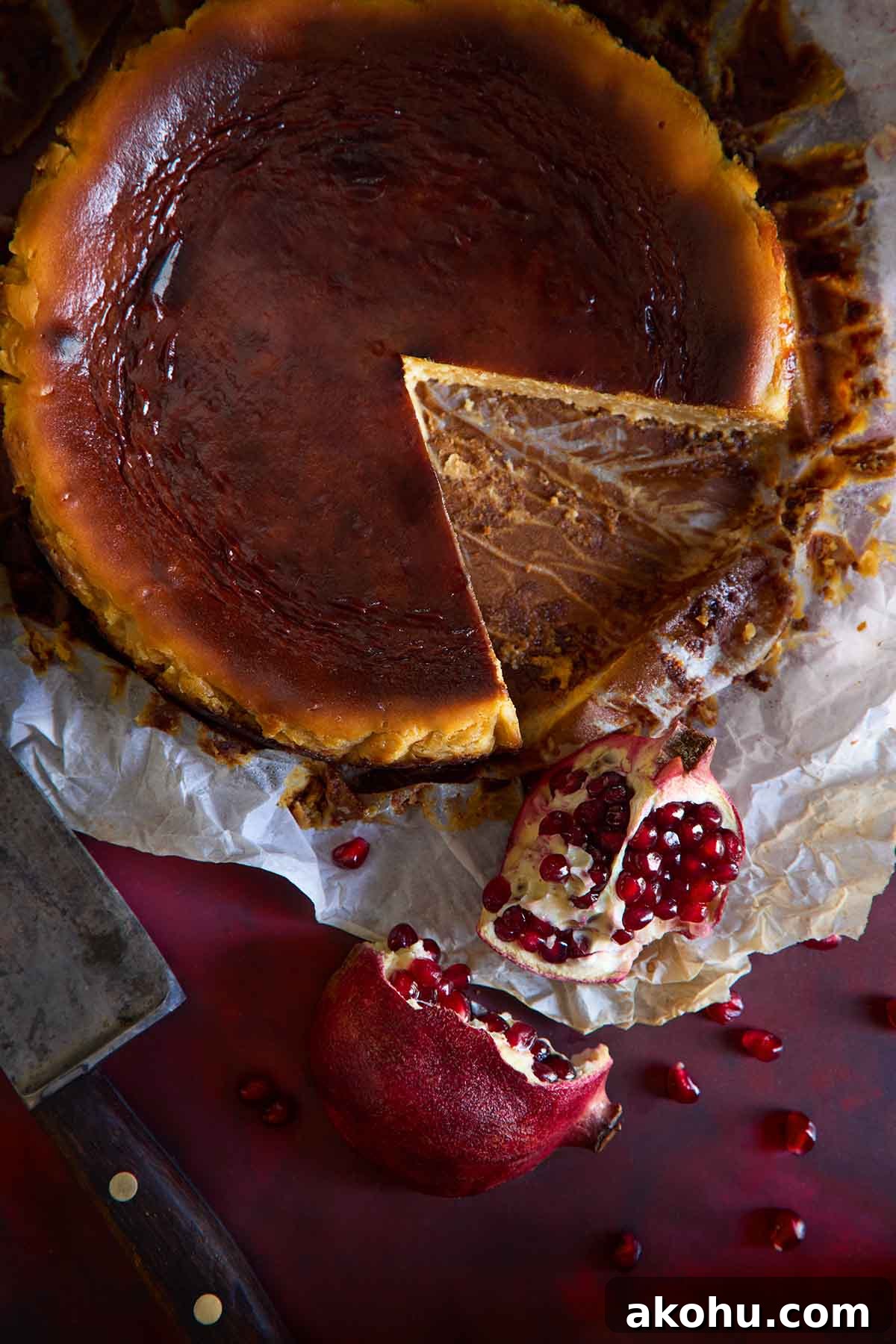
Basque cheesecake should have a deeply caramelized top and a creamy, custard-like interior. The center will be very jiggly straight from the oven but will set as it cools. It should be smooth and velvety—not runny or overly loose.
Your Basque burnt cheesecake questions, answered
It adds a sweet-tart complexity that balances the rich, creamy interior and enhances the caramelized top with a subtle fruity brightness.
A food processor yields the smoothest, creamiest batter. If your processor is too small, process the ingredients in two batches and combine them in the pan.
Serve it simply, or add fresh berries, a dollop of whipped cream, or a drizzle of extra pomegranate molasses. A light, slightly sweet dessert wine also pairs nicely.
Cheesecake pro tips & troubleshooting
- Use room-temperature ingredients for a uniformly smooth batter.
- Allow the cheesecake to cool completely for the best texture.
- Avoid overbaking—remove the cake when it reaches 150°F (65°C) to keep it creamy.
- Use full-fat, 100% cream cheese for optimal flavor and texture.
Storage
Fridge: Cover tightly and refrigerate for up to 5 days. Remove from the fridge about two hours before serving to bring it to room temperature.
Freezer: Wrap tightly in plastic and foil and freeze for up to three months. Thaw in the refrigerator and bring to room temperature before serving for best texture.
More incredible cheesecake recipes
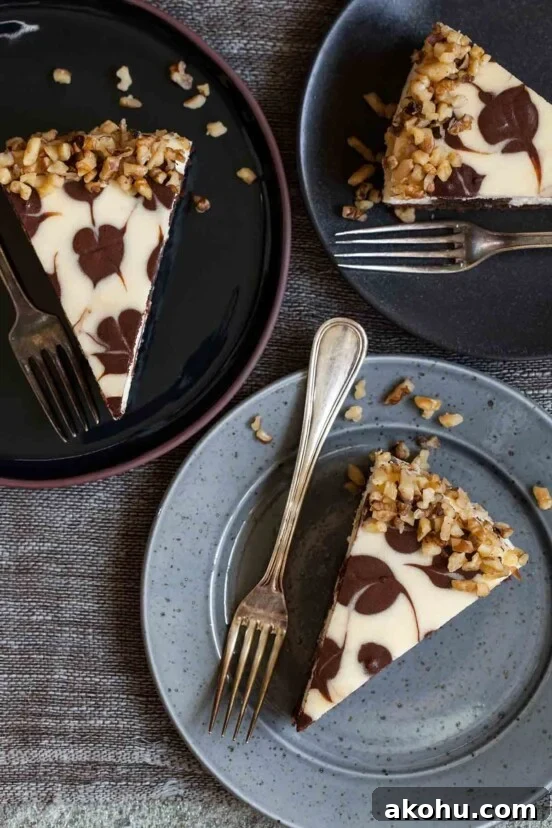
Junior’s Brownie Swirl Cheesecake
4 hrs
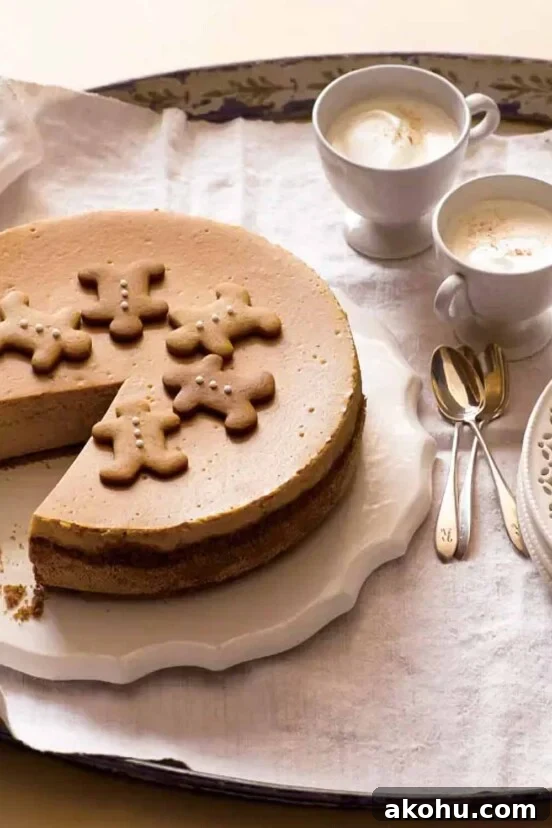
Gingerbread Cheesecake
3 hrs
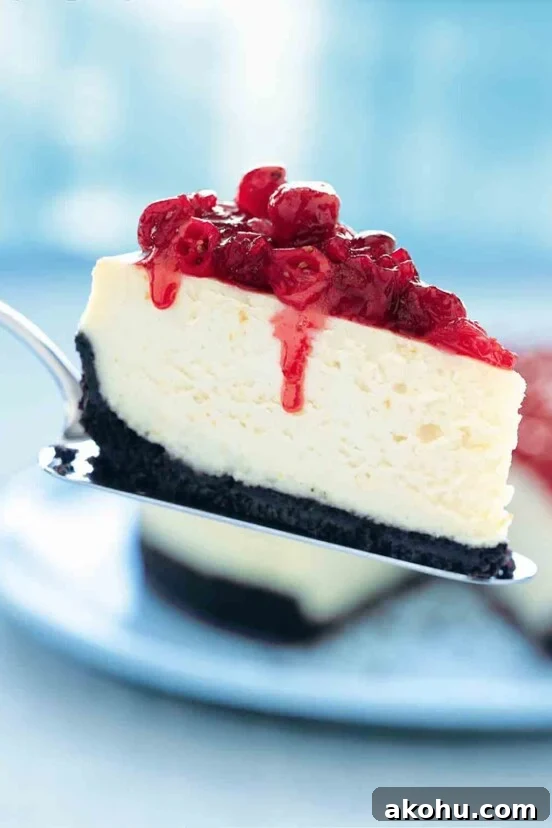
Cranberry-Orange Cheesecake
1 hr 15 mins
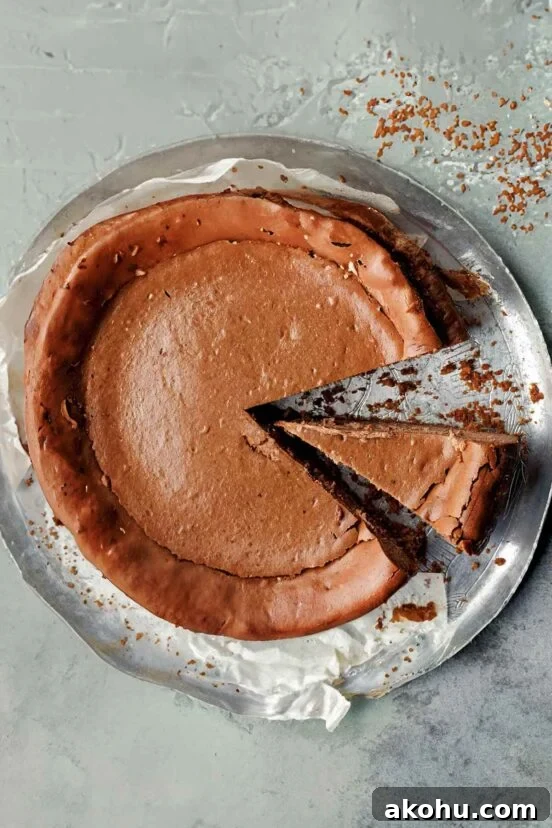
Espresso Cheesecake
1 hr 30 mins
Write a Review
If you make this recipe, consider leaving a review, a star rating, and a photo in the comments. The feedback is appreciated.
Featured Review
Really fantastic and now one of the most-requested cheesecakes in my family. The pomegranate molasses is the bomb, and adding the 1/2 cup is highly recommended. Also, this is the recipe where I learned (after 40 years of baking) to wet and crumple the parchment—game changer!
Monica Flynn
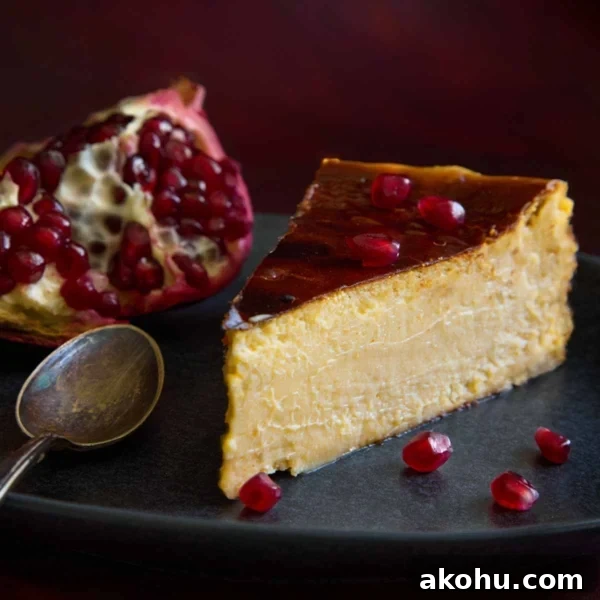
Basque Cheesecake with Pomegranate Molasses
David Leite
Equipment
- 14-cup food processor
- 9-inch springform pan
Ingredients
- 8 large eggs, room temperature
- 2 cups granulated sugar
- 2 ¼ pounds (36 oz) Philadelphia brand cream cheese, room temperature, cut into chunks
- 3 tablespoons all-purpose flour
- Good pinch of salt
- 1 cup heavy cream, room temperature
- ⅓ to ½ cup pomegranate molasses (use ½ cup for a bolder tang)
Instructions
- Position a rack in the middle of the oven and preheat to 425°F (218°C).
- Crumple a 15-by-15-inch piece of parchment into a loose ball, run it under water to make it pliable, and shake off excess water.
- Press the parchment into a 9-inch springform pan, letting the edges stick up. Set the pan on a baking sheet. (The baking sheet helps prevent the bottom from burning because of the sugar in the molasses.)
- Add 8 eggs, 2 cups sugar, the cream cheese chunks, 3 tablespoons flour, and a good pinch of salt to a large food processor.
- Process until completely smooth, about 3 to 4 minutes, stopping occasionally to scrape down the bowl.
- Drizzle in 1 cup heavy cream and ⅓ to ½ cup pomegranate molasses and process until fully incorporated, about 30 seconds.
- Pour the batter into the prepared pan.
- Slide the baking sheet and pan into the oven and bake until the top is deeply browned and an instant-read thermometer reads 150°F (65°C), about 40 to 50 minutes. The center will be very jiggly; that’s normal.
- If desired, carefully broil for short 30-second bursts to deepen caramelization, watching closely to avoid burning.
- Remove from the oven and cool completely on a wire rack, about 2 hours. The cake will collapse slightly as it cools.
- To serve, gently peel away the parchment. Dip a sharp knife in hot water, dry it, and slice—re-dipping the knife between cuts makes clean slices.
- Store covered in the refrigerator for up to 5 days; remove about two hours before serving for best texture.
Notes
- Parchment hack: Use a 15-inch-wide sheet; if yours is narrower, overlap two sheets to form a 15-by-15-inch square.
- Room temperature: Let all ingredients sit at room temperature for about 2 hours for a smooth batter.
- Cream cheese: Use full-fat, real cream cheese for best results.
- Cooling: Let the cake cool completely before serving for ideal texture.
- Gluten-free option: Omit the 3 tablespoons of flour to make the cake gluten-free.

An LC Original
Nutrition
Calories: 568 kcal
Nutrition information is an approximation.
Recipe Testers’ Reviews
This recipe passed a rigorous blind testing process and earned the Leite’s Culinaria stamp of approval.

Greg Crawford
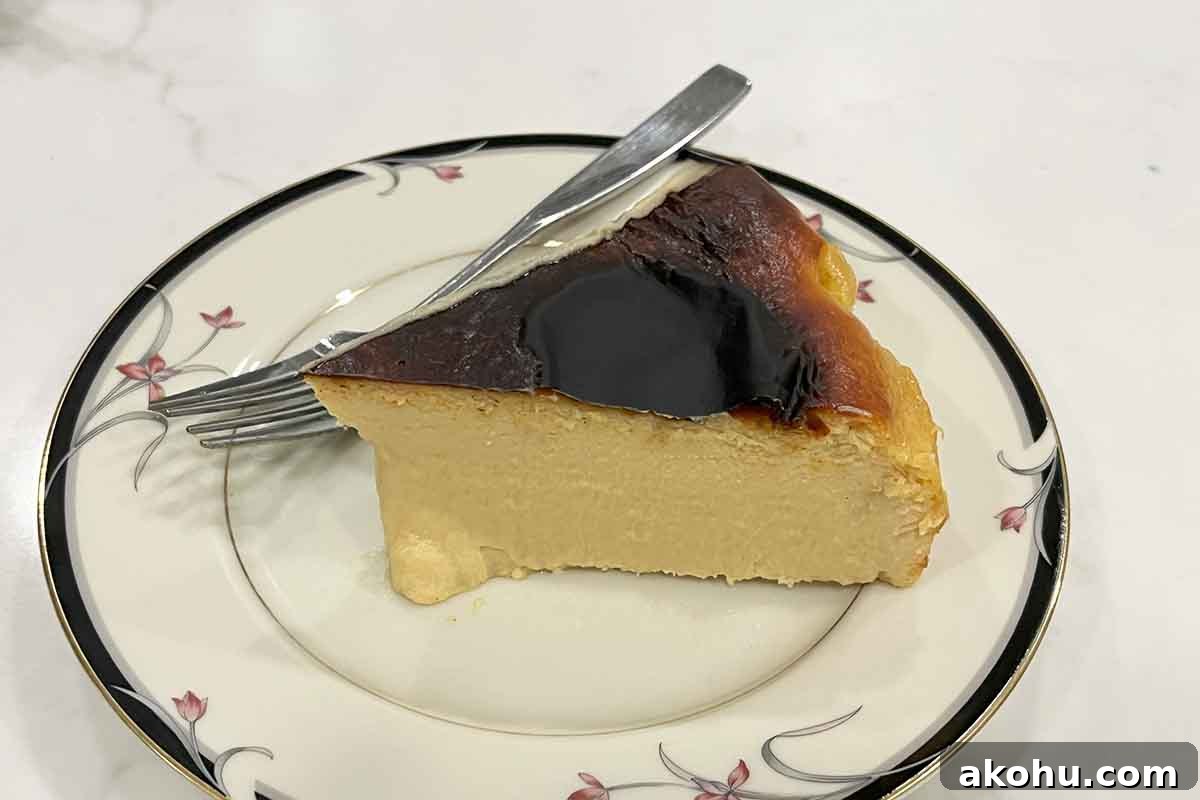
I’ve been making cheesecake for 30 years and this recipe moved to the top of my list. The texture is unbelievably silky and rich. The pomegranate molasses adds a pleasing tang without overwhelming the cheesecake. Testing doneness with a thermometer removes guesswork—150°F (65°C) is the target.

Nadine Bonda
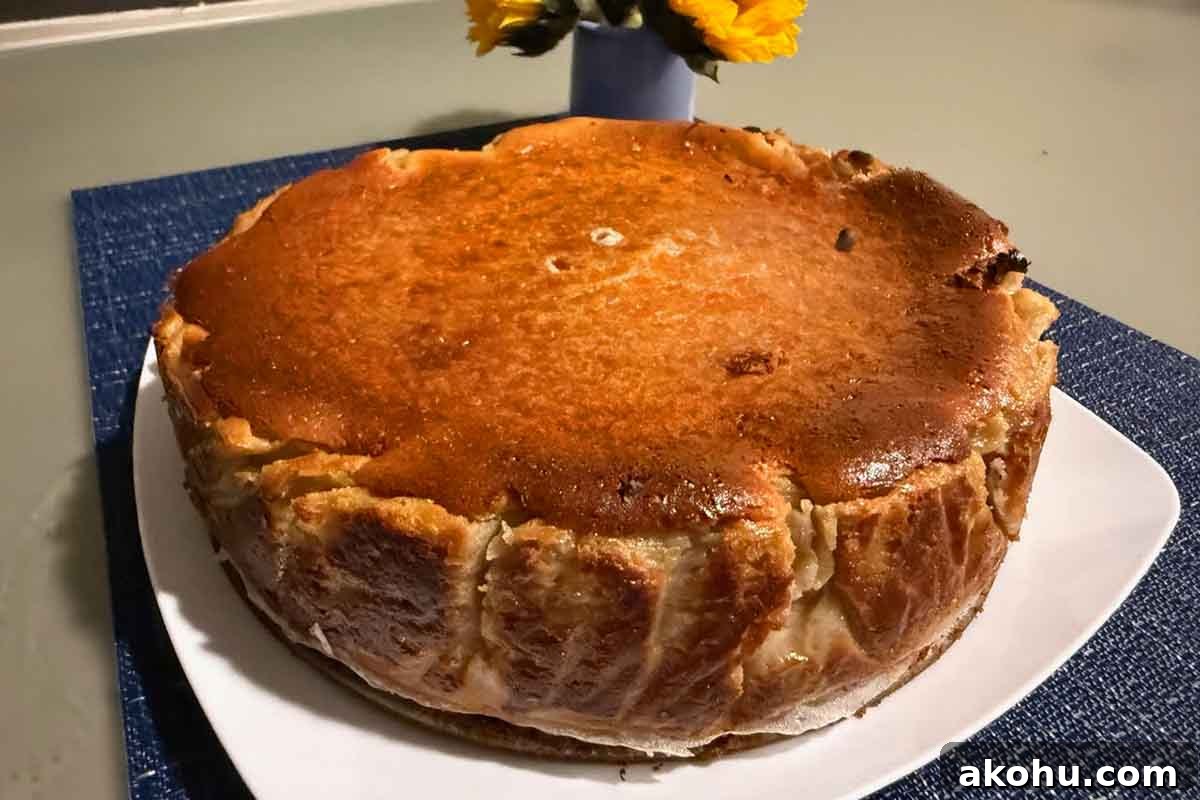
I tasted the original in San Sebastián and this version captures that same remarkable, creamy texture. The pomegranate molasses adds a subtle citrusy note—simply delicious and easy to make.