
Cornetti, literally “little horns,” are the Italian cousin of the French croissant. Like croissants, they are light, flaky, and buttery, but cornetti have their own Italian character: a slightly sweeter dough enriched with eggs and often made with a little extra passion.

I received a request for a Cornetti (Italian croissants) recipe some time ago, so I researched, practiced, and used plenty of butter to refine this version. The result is a flaky, tender pastry you can make at home. If you grew up with cornetti or learned tips from your Nonna, please share them in the comments — I’d love to learn your tricks.
If you like Italian pastries, try the Pignoli Cookies, Zeppole, Torta Della Nonna, and Italian Cream Puffs recipes on this site.
Cornetto vs. Croissant
Cornetti (plural of cornetto) are very similar to French croissants but differ in a few key ways:
- The dough is enriched with eggs, unlike traditional croissant dough. This gives cornetti a slightly richer crumb.
- Cornetti are usually a bit sweeter than classic croissants.
- Shape differs: cornetti are often straighter and plumper through the center, while French croissants are curved into a crescent.
- Cornetti are commonly shaped and baked with fillings such as pastry cream, crema pasticcera, or almond cream; croissants are more often filled after baking.
In some places outside Italy, cornetti are less common than croissants, but they’re easy to make at home and pair beautifully with coffee.

Ingredients
Key ingredients and substitutions:
- Bread flour and all-purpose flour: I like a blend for texture, but all-purpose alone will work.
- Warm milk: Whole milk is best for richness; skim milk or warm water can be used if needed.
- Granulated sugar: Light brown sugar can be used for a deeper flavor.
- Instant yeast: You can substitute active dry yeast with appropriate conversion (see notes in the recipe card).
Some recipes add a touch of lemon zest; that’s optional and can complement the butteriness.
How to make Cornetti
This recipe can be done in one day or stretched over two (overnight refrigeration). The detailed measurements and steps are in the recipe card below; the following summarizes the process and important techniques.
Prepare the butter
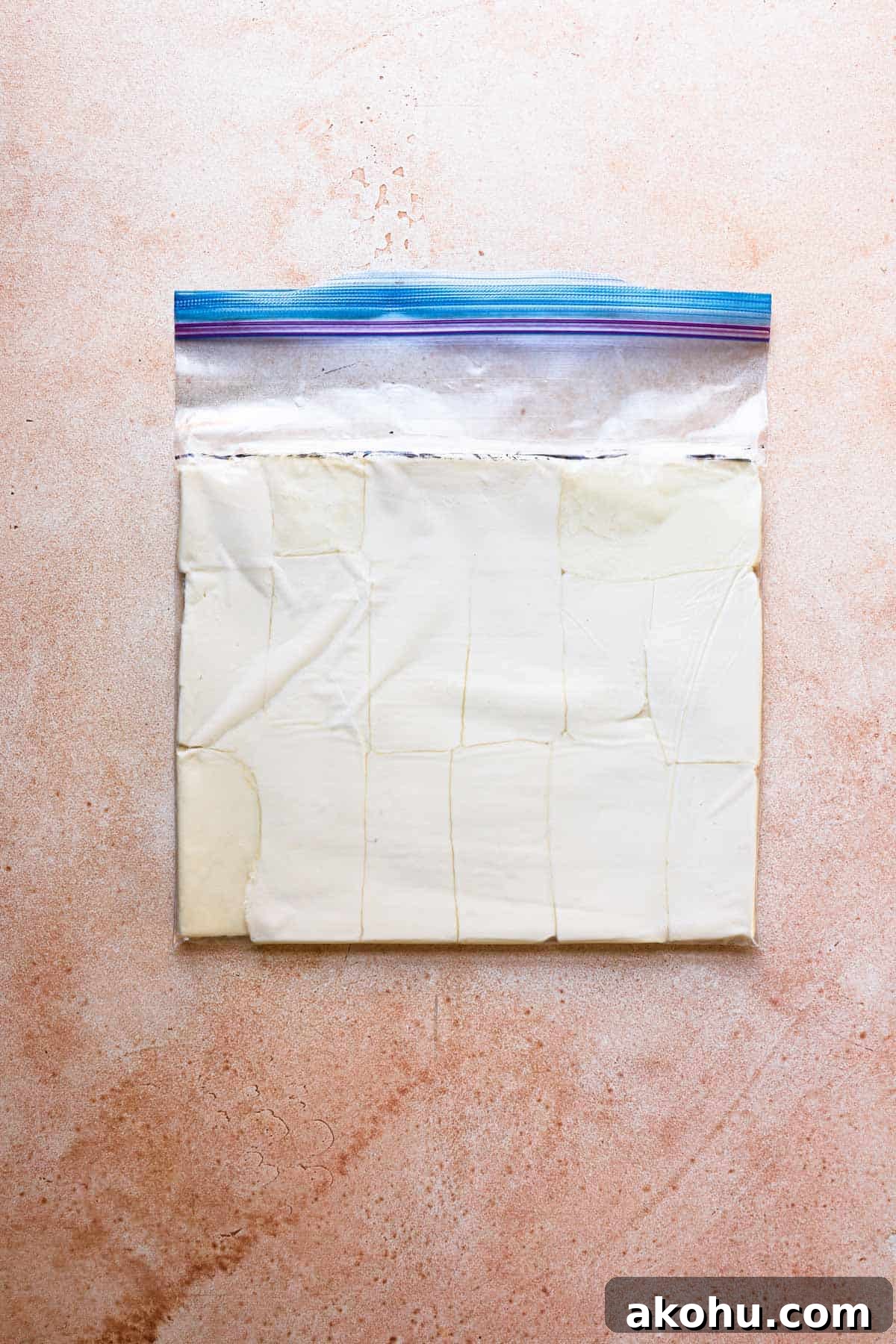
Form a 9×10-inch butter block by arranging sliced butter between parchment or inside a large zip-top bag, then rolling to an even rectangle. The butter should be pliable but firm — about 68°F (20°C) — so it rolls without melting or cracking. For a shortcut, you can freeze the butter and grate it over the dough, though that changes the texture slightly.
Make the dough
Cornetti dough resembles brioche dough but with less butter mixed directly into the dough. We add a small amount of butter to the dough itself and incorporate the rest through lamination (rolling and folding). Mix the ingredients until they form a smooth dough, then knead only briefly (3–4 minutes). Overmixing at this stage makes the dough too elastic and hard to roll later.
Proof the dough in an oiled bowl for one hour, then refrigerate overnight or leave at room temperature for about three hours.
This lamination method is the same basic technique used for croissants, puff pastry, cruffins, and pain au raisin.
Locking the butter
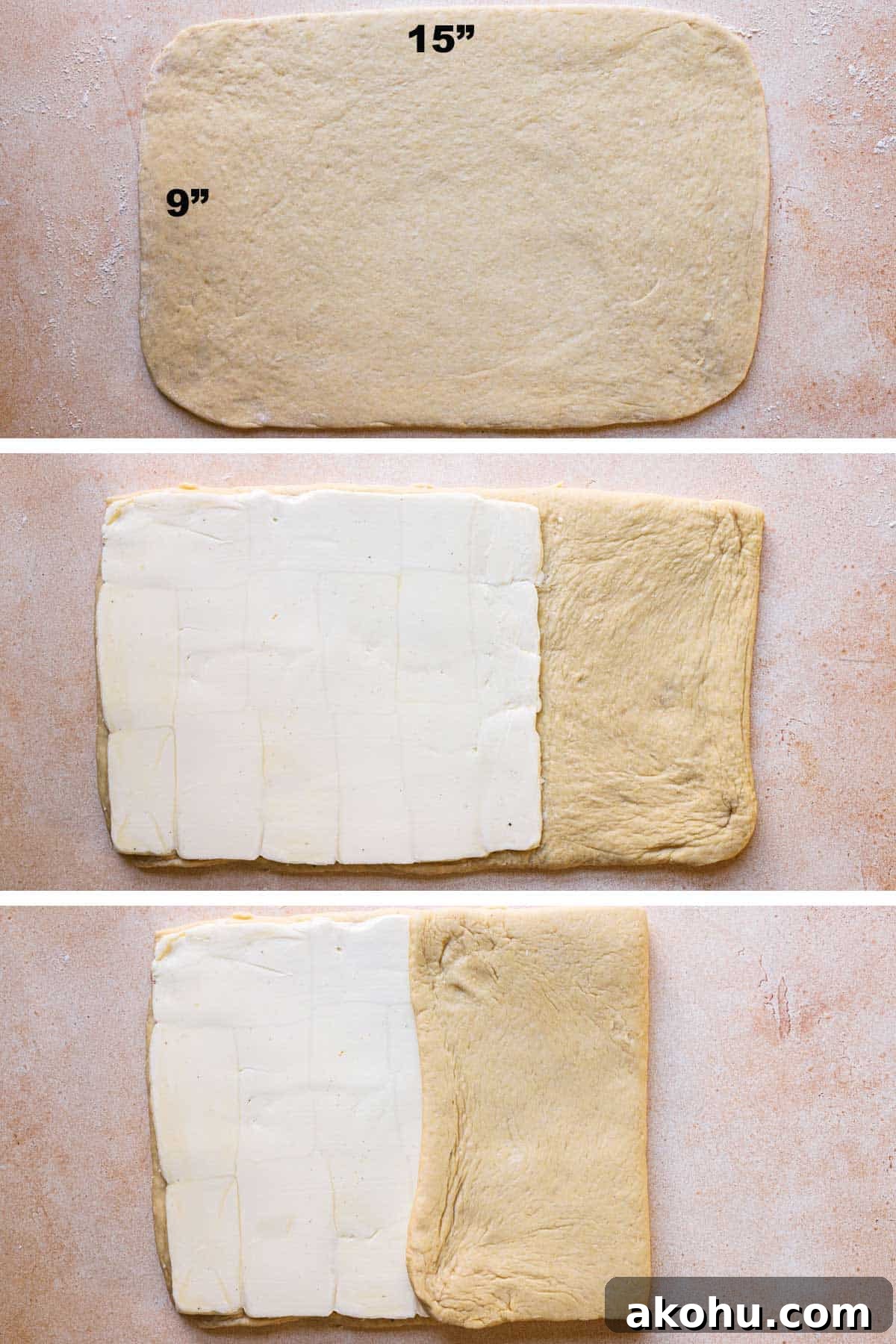
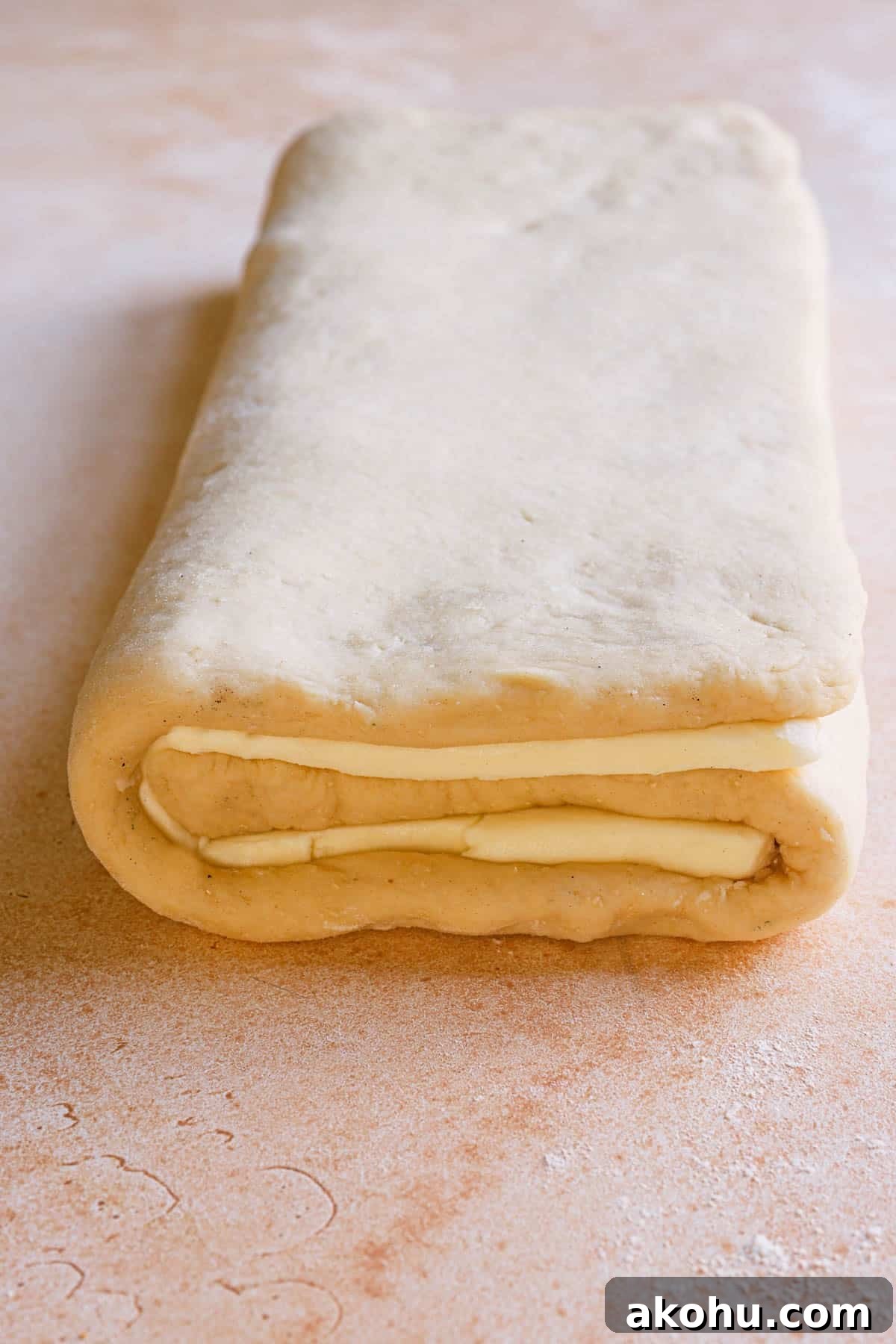
To create the layered dough, have flour, a pastry brush, and a rolling pin ready. Remove the dough and butter from the fridge about 20 minutes before you start so the butter is pliable but not soft. Roll the dough into a rectangle, place the butter block on one side, fold the dough over to encase the butter, and ensure there are no gaps. Wrap and chill for 25 minutes before folding.
Folding
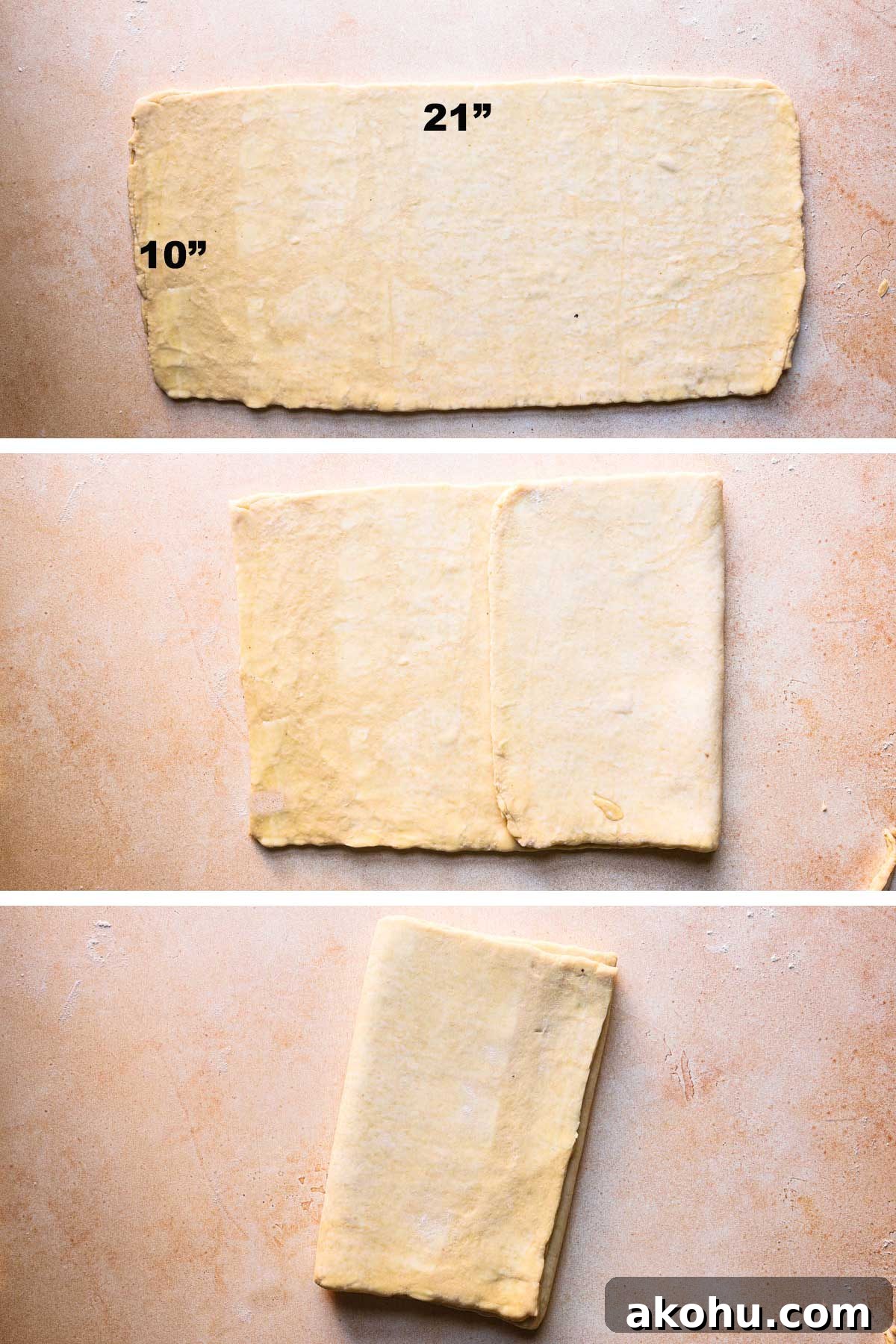
First fold — the book fold: Fold each side toward the middle, then close the “book” by folding one side over the other. Chill for 25 minutes.
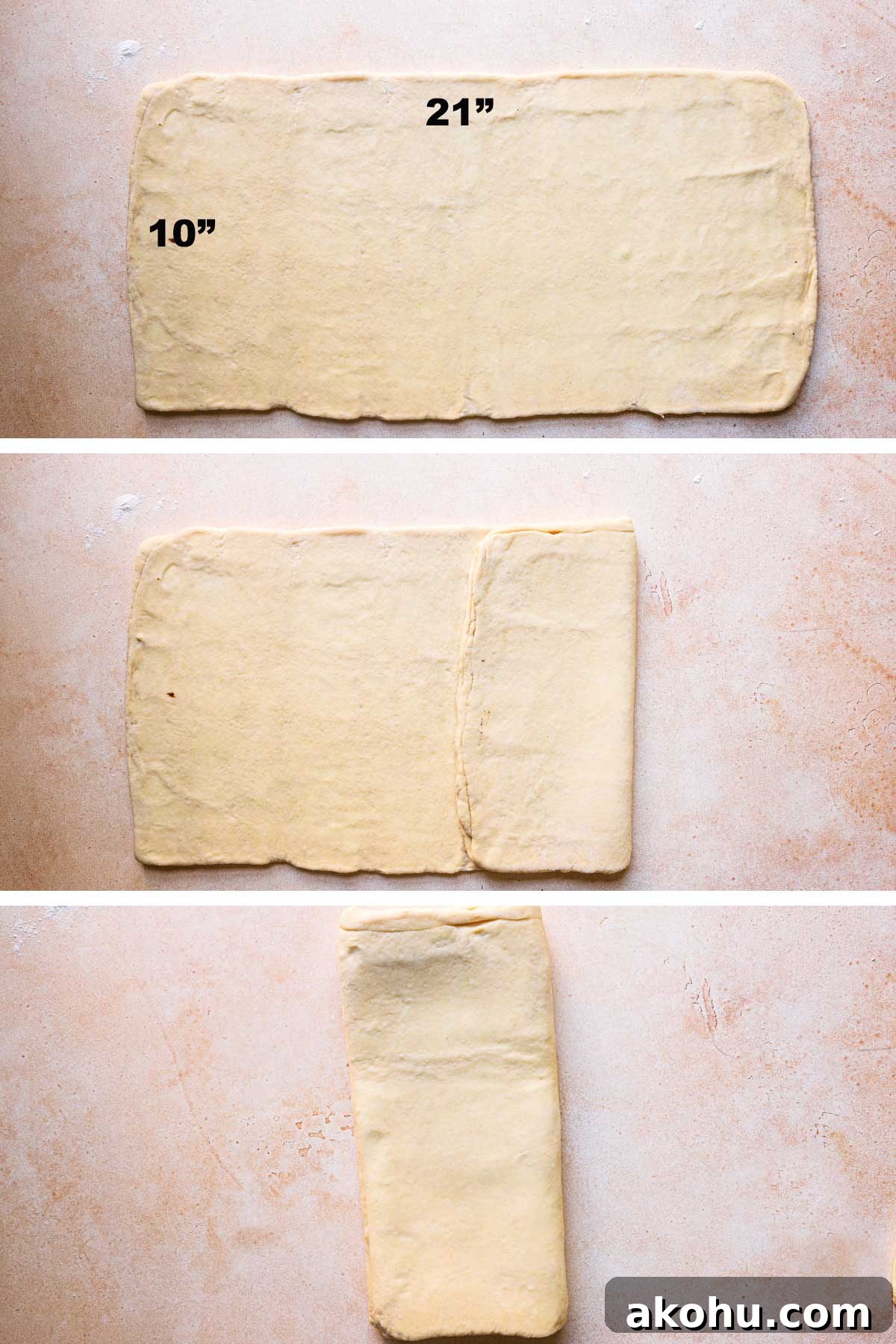
Second and third folds — the three-fold: Mentally divide the rectangle into thirds and fold left over center, then right over center. Repeat once more. Do not fold more than three times; too many folds can weigh down the dough and reduce rise. After each fold, chill for 25 minutes; after the final fold, refrigerate for 1.5–2 hours.
Shaping
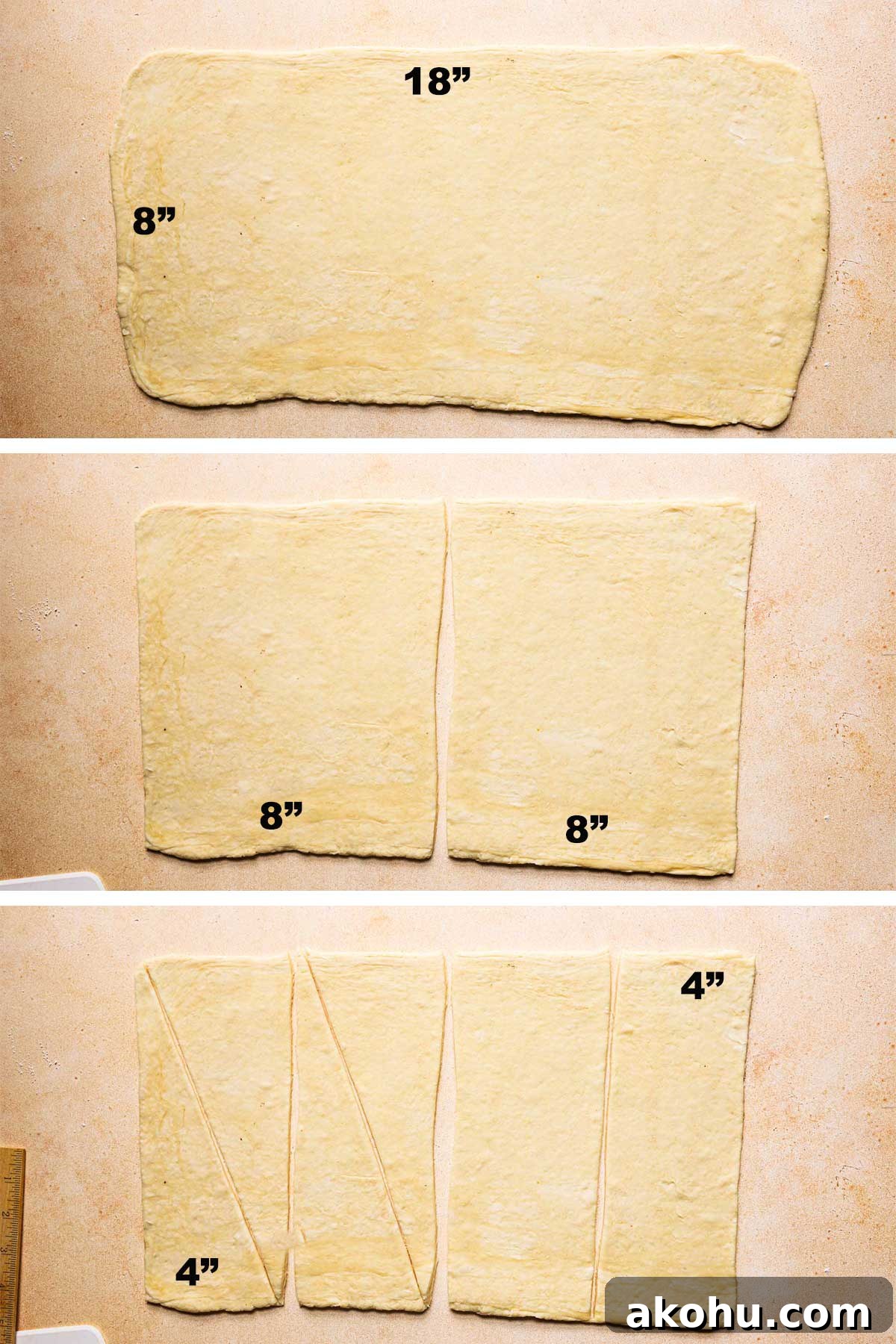
Roll the chilled dough into an 18×8-inch rectangle and trim the edges. Cut the dough into two 8×8-inch squares, then cut each square diagonally to produce triangles about 4×8 inches. Gently stretch each triangle at the base, then roll from the wide end toward the tip to form the horn shape. Place on a baking sheet lined with parchment, cover, and let rise for 60–90 minutes.
Brush with egg wash and bake at 400°F (200°C) for about 15 minutes, then reduce the oven to 350°F (180°C) and bake an additional 8–10 minutes until golden brown. Cool slightly before serving.

Expert Tips
- Use a kitchen scale for accurate measurements — precision matters with laminated dough.
- Keep the dough cold: chilling between folds prevents the butter from melting and keeps clean layers.
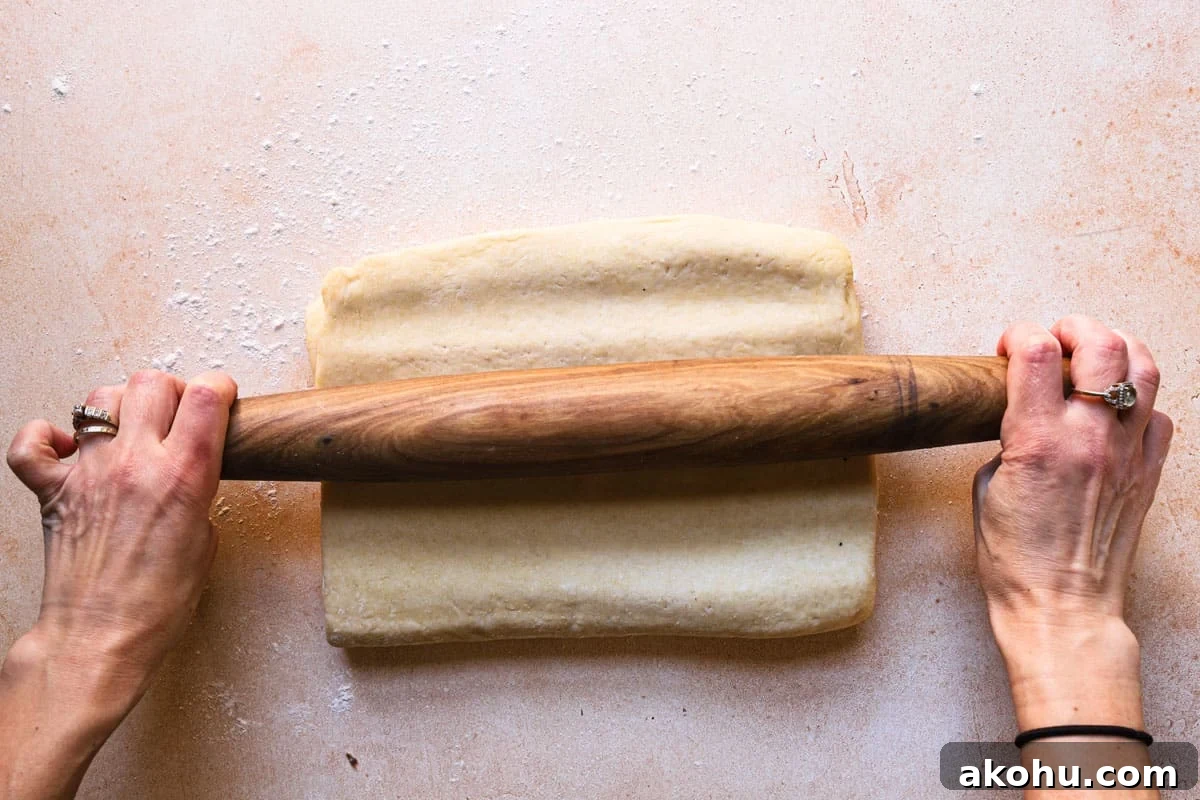
- Before rolling, gently tap the dough with a rolling pin to relax it to about 1/2-inch thickness; this reduces bounce-back from gluten.
- Use a ruler or bench scraper to keep edges straight as you roll and cut.
- If you can’t see distinct layers at the short edge, slice a thin sliver to check for dough-butter layers (about 3 mm). If unsure, you can skip this step.
- Flour your work surface as needed so the dough slides easily and doesn’t stick.
Storing and Making Ahead
Make ahead: After finishing lamination, wrap the dough tightly and freeze for up to four weeks. Thaw overnight in the refrigerator before shaping and baking.
Storing: Cornetti are best fresh within 24 hours. Store leftovers in an airtight container or bag for up to 3 days. Day-old cornetti are excellent transformed into almond cornetti, pistachio-filled cornetti, or brioche-style French toast.
More Pastry Recipes You Might Enjoy
Try Chocolate Cream Puffs, a guide on making choux pastry, or puff pastry croissants for more laminated dough treats.

Flaky Cornetti | A step-By-Step Guide
Equipment
- Large bowl
- Parchment paper
- Rolling pin
- Pizza roller or sharp knife
- Ruler or bench scraper
Ingredients
Butter Block
- 1 1/2 cups + 2 tbsp unsalted butter, sliced into 1/2-inch strips, soft (about 350g)
Dough
- 2 cups unbleached all-purpose flour (240g)
- 2 cups bread flour (240g)
- 1/3 cup granulated sugar (70g)
- 2 1/4 tsp instant yeast
- 1/2 tsp salt
- 2 large eggs, room temperature
- 3/4 cup lukewarm milk or water (180ml)
- 2 tbsp unsalted butter (25g) for the dough
- 1/2 cup flour for dusting
- 1 egg, beaten, for egg wash
Instructions
Prepare the Butter
- Line butter strips in a large freezer bag or between parchment and roll into a 9×10-inch rectangle. Refrigerate until ready.
Make the Dough
- Place flours, sugar, yeast, salt, eggs, milk (or water), and the 2 tbsp butter in a mixer or large bowl. Mix to combine.
- Knead briefly — about 3–4 minutes — until a soft dough forms. Avoid overmixing.
- Place dough in an oiled bowl, spray or brush the top with oil, cover, and let rest 1 hour, then refrigerate overnight. Alternatively, leave at room temperature for about 3 hours.
Locking the Butter
- Remove dough and butter from the fridge about 20 minutes before handling so the butter is pliable.
- Lightly flour the work surface and tap the dough into a 1/2-inch rectangle. Roll the dough into a 9×15-inch rectangle and straighten the edges.
- Place the butter block on the left side of the dough so the butter is fully covered. Fold the unbuttered section over the butter, then fold the buttered part over the dough to encase it. Dust with flour, wrap, and freeze 25 minutes.
Fold #1 — The Book Fold
- Remove from freezer, dust with flour, tap to 1/2-inch thickness, then roll to a 21×10-inch rectangle horizontally.
- Fold left and right sides toward the center, then fold one end over the other to close like a book. Wrap and freeze 25 minutes.
Fold #2 & #3 — The Three-Fold
- Tap and roll to 21×10 inches. Mentally divide into thirds and fold left over center, then right over center. Dust, wrap, and freeze 25 minutes.
- Repeat this three-fold one more time, then refrigerate 1.5–2 hours before shaping.
Shaping the Cornetti
- Divide chilled dough into two pieces and keep one refrigerated while you work.
- Roll the piece into an 18×8-inch rectangle, trim edges, and cut into two 8×8-inch squares. Cut each square diagonally to make triangles.
- Gently stretch the base of each triangle, then roll from the wide end toward the tip to form horns. Place on parchment-lined baking sheets.
- Cover with plastic and let rise 60–90 minutes. Brush with beaten egg and bake at 400°F (200°C) for about 15 minutes, then lower the temperature to 350°F (180°C) and bake another 8–10 minutes until golden.
- Remove from the oven and enjoy warm or at room temperature.