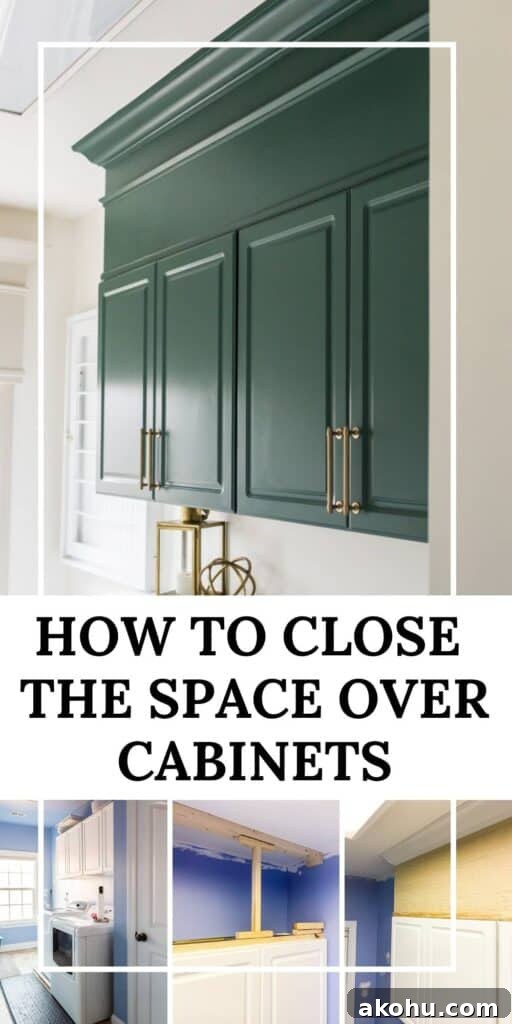
Tired of the ugly, dust-collecting space above cabinets? Learn how to extend your cabinets to the ceiling with simple wood framing and molding.
For years my laundry room prioritized function over form.
It was simply a space to wash clothes and store cleaning supplies.
And yes — the cat’s litter box lives there, too.
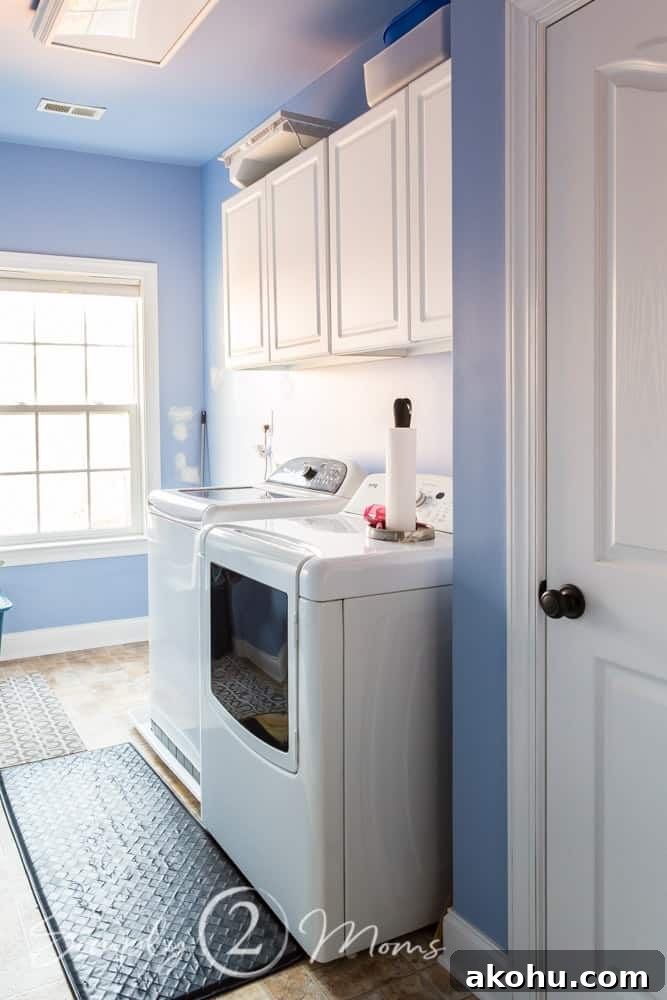
I prefer cabinets over a builder-grade wire shelf, so we installed inexpensive laminate cabinets from our local hardware store soon after moving in.
The cabinets hide cleaning supplies and keep everything a lot less dusty.
That said, the open gap above the cabinets became a dust magnet — especially with the litter box in the room.
We stored a few odd items up there, like a shoe-dryer contraption and some buckets. It looked messier than I care to admit.
It was time to make the space enjoyable — or at least less annoying.
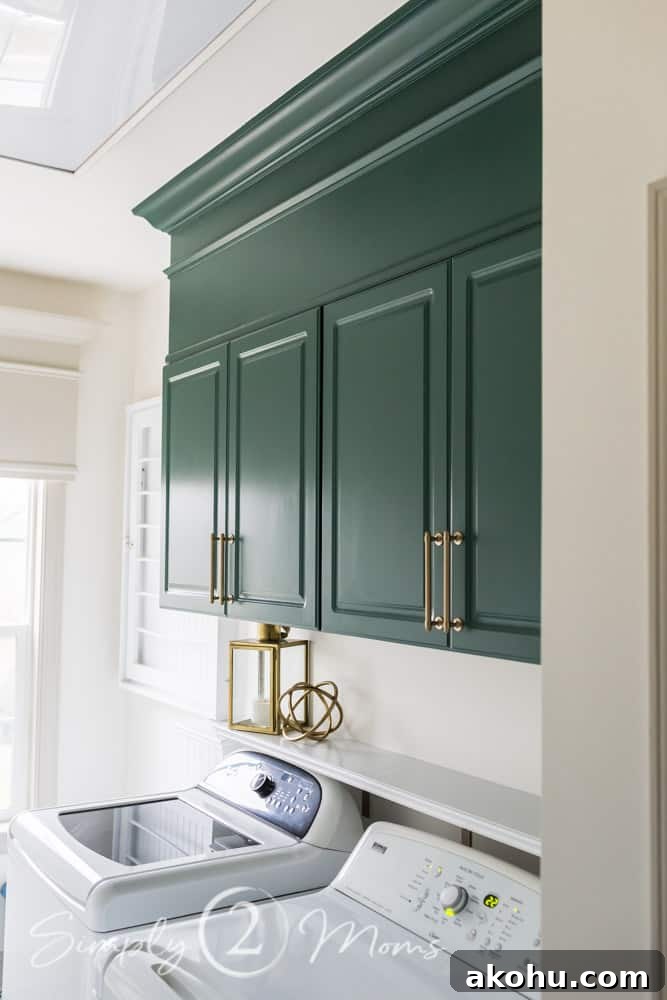
One of the first tasks in our laundry room makeover was enclosing the space above the cabinets to prevent dust buildup and create a finished, built-in look.
We moved unused items to the garage and discarded the dryer contraption. The transformation was easier than I expected and the results were worth it.
This post originally included affiliate links.
- Supplies to Enclose Space Over Your Cabinets
- How to Fill the Gap Above Cabinets
- Locate the studs and beams around the cabinets
- Create an end cap
- Add a header
- Add vertical support frames
- Attach plywood and molding to the frame
- Fill nail holes and sand smooth
- Prime, then paint!
- More ideas for the space above your cabinets
Supplies to Enclose Space Over Your Cabinets
This is a straightforward project that requires a handful of common tools and materials. The same technique works for kitchen cabinets as well.
Tools used:
- Stud finder
- Level
- Tape measure
- Hammer
- Wood glue
- Impact drill/driver with screwdriver and drill bits
- Miter saw
- Putty knife
- Caulk gun
- Sandpaper (80, 120 & 220 grit)
- Tack cloth
Materials used:
- 3/4″ plywood (for end caps or structural pieces)
- 2x4s (for framing)
- 1/4″ plywood sheet (lightweight sheathing for faces)
- Scrap wood or 1×3 boards for blocking and nailers
- Crown molding and base cap or mullion molding
- Nails and wood screws
- Toggle bolts (if ceiling studs are not available)
- Wood putty and caulk
- Primer and paint
How to Fill the Gap Above Cabinets
The basic idea is to build a framed box attached between the cabinet tops and the ceiling, then cover it with plywood and finish with molding. Because we added crown molding, the frame needed solid nailers to secure the trim.
We had some 3/4″ plywood in scraps for one end, but not enough to cover the front, so we used 1/4″ plywood for the front panel and reinforced it with internal supports. If you can use 3/4″ plywood for the front, you can skip some of the internal support steps since the thicker sheet can take nails for the molding on its own.
Locate the studs and beams around the cabinets
Start by locating studs and ceiling joists. If there’s a joist above the cabinet edge you can screw the header directly into it. If not, plan to use toggle bolts or attach blocking to reach a stud.
Create an end cap
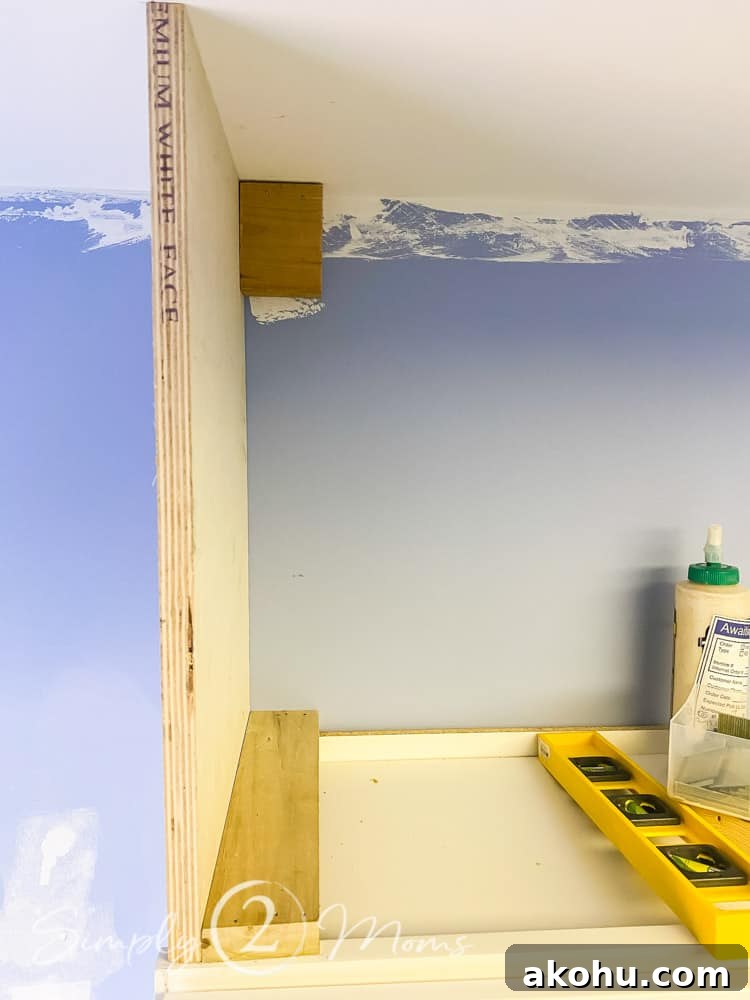
Measure cabinet depth (from front to wall) and subtract 1/4″ if you plan to attach 1/4″ plywood to the front. Measure the height from the top of the cabinets to the ceiling and cut a piece of 3/4″ plywood to that height for the end cap.
Build internal supports — a bottom nailer that sits on top of the cabinet and a block at the ceiling that attaches to a wall stud — to securely anchor the end cap. Make sure the end cap is level, then fasten it to the nailer and the ceiling block with nails or screws.
Add a header
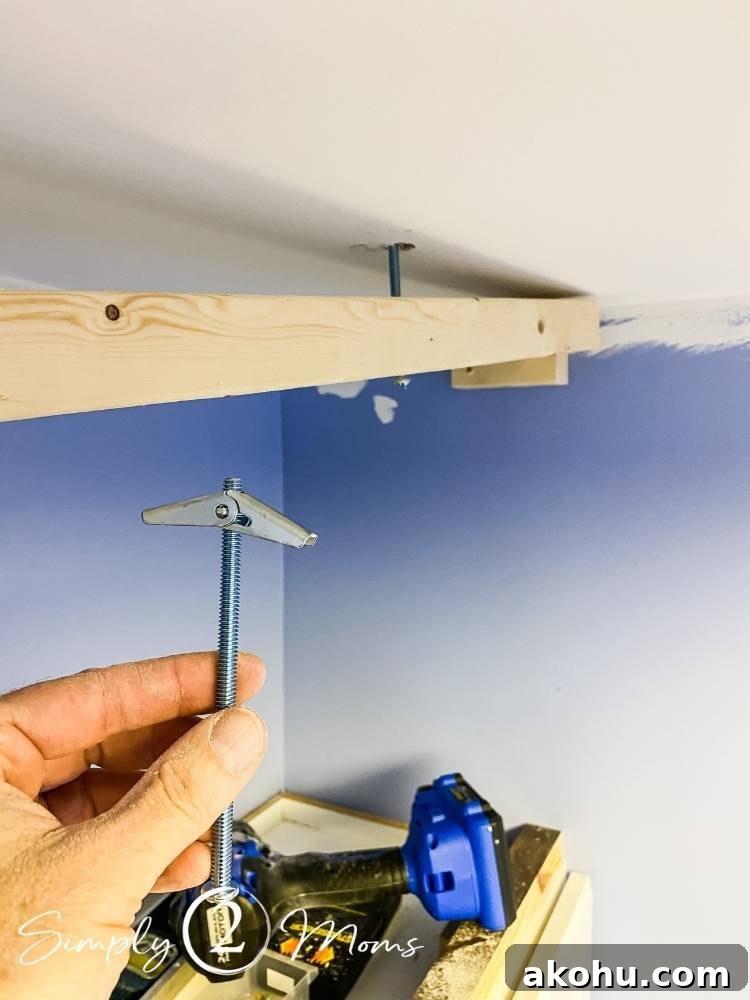
Install a 2×4 header along the ceiling, flush with the edge of the end cap. If you can reach ceiling joists, screw the header into them. If not, use toggle bolts to secure the 2×4 to the drywall — drill holes, insert toggle bolts, and tighten until the 2×4 is snug to the ceiling. Then fasten the end cap to the header.
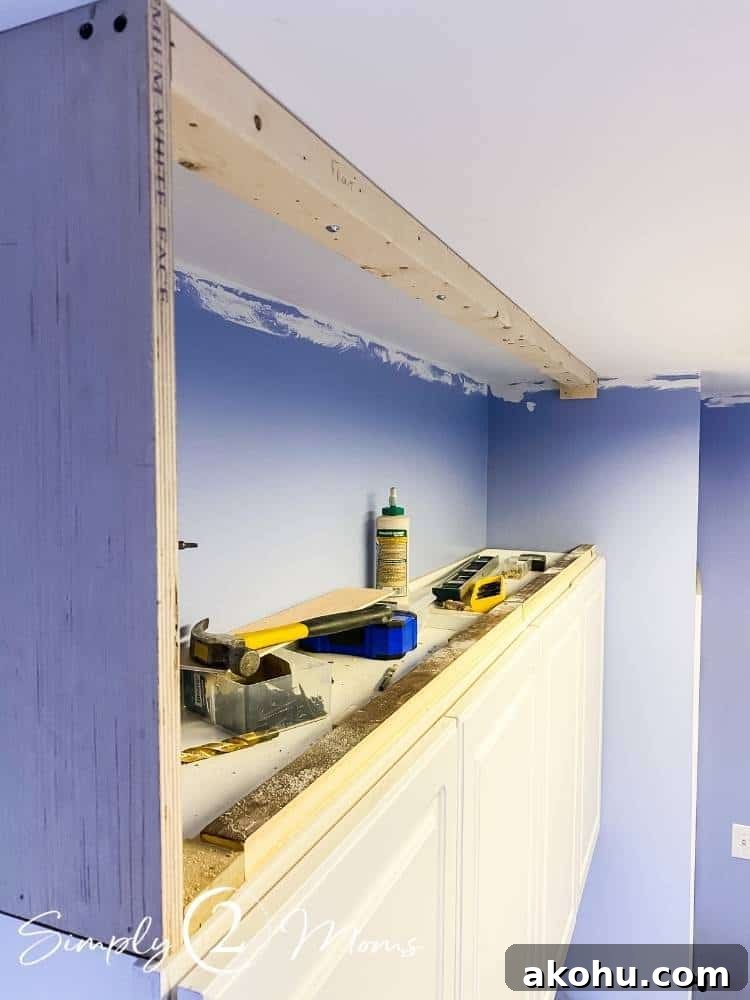
Use scrap wood or another 2×4 as the bottom plate of the frame attached to the cabinet tops. Use appropriate nail length so you don’t penetrate the cabinet interior.
Add vertical support frames
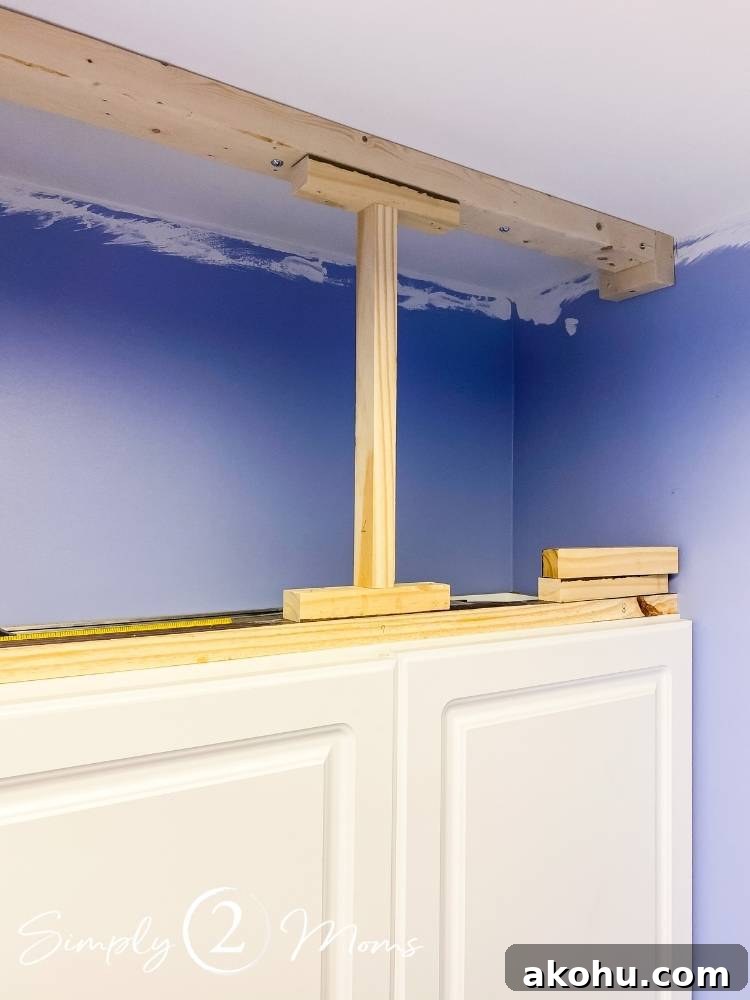
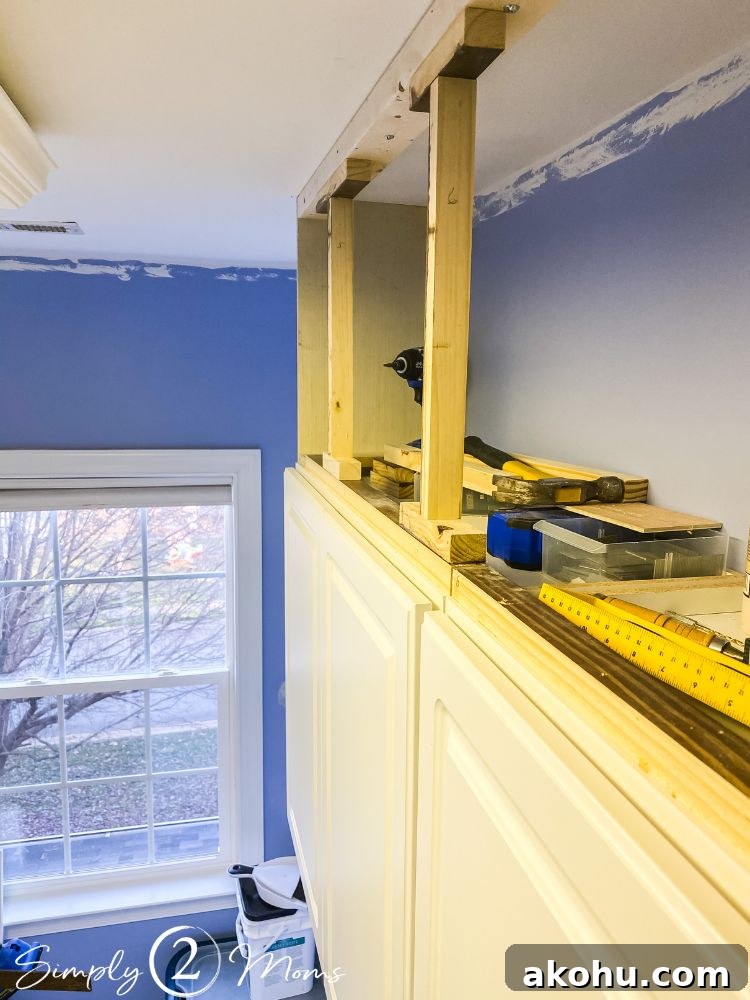
Cut strips of 3/4″ plywood to form vertical I-style supports for the height of the opening. Space these internal supports every 18–24 inches and include a support at the far end next to the wall. These give the box rigidity and provide nailing surfaces for the front panel and molding.
Attach plywood and molding to the frame
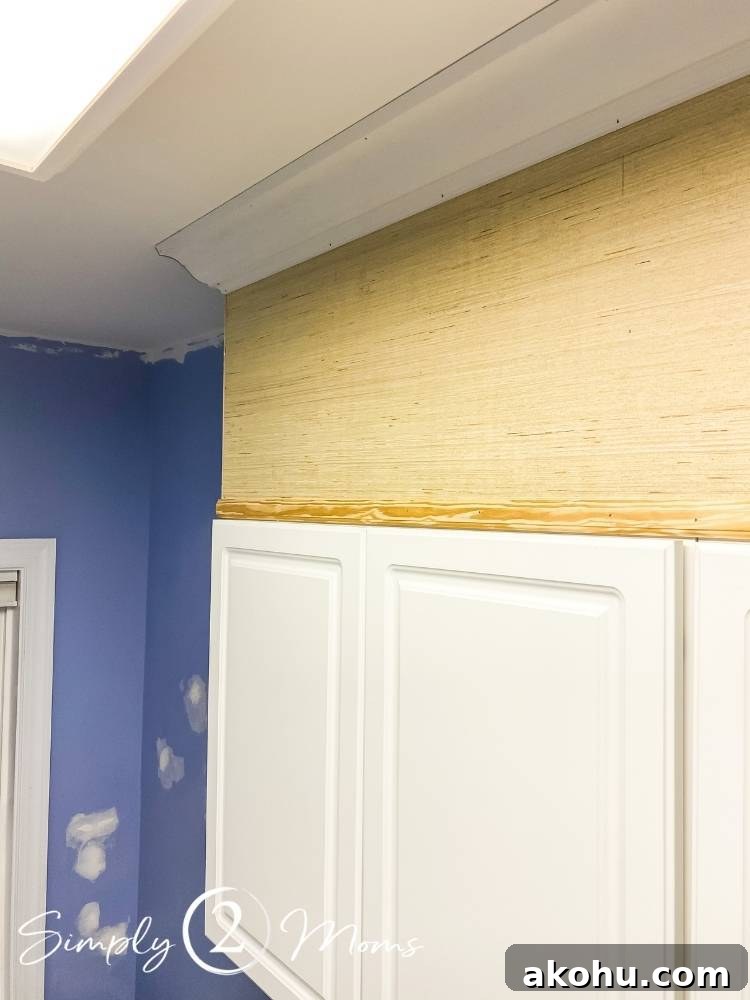
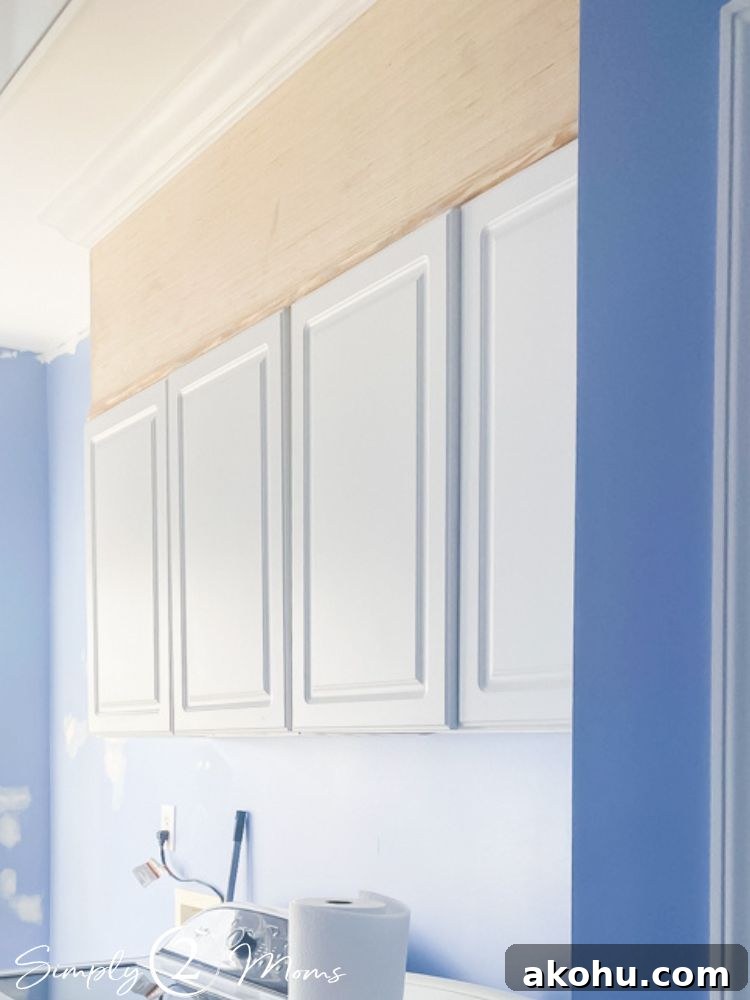
Cover the frame with 1/4″ plywood sheeting for a lightweight finish. Measure carefully and double-check cuts to avoid gaps that require excessive putty. Fasten the plywood to the frame with nails or screws, then install crown molding along the top edge to achieve a furniture-like look.
Along the bottom where the box meets the cabinet tops, use wide mullion or base cap molding to create a finished transition. We added a second “neck” molding about four inches below the crown to visually break up the box and reduce the perceived width.
Fill nail holes and sand smooth
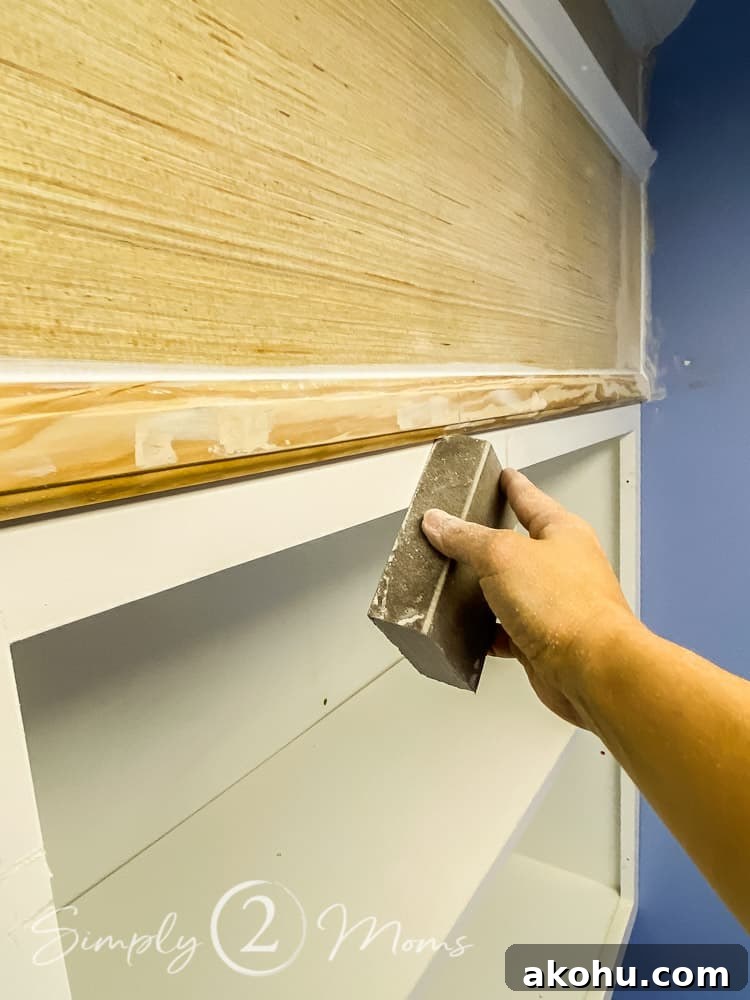
Fill nail holes and any seams with wood putty, allow it to dry, then sand smooth. Start with 80-grit for heavy leveling, move to 120-grit, and finish with 220-grit for a fine, paint-ready surface. Use a sanding block for curves and an orbital sander for flat panels.
Prime, then paint!
Follow the primer’s directions regarding caulking order. If it’s not specified, caulk all seams and trim edges before priming to seal gaps and prevent visible seams after painting. Prime the entire box, let it cure, then paint to match your cabinets.
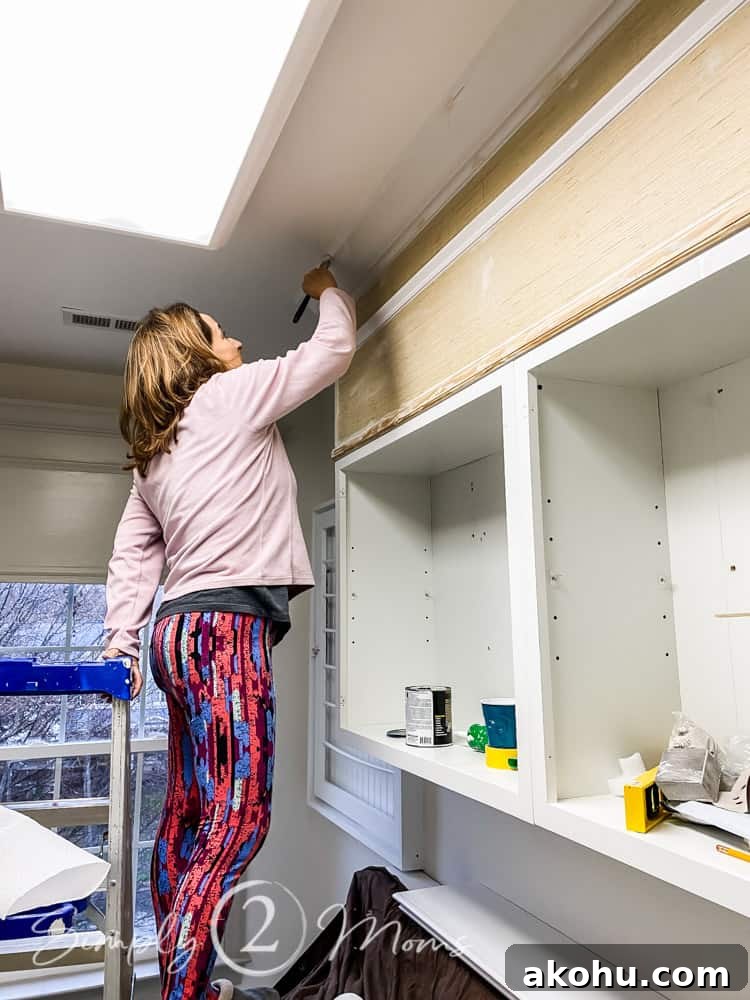
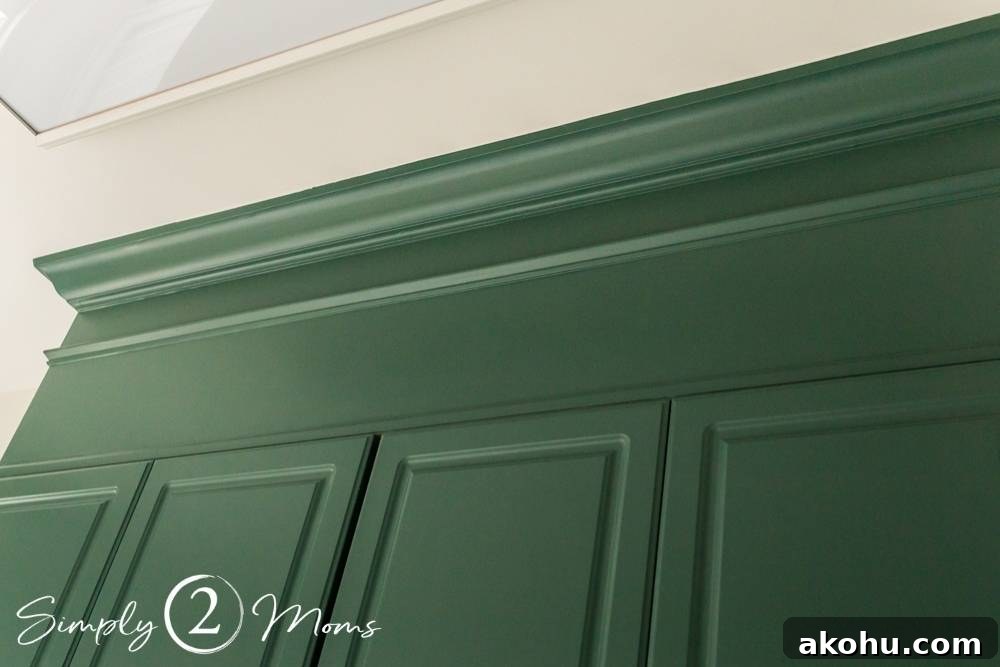
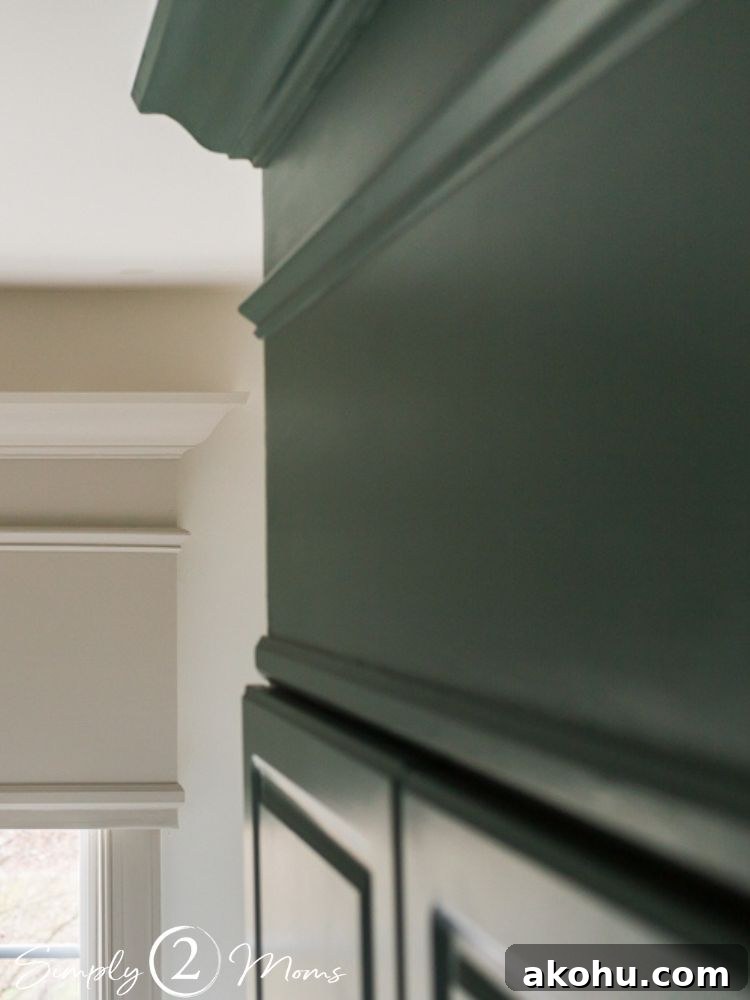
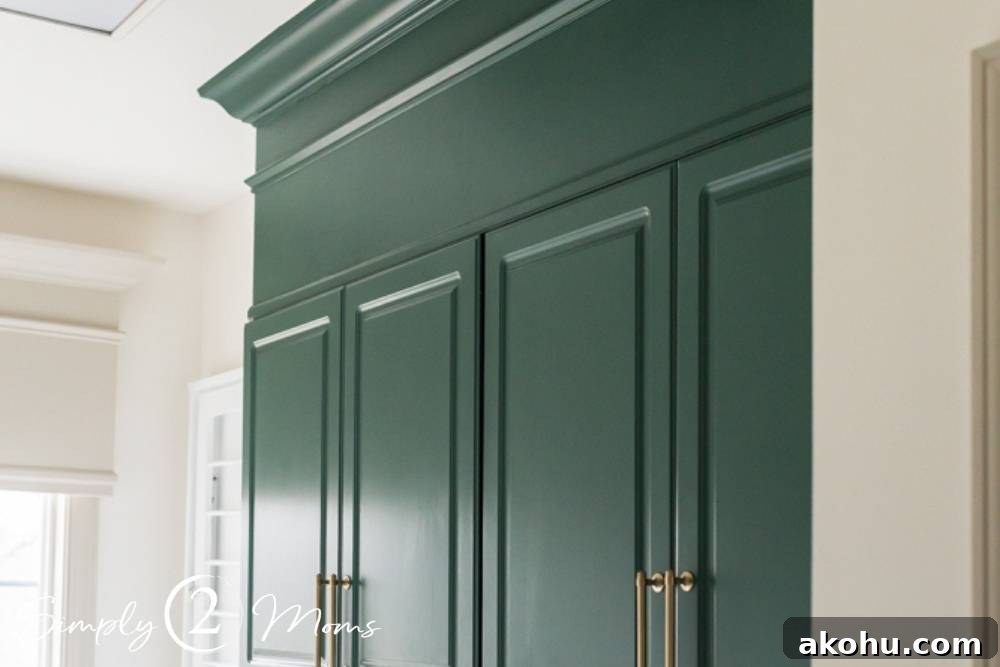
The final result looks like a custom built-in, with no more open, dust-collecting space above the cabinets.
More ideas for the space above your cabinets
I chose to enclose the space because I didn’t need extra storage and the area is difficult to reach without a ladder. If accessibility isn’t an issue, consider adding shallow cabinet inserts or custom doors to create usable storage.
If you want storage, you can build the box the same way and add custom-sized doors or pre-made cabinet inserts to the front.
If you have questions or suggestions, feel free to comment on the project or reach out. This simple build transforms builder-grade cabinets into a clean, finished, built-in look that keeps dust out and elevates the room.

Pin it to Remember it: