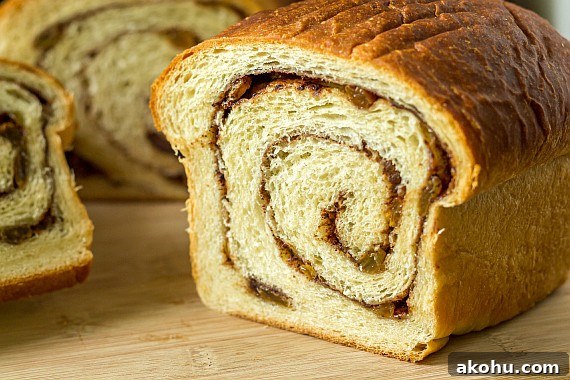
Today we’re addressing a common baking frustration: why cinnamon swirl bread sometimes separates and gaps when baked, and how to prevent it.
Unlike cinnamon rolls, which are meant to be gooey and pulled apart, loaf-style cinnamon swirl bread should slice neatly for toast and sandwiches. If your slices unroll or fall apart, you haven’t failed — this is usually caused by a few fixable issues.
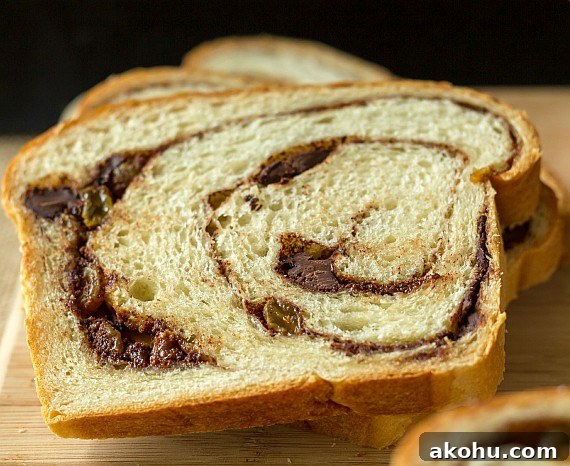
The photos in this post show examples of both problematic and well-laminated loaves. Read on to learn the typical causes of delamination and the practical fixes that will give you clean, attractive slices.
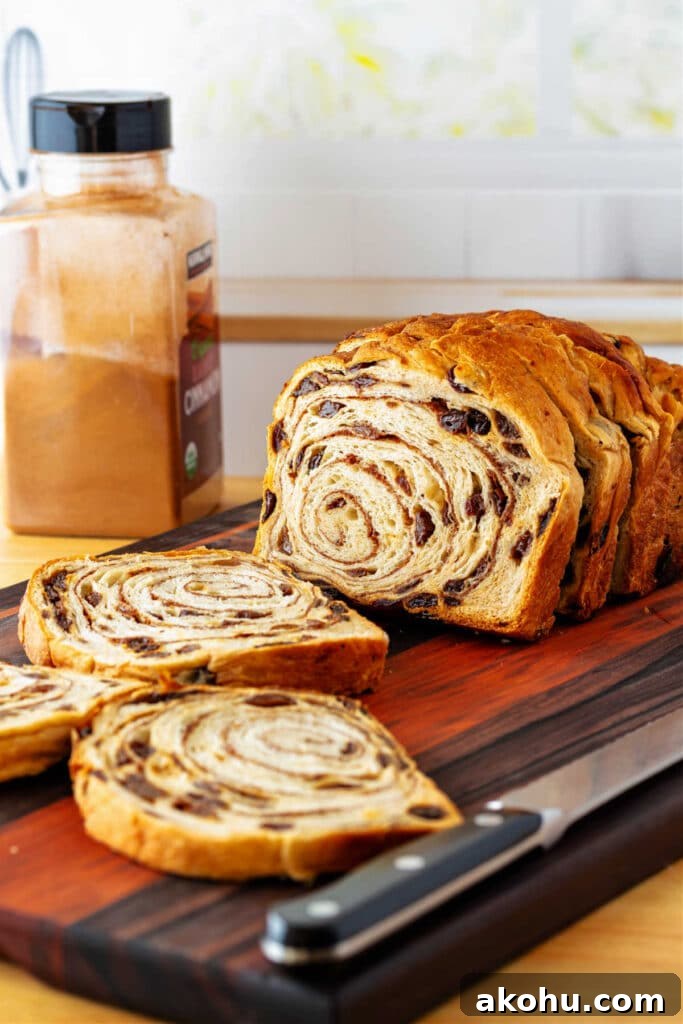
If you want a recipe that addresses this problem directly, try the Cinnamon Raisin Bread recipe included with this method. The steps below explain why separation happens and two reliable ways to bind the swirl so slices hold together.
Table of Contents
Reader Question
Phyllis recently asked why her cinnamon raisin loaves developed gaps between the layers after baking. She described rolling out dough, spreading butter, cinnamon, sugar, and raisins, then rolling and baking — only to find the inside separated and left large empty spaces. She wanted neat, intact slices.
That prompted some research and experimentation. I discovered that the problem is common and easily solved once you understand the causes.
Why Does Cinnamon Bread Separate?
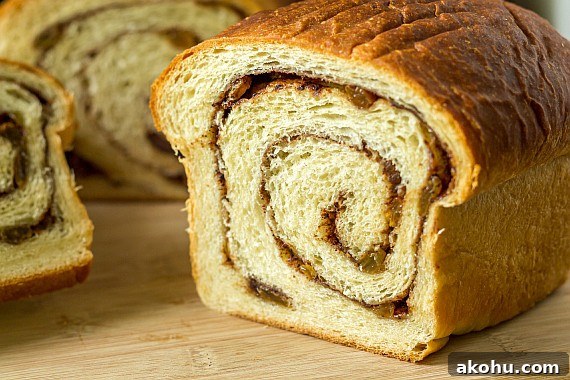
There are two main reasons swirled loaf breads gap or delaminate:
- Steam and yeast gases push between the layers during baking. That pressure often forces the filling outward and upward, leaving a gap beneath the top layer of the swirl.
- The filling can be too slippery to stick. Many recipes use butter in the spiral, and fat makes the layers slide instead of bind. If the swirl doesn’t adhere to the dough, escaping steam and gas will widen those gaps.
Overproofing can also contribute if the dough rises excessively and collapses, but the two reasons above are the primary culprits and the easiest to correct.
How To Keep Cinnamon Bread from Separating
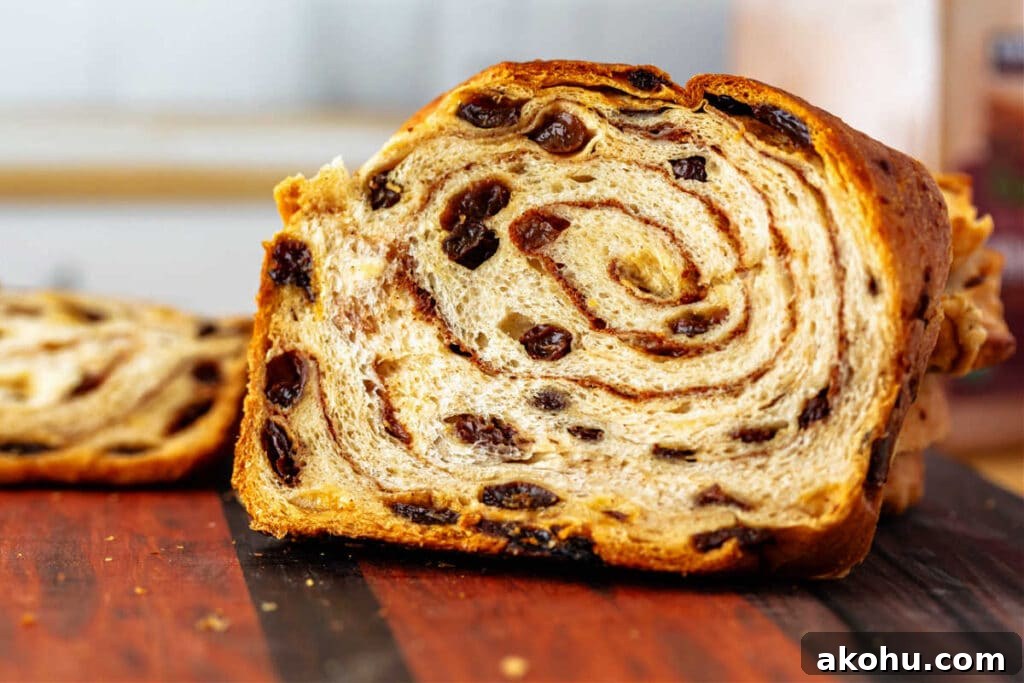
After testing several approaches, I recommend two reliable methods that prevent delamination and produce attractive, sliceable loaves:
- Use a starch-based binder in the swirl
- Use a beaten egg as a binder (an effective alternative)
The Starch Method
This is my preferred method and the one I use most often. It replaces butter in the swirl with a thin, dough-like mixture made from flour (starch), sugar, cinnamon, and a little salt, plus a brushing of milk to hydrate it.
For a single loaf, a good starting point is 2 tablespoons flour, 2 tablespoons granulated sugar, about 4 1/2 teaspoons cinnamon, and a pinch of salt. Adjust amounts proportionally for larger batches.
How the Starch Method Works
Fat acts like a lubricant, so butter in the spiral prevents layers from bonding. Flour-based mixture, however, behaves like a very thin dough and will adhere to the dough layers. Brushing the rolled-out rectangle with milk provides the moisture needed to hydrate the dry mixture and create a sticky, cohesive layer that bakes into the swirl.
Steps:
- Roll the dough into a thin rectangle and brush the surface generously with milk.
- Mix the flour, sugar, cinnamon, and salt, then spread the dry mix evenly over the milk-wetted dough, pressing gently so the mixture becomes moist.
- Roll the dough under light tension, tightening the roll by gently pulling back every couple of turns.
- Place the loaf in the pan, allow it to rise appropriately, and bake.
- Cool before slicing; you’ll get neat, stable slices—even when cut thin.
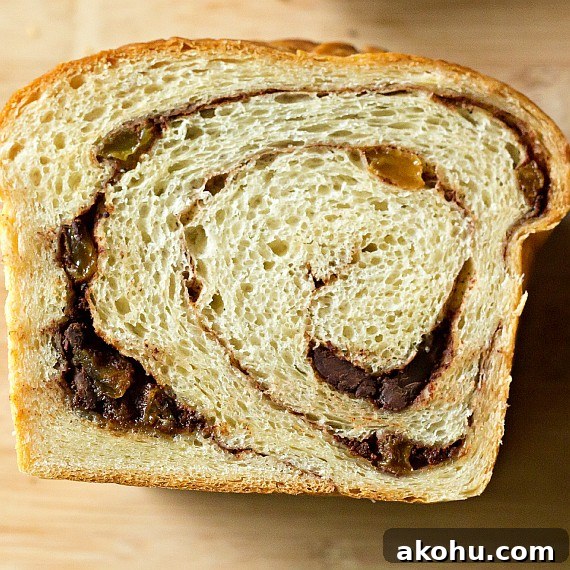
The Egg Method: My Runner-Up
Another effective approach is to whisk a beaten egg with the cinnamon and sugar, then spread that thin egg-sugar-cinnamon mix onto the dough. The egg coagulates during baking and acts as a glue, bonding the layers and preventing gaps.
Why It’s My Runner-Up
The egg method works well, but it’s not ideal if you need an egg-free loaf. If you avoid eggs for dietary reasons, the starch method gives the same benefit without adding egg.
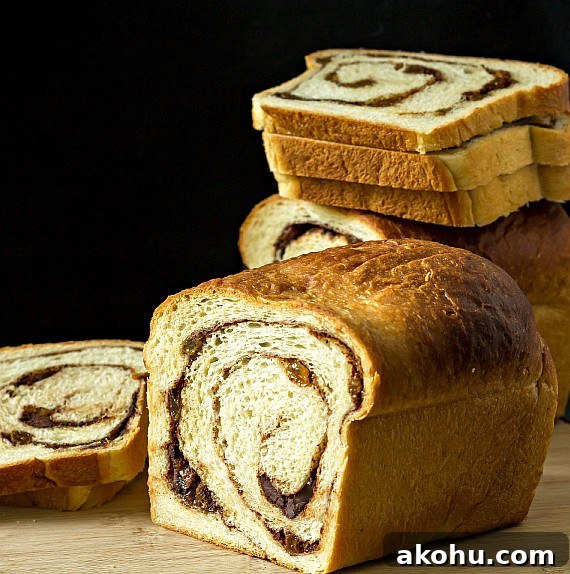
Add Your Mix-ins to the Dough and Not the Swirl
Another tip: keep chunky mix-ins—raisins, nuts, chocolate chips—out of the spiral itself. These pieces interrupt the binding surface and create local gaps. Instead, fold mix-ins into the dough before rolling it out, and keep the spiral smooth with only the binder (starch mixture or egg), cinnamon, sugar, and salt.
If you add mix-ins directly to the swirl, expect some irregular delamination where the pieces interfere with contact between layers. For the cleanest slices, knead those mix-ins into the dough body.
Reader Review
Reader Helen tried the method and reported excellent results: the loaf didn’t separate, and she preferred this version to her old recipe. Positive reader feedback confirms that either the starch or egg method reliably prevents delamination when followed correctly.
More Answers to Baking Questions
If you enjoy understanding the science behind techniques, you might also find helpful discussions on related baking topics such as sifting flour, the role of eggs in baking, and the creaming method. Learning why methods work helps you troubleshoot and adjust recipes with confidence.
Reader Rave
Perfect! Made this bread last night following the recipe to a T, and it could not have turned out any better. The dough was a joy to work with and the taste is so yummy. Thank you for sharing your recipe. I love it and now have a favorite, go-to recipe source.
Reader Patti
If you have questions about these methods or the recipe, leave a comment and I’ll respond. For more immediate contact, you can email the author directly via the provided contact address. The improved cinnamon raisin bread recipe referenced here uses the starch technique for a reliably laminated swirl.

Hi, y’all! I hope this helps you bake more reliable, beautiful cinnamon swirl loaves. If you enjoy the style of these posts, consider signing up for the newsletter for occasional updates and new recipes.