
We all feel the shift as the holidays approach. With celebrations, office parties, family dinners and seasonal treats, it’s natural to worry about staying on track with your macros. The good news is you can enjoy meaningful moments with loved ones while still protecting your progress. Below are practical strategies to balance memories and macros without stress.

Prioritize Your Holiday Events
Start by reviewing your calendar. Identify how many events will challenge your usual routine—buffets, cookie exchanges, office treats, and family gatherings. Once you have a clear list, decide which events matter most to you. Some occasions are easy to decline: extra sweets in the office or impulse treats that aren’t tied to meaningful moments. Other events—like Thanksgiving or Christmas gatherings—are worth fully participating in and savoring.
For many, there are only a handful of days during the season when they want to relax tracking and simply enjoy food and company. I typically anticipate about 5–7 such events across the holidays. Outside of those chosen days, commit to your plan: hit your protein targets, focus on balance, and maintain structure. A clear plan reduces anxiety and helps you stay consistent.
Focus on Whole Foods
Don’t let colder weather be an excuse to skip vegetables. Frozen steamable vegetables are an easy, nutritious option—microwave and add to any meal. Choosing whole foods like lean proteins, vegetables, fruits, and whole grains makes it easier to control portions and keep calories reasonable while still enjoying satisfying meals.
Bring a Macro-Friendly Dish to Share
Potlucks are a perfect opportunity to contribute something both delicious and macro-friendly. Bring a vegetable or fruit platter, a lean-protein casserole, or a lighter version of a classic family recipe. If you love making a richer heirloom dish, consider sharing a small portion so everyone enjoys it without you having an entire dish at home tempting you later. Enjoy a serving at the event and let others take care of the leftovers.
Keep Tracking
Even minimal tracking can keep you mindful. If logging full macros feels like too much during a busy day, track protein intake at minimum. Prioritizing protein supports muscle maintenance and helps you feel full, which often prevents overeating. When protein is prioritized, staying near your calorie target becomes much easier.
Set a Holiday Weight Range for Balance and Accountability
Establishing a reasonable weight range gives you freedom while maintaining accountability. A common and workable approach is a +/- five-pound range, which encourages intention without punishing enjoyment. Regular weigh-ins—daily or several times a week—can serve as a helpful feedback tool. Use the scale as one of several measures to guide choices, not as the sole judge of success.
Pick Something to Train Towards
Choose a training goal for the season—a race, a personal record in the gym, or a family 5K. Having a target helps you plan workouts and keeps activity consistent, even when the schedule gets hectic. A training goal provides structure and motivation, and you’ll appreciate the momentum come January.
Start the New Year Strong
Think about how you want to feel on January 1 and make choices now that set you up for a strong start. Rather than postponing healthy habits until the new year, prioritize your nutrition and fitness during the holidays so you arrive January 1 already moving toward your goals. You’ll feel more confident and energized, and less likely to rely on resolve alone.
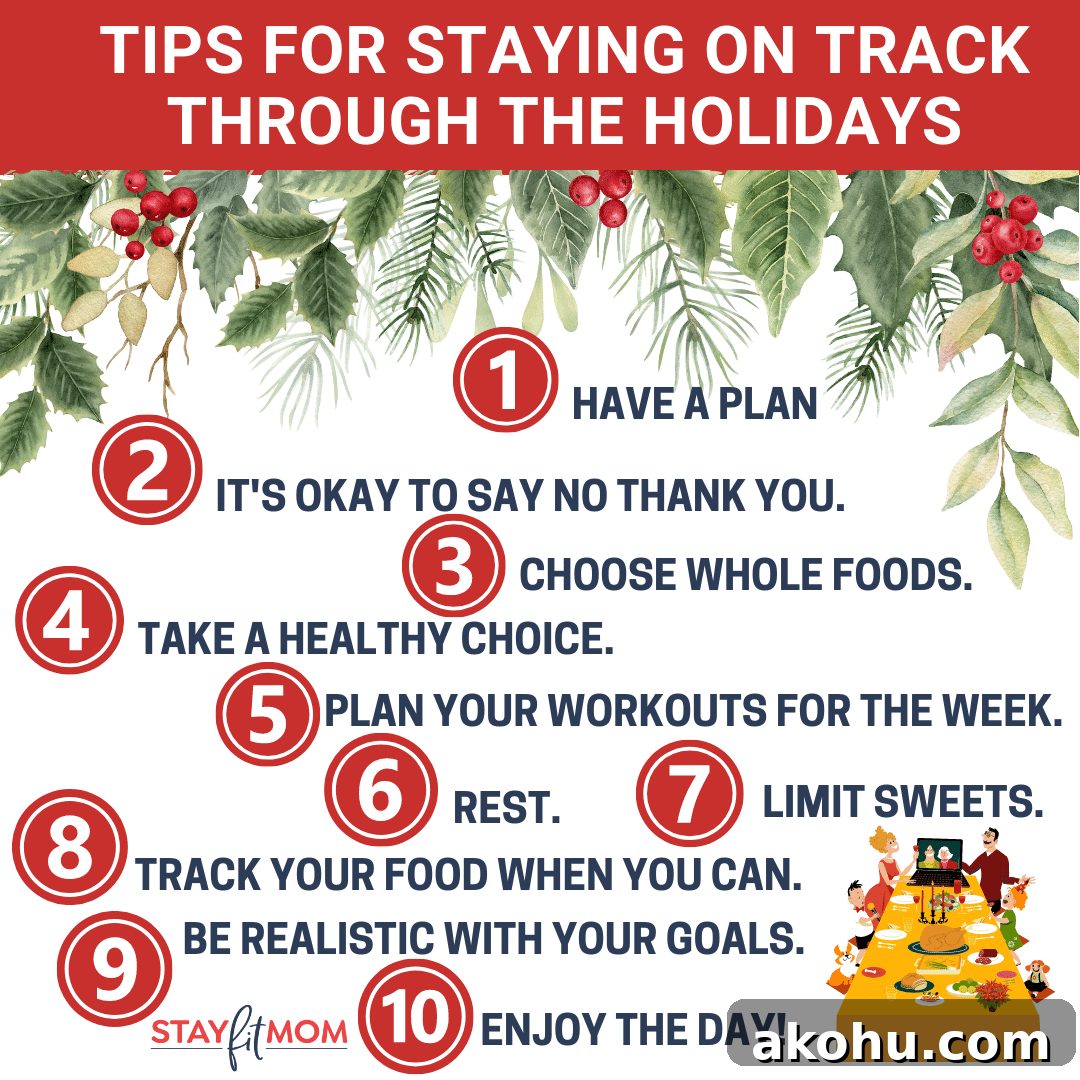
At the heart of the season are people and memories, not the food. You can enjoy holiday meals without letting them derail your progress. With a few simple strategies—prioritizing events, choosing whole foods, bringing macro-friendly dishes, tracking protein, setting a realistic weight range, staying active with a training goal, and planning for the new year—you can savor the season and protect your progress. Make room for joy, keep things balanced, and focus on what matters most.