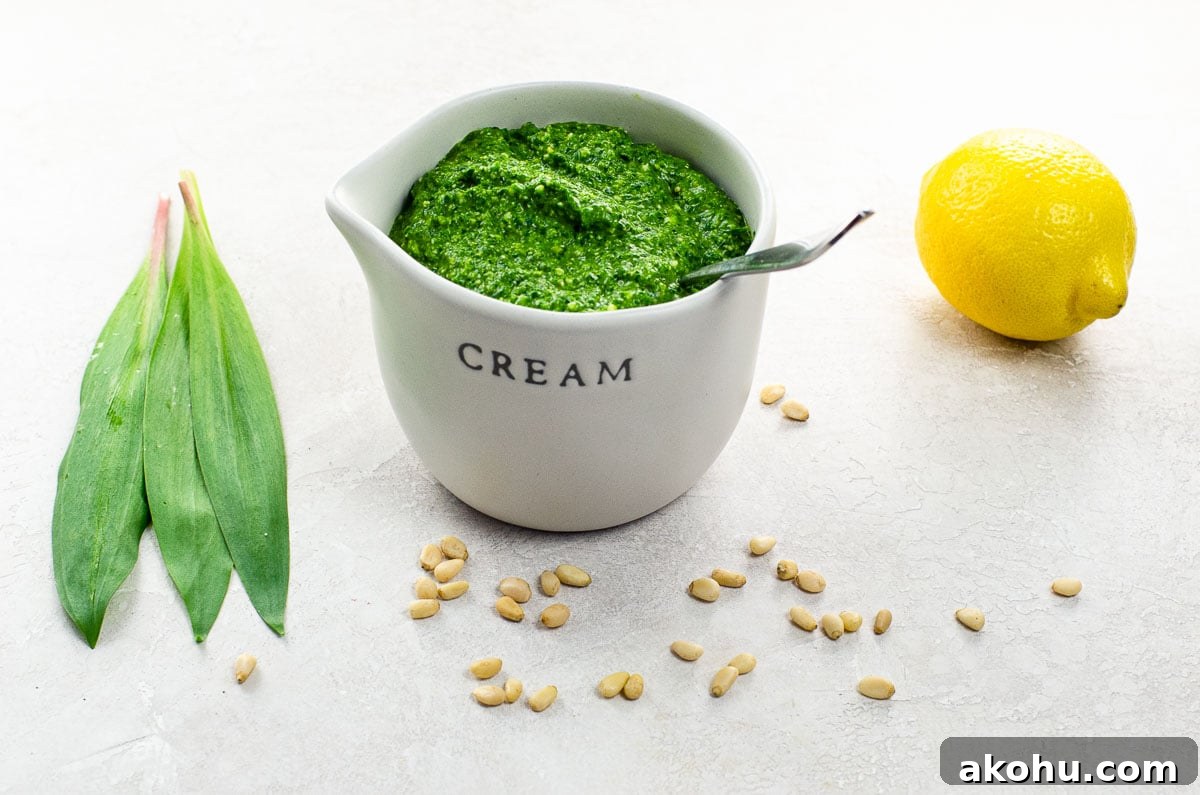
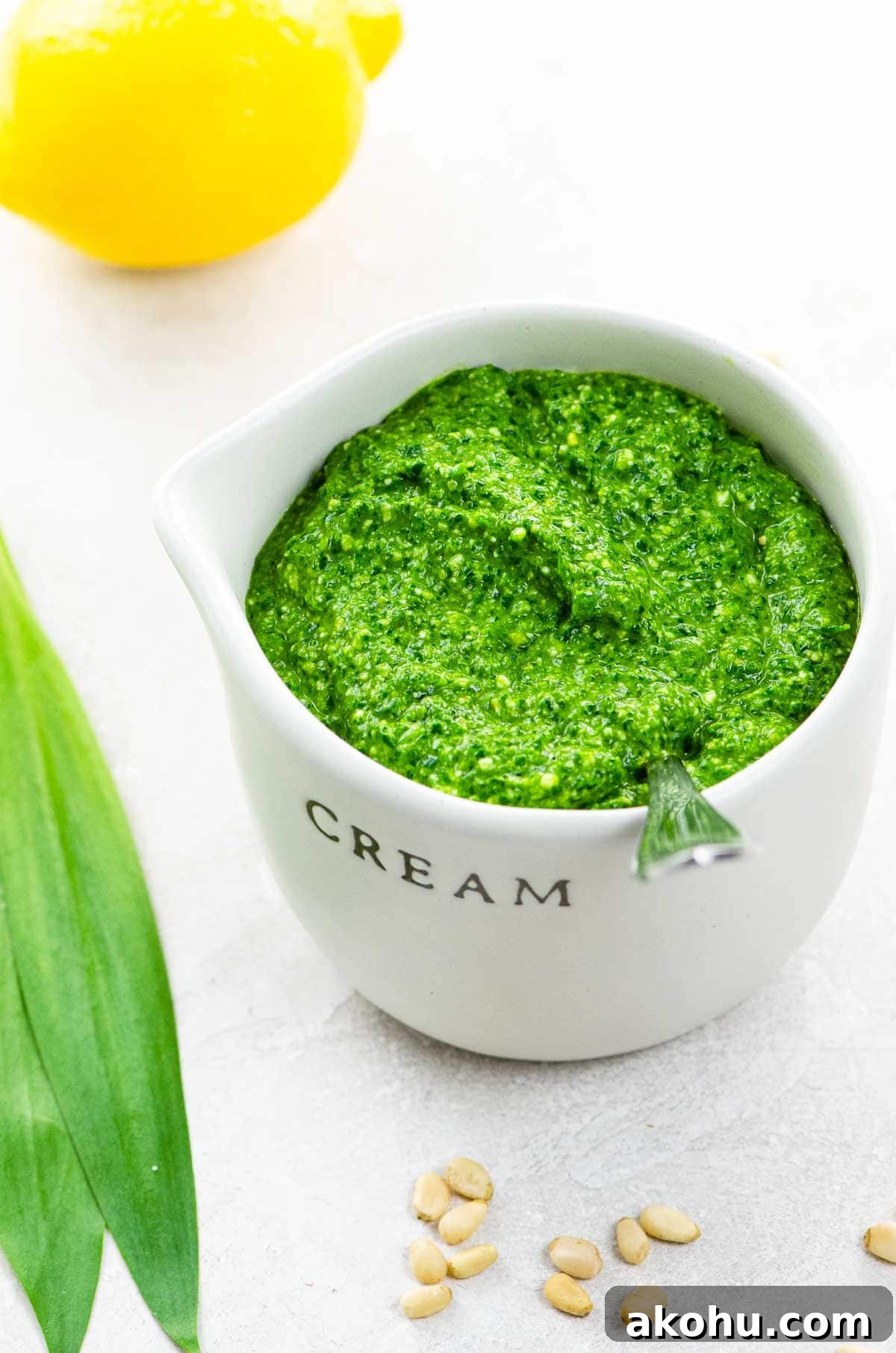
Ramp pesto is the thing I make the moment ramps appear at farmers’ markets. My favorite version blends ramps with basil and baby spinach for a balanced, large-batch pesto that stays bright and green. If you don’t have ramps, you can substitute regular basil pesto.
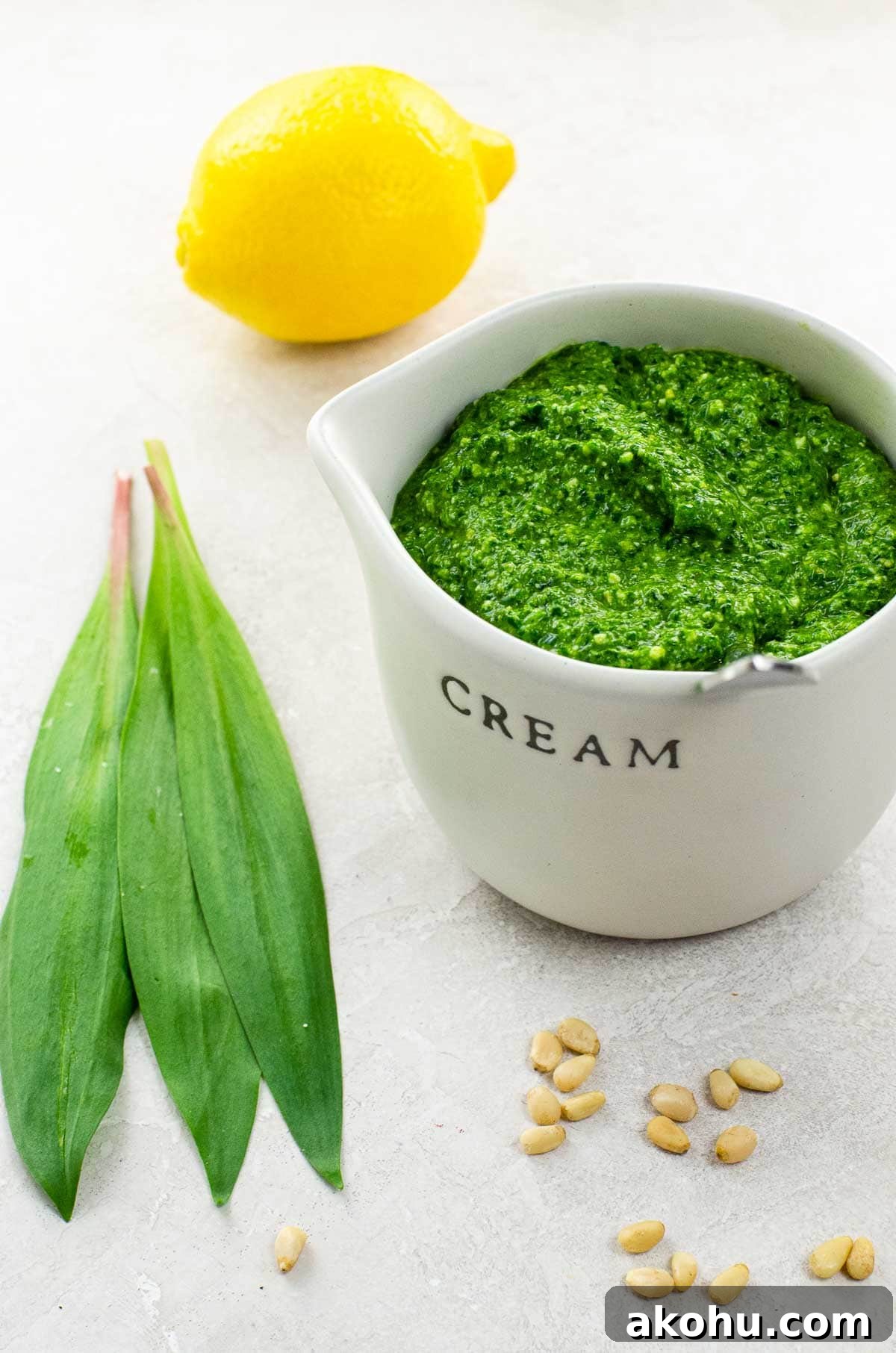
Why we love this recipe
Ramps lend a bold, garlicky-oniony kick to dishes, but this pesto shows them at their best: bright, slightly spicy, and perfectly balanced. The basil and spinach round out the flavor and keep the color vibrant.
Highlights:
- Well-rounded: basil and spinach soften the ramps’ intensity.
- Lemony: fresh lemon juice lifts the flavors.
- Vibrant green: the spinach helps the pesto stay bright.
- Creamy and savory: nuts and cheese add richness.
This recipe was first published in 2016 and has been clarified and slightly tweaked since then, but the essence remains the same.
What you’ll need
Here’s a quick look at the ingredients used to make this ramp pesto.
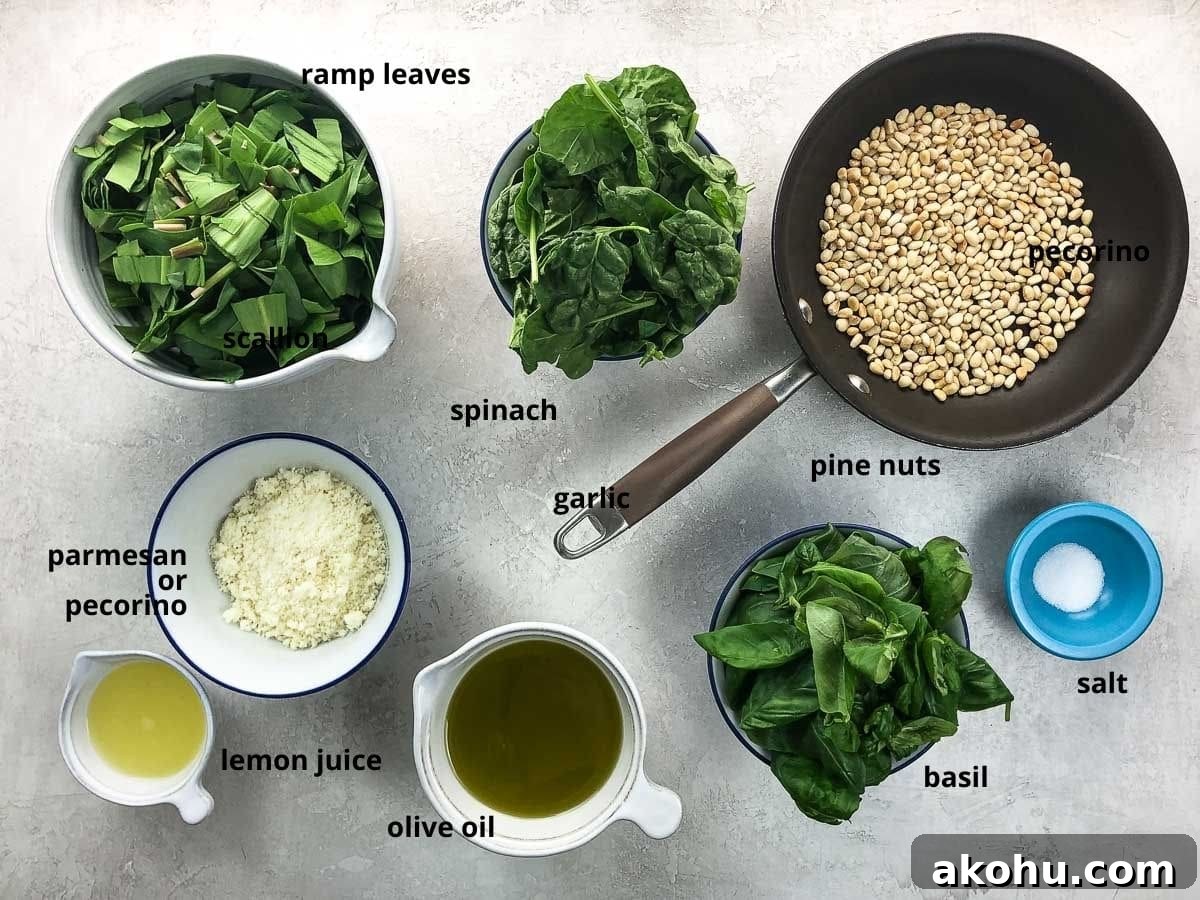
- Buying ramp leaves instead of whole ramps with bulbs helps support sustainable harvests, though either form works in this recipe.
- Baby spinach keeps the pesto vividly green and softens the flavor when combined with basil.
- Use pecorino, parmesan, or a mix. Pecorino is tangier and saltier; parmesan is sweeter. Both make excellent pesto.
How to make it
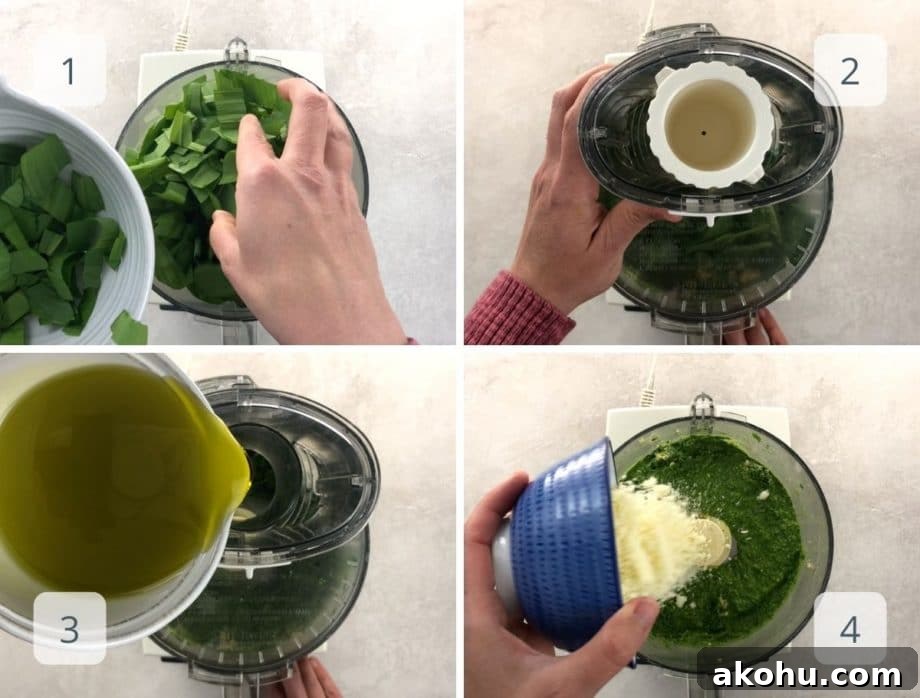
Follow these steps to make a smooth, flavorful ramp pesto. The finished recipe and measurements are in the recipe card below.
- Toast the pine nuts in a dry skillet over medium heat until lightly browned in spots, about five minutes. Watch carefully so they don’t burn and let them cool slightly.
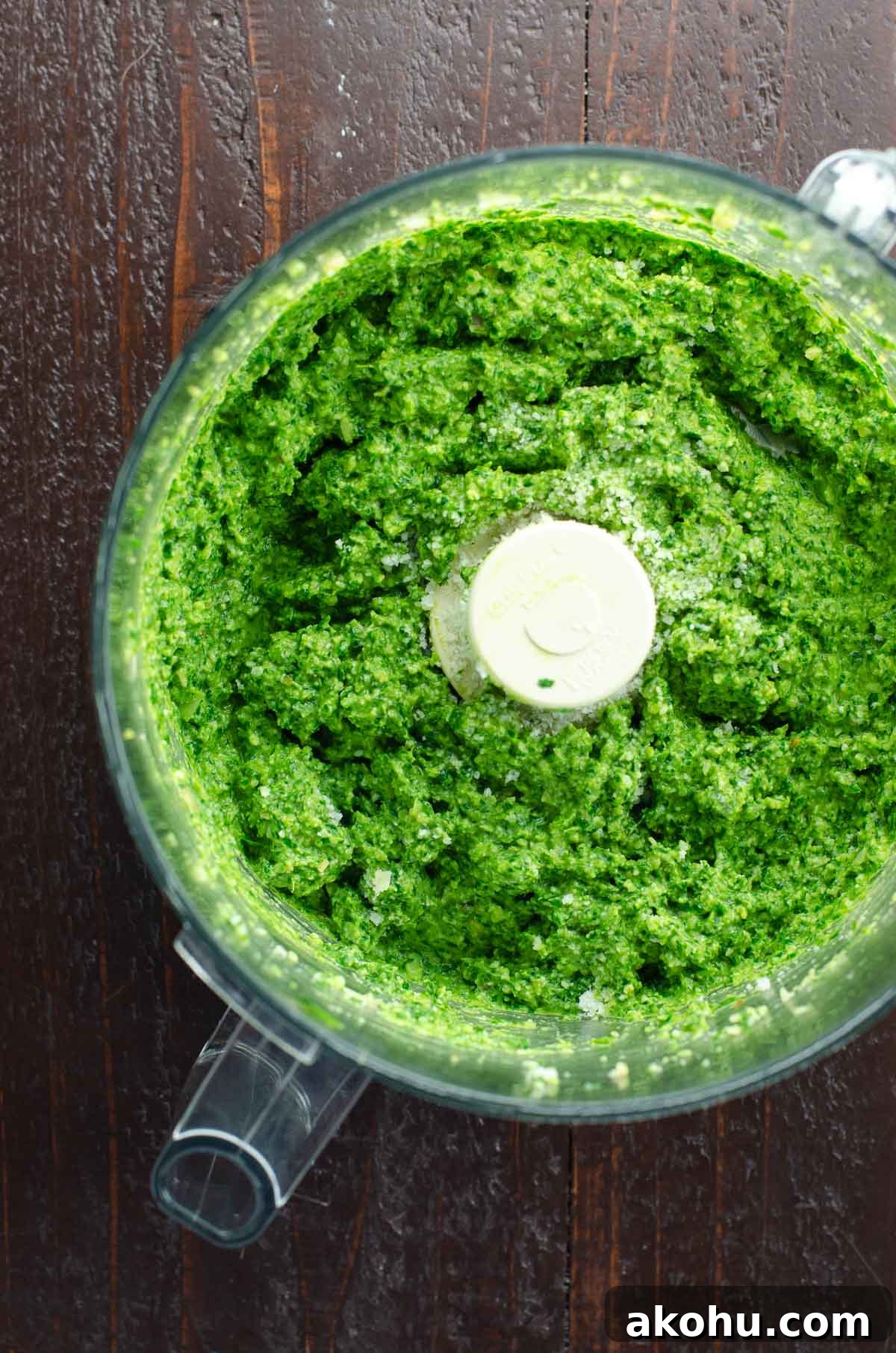
- Place the cooled pine nuts in a food processor with sliced ramps, basil leaves, baby spinach, salt, and lemon juice. Pulse until the mixture is chopped into small pieces, scraping down the bowl as needed.
- With the processor running, stream in the olive oil until the pesto reaches your desired consistency.
- Stir or pulse in the grated cheese until incorporated.
Expert tips and FAQs
Ramps, also called wild leeks, are an early-spring allium prized for their garlicky-onion flavor. They are often foraged and are a seasonal favorite at farmers’ markets in spring.
If pine nuts are expensive or hard to find, substitute toasted walnuts, pecans, almonds, sunflower seeds, or pepitas. Use more ramps and less spinach for a stronger ramp flavor, or add extra olive oil for a saucier pesto. You can also make a small batch with a mortar and pestle for a coarser texture.
Yes. Store pesto in an airtight container in the fridge for up to a week. Smooth the top and pour a thin layer of olive oil over it before sealing to help preserve color. Freeze in pint containers or in ice cube trays for small portions; transfer cubes to a sealed container when fully frozen. Properly stored, frozen pesto can keep for months.
How to serve it
Use ramp pesto anywhere you’d use basil pesto. A few favorite ways:
- Toss with hot pasta
- Spread on a grilled chicken sandwich
- Add a spoonful to an omelet
More favorite ramp recipes
- Creamy asparagus and ramp soup
- Farfalle with soppressata and ramps
- Vegetarian carbonara
- Hot ramp and leek spinach dip
Ramp Pesto with Basil and Spinach
Ingredients
- ½ cup (60 g) pine nuts
- 5 ounces (142 g) ramps, about 3 cups sliced and packed
- 1½ ounces (43 g) basil leaves, about 2 gently packed cups
- 1 gently packed cup baby spinach leaves (about 1¼ oz)
- ½ teaspoon fine sea salt
- Juice of 1 lemon (about 3 tablespoons / 45 ml)
- ½ cup (120 ml) extra-virgin olive oil
- ½ cup (2 oz / 57 g) grated pecorino (or parmesan, or a mix)
Instructions
- Toast the pine nuts in a small dry pan over medium heat until lightly browned in spots, about five minutes. Watch carefully and let cool slightly.
- Add the toasted pine nuts to a food processor fitted with the blade.
- Add ramps, basil, spinach, salt, and lemon juice.
- Pulse until ingredients are finely chopped, stopping to scrape the sides as needed.
- With the processor running, pour in the olive oil until the pesto reaches your preferred consistency.
- Stir or pulse in the cheese until incorporated. Adjust salt, lemon, or oil to taste.
Notes
- Buying ramp leaves instead of whole ramps helps encourage sustainable harvesting. If using whole ramps, trim roots and chop bulbs, stems, and leaves into bite-sized pieces.
- Baby spinach preserves the pesto’s green color and mellows the ramps. Weigh basil after removing leaves from stems.
- Use pecorino, parmesan, or a combination depending on whether you want tangier or sweeter notes.
- Substitute toasted walnuts, pecans, almonds, sunflower seeds, or pepitas for pine nuts. Use more ramps and less spinach for a stronger ramp flavor, or more oil for a looser sauce. A mortar and pestle yields a coarser texture.
- Refrigerate in an airtight container for up to a week. Smooth the surface and pour a thin layer of olive oil over the top before sealing to preserve color.
- Freeze in pint containers or ice cube trays for smaller portions; transfer frozen cubes to a sealed container. Properly frozen pesto stores for months.
- Serving ideas: toss with hot pasta, spread on a grilled chicken sandwich, tuck into an omelet, or use anywhere you’d use basil pesto.
Nutrition
Calories: 214 kcal, Carbohydrates: 6.7 g, Protein: 6.4 g, Fat: 19.1 g, Fiber: 1.7 g
Nutrition information is an approximation.
Additional Info
Course: Sauces and Condiments
Cuisine: Italian
Share your results and tag your photos.