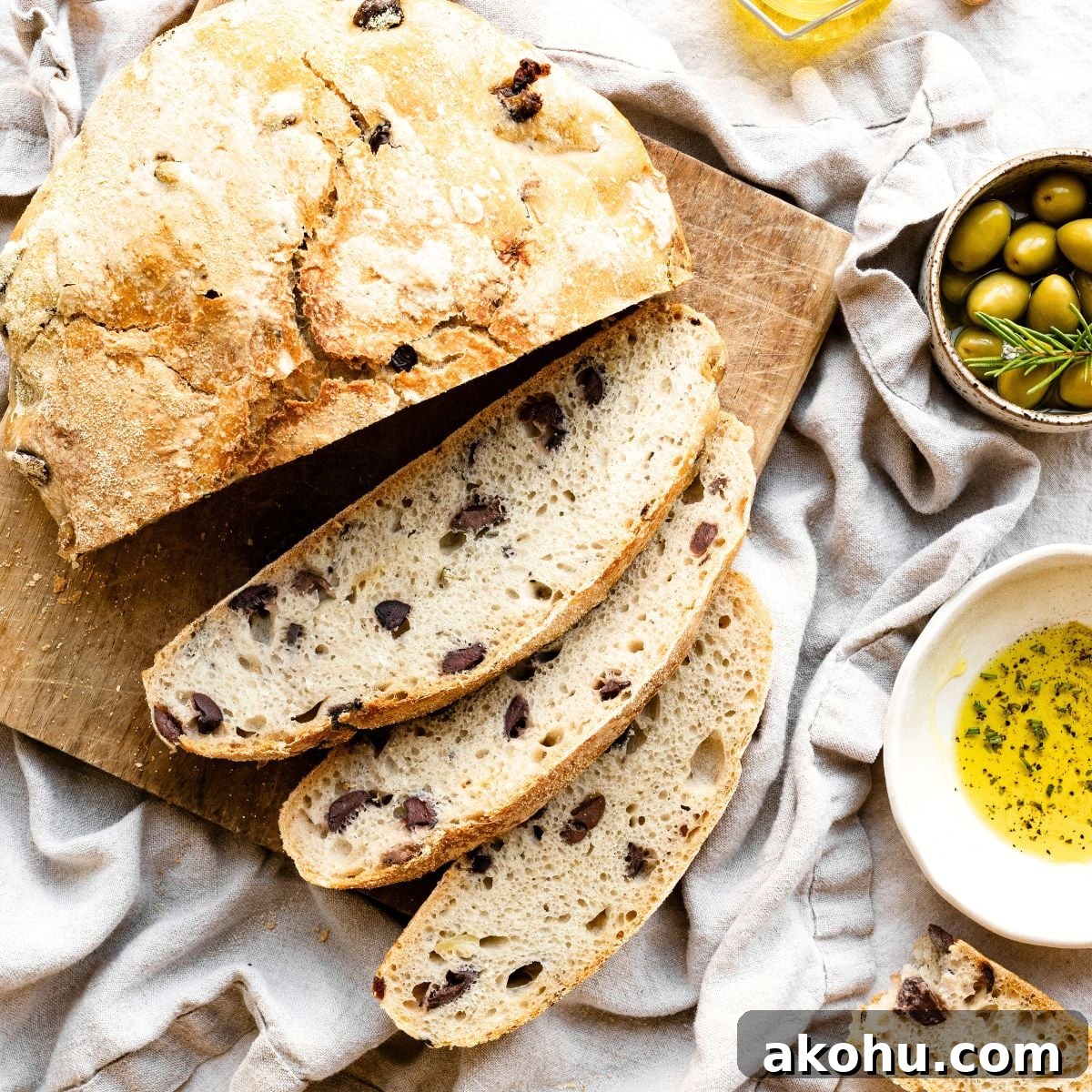
Delicious Mediterranean-inspired No Knead Herb and Olive Bread studded with savory olives, roasted garlic, and fresh rosemary. This easy, low-effort dough develops flavor and structure during a long, overnight rest. Bake in a preheated Dutch oven for a moist, open-crumb loaf perfect for sandwiches, dipping in olive oil, or pairing with cheese.
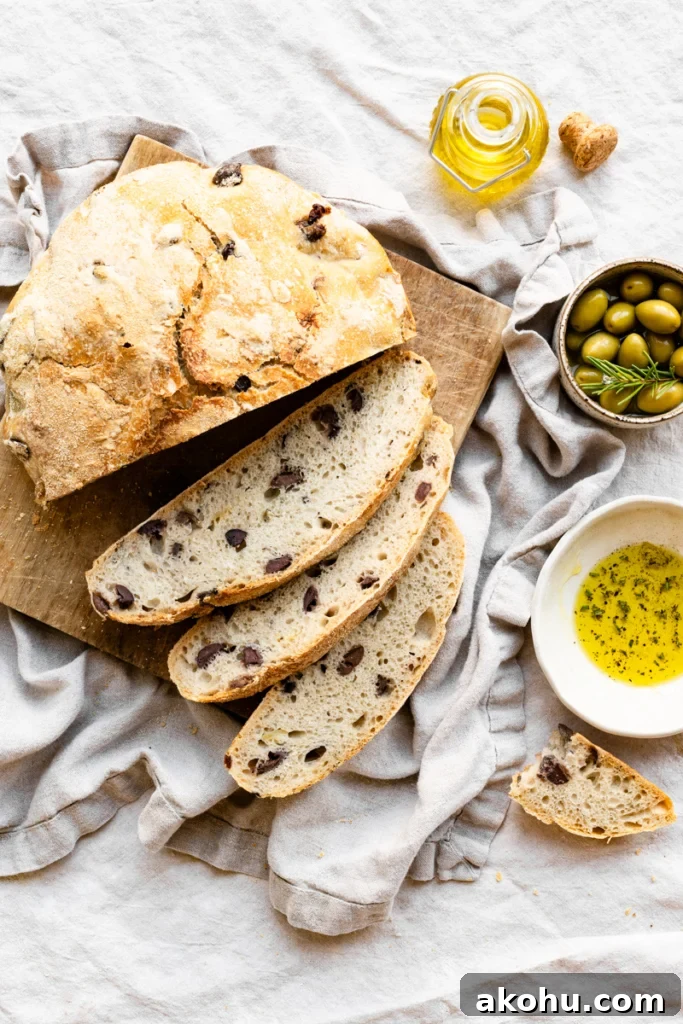
Unlike traditional yeast breads that require intensive kneading to build gluten, no-knead bread relies on a long fermentation—typically 12–14 hours—to develop gluten and create lots of air bubbles. The dough is high-hydration and sticky, producing an airy interior and crisp crust with minimal hands-on time. It’s an ideal recipe for beginners or anyone who wants great homemade bread without extra effort.
Key Ingredients & Notes
- Bread Flour: Higher protein (12–13%) gives structure and chew. Swap evenly with all-purpose if needed for a slightly softer loaf.
- Active Dry or Instant Yeast: Small amount encourages a long, slow rise and an open crumb.
- Kalamata and Green Olives: Pitted and chopped, they give a bright, salty Mediterranean flavor.
- Roasted Garlic: Roasting softens garlic and adds a sweet, mellow depth. Optional but highly recommended.
- Fresh Rosemary: Adds an aromatic herbal note that complements the olives and garlic.
- Cornmeal or Semolina: Dust the work surface or top of the loaf for extra texture and crunch.
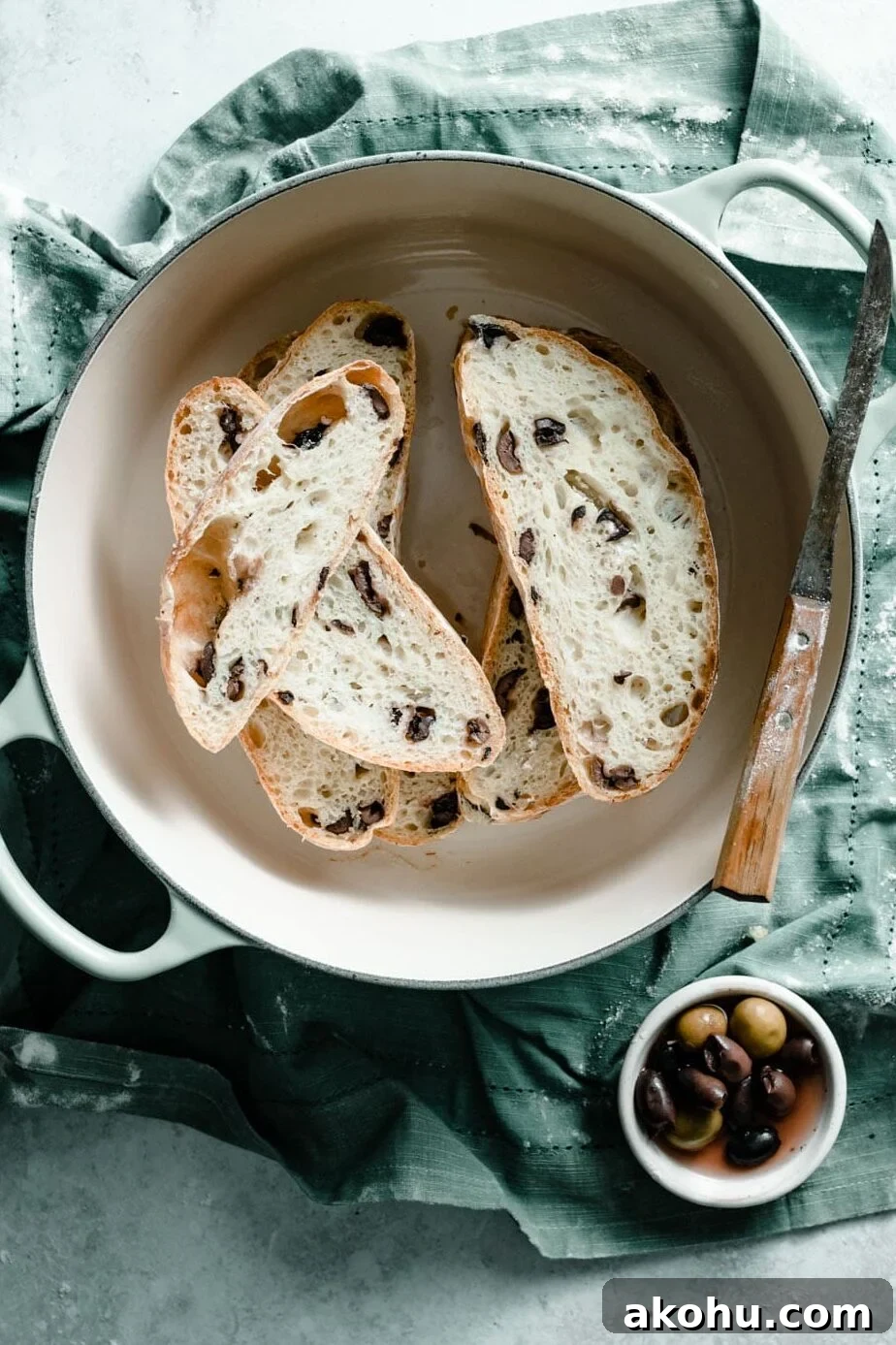
How to Make Olive Bread
This rustic no-knead loaf requires minimal hands-on time but does need patience for fermentation. Start the day before you plan to bake so the dough can rest for about 12–14 hours overnight and then proof another 2 hours before baking.
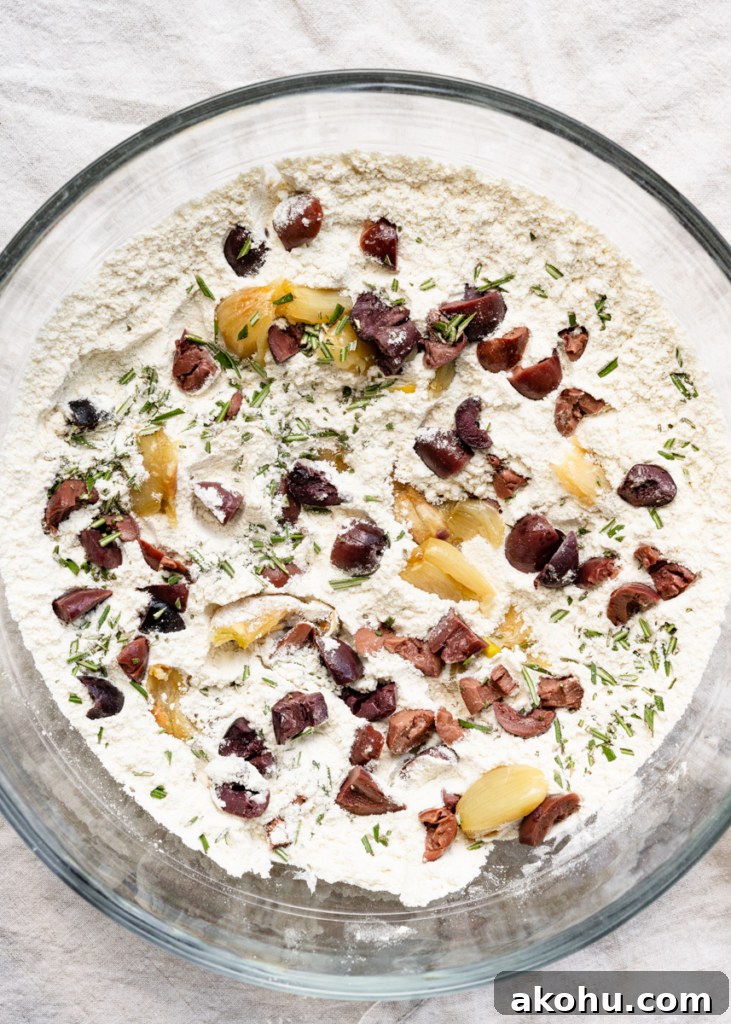
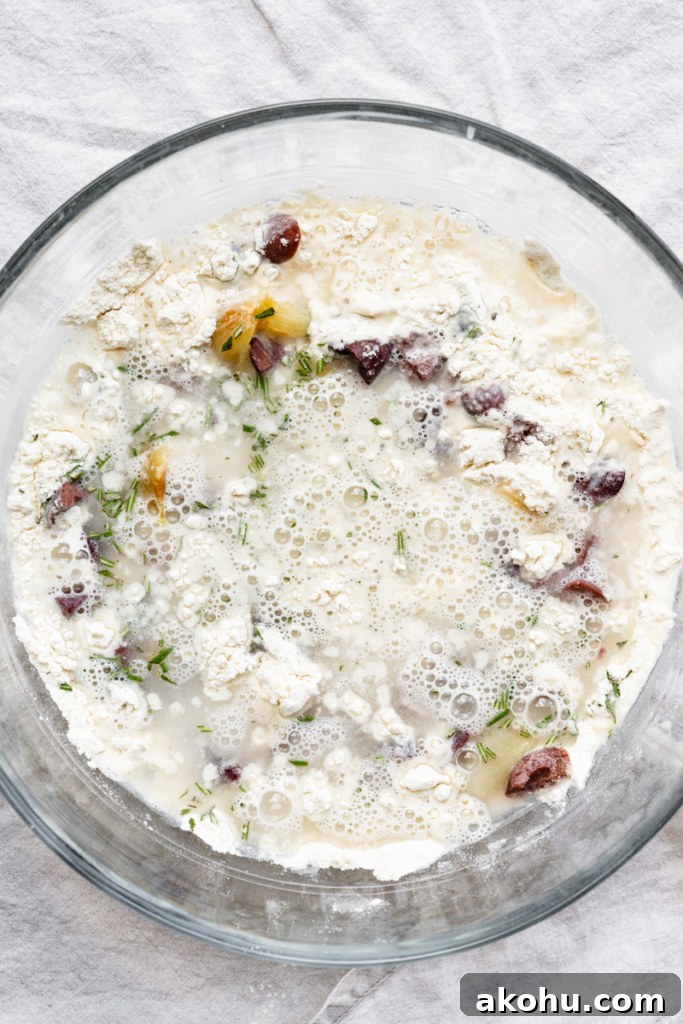
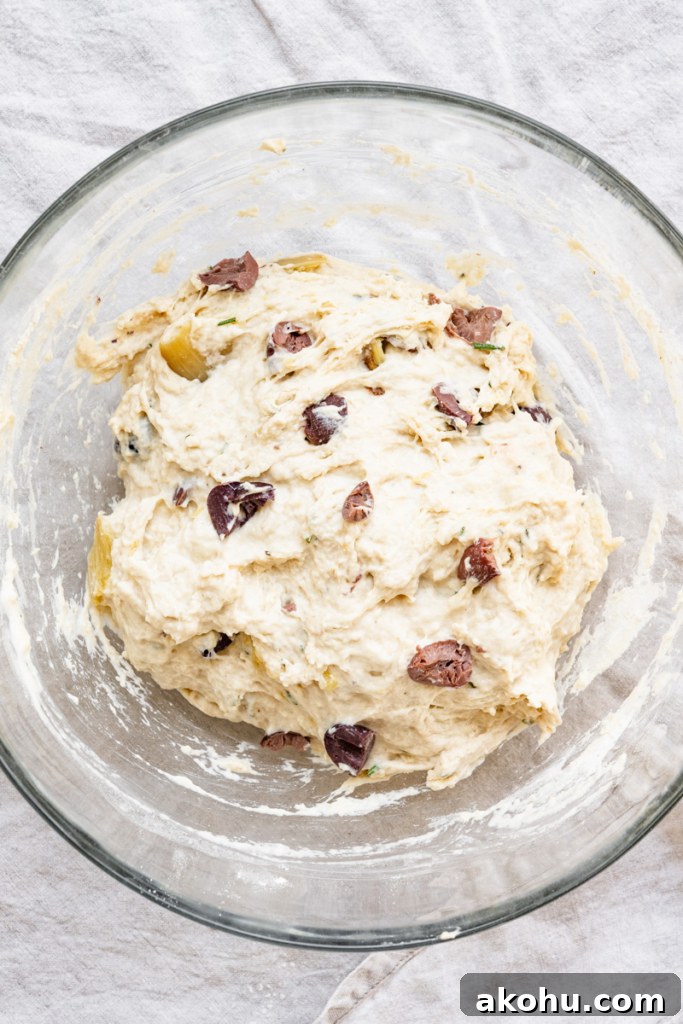
Begin by roasting the garlic and chopping the olives. Whisk flour, yeast, and salt in a large bowl, then add the chopped olives, roasted garlic, rosemary, and warm water. Stir with a wooden spoon until a wet, sticky dough forms. Cover and let rest at room temperature for 12–14 hours.
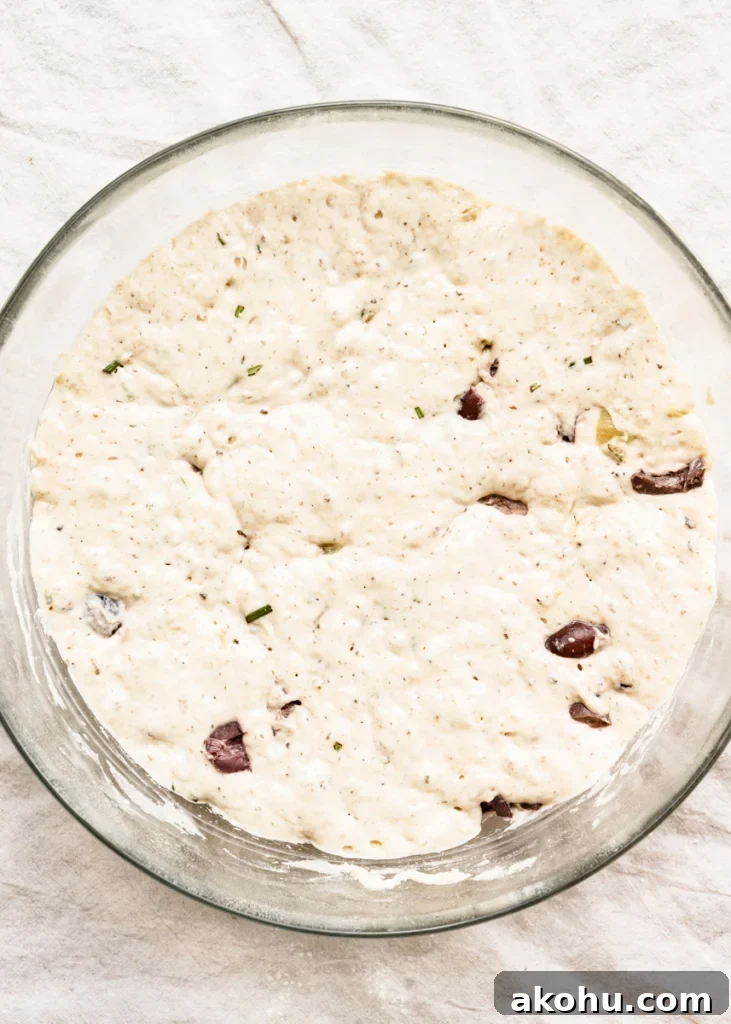
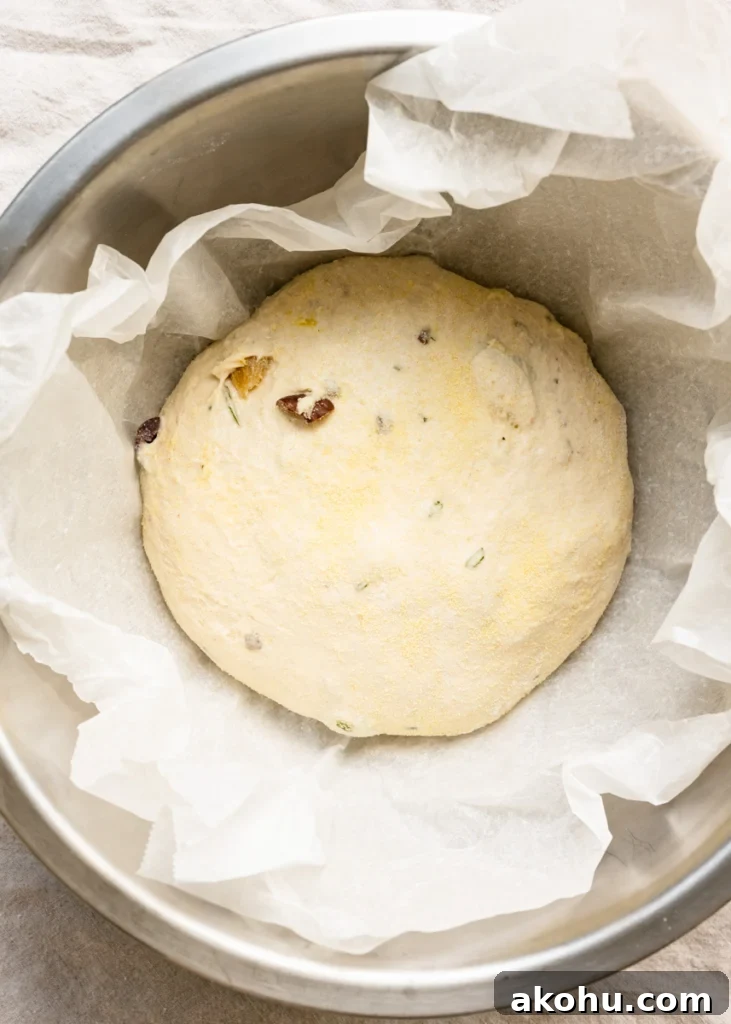
The next day, turn the dough out onto a well-floured surface using a dough scraper. Gently shape it into a round loaf by folding the dough back onto itself 2–3 times. Place the shaped dough on a piece of parchment and set it into a bowl to rest under a towel for 2 hours until doubled.
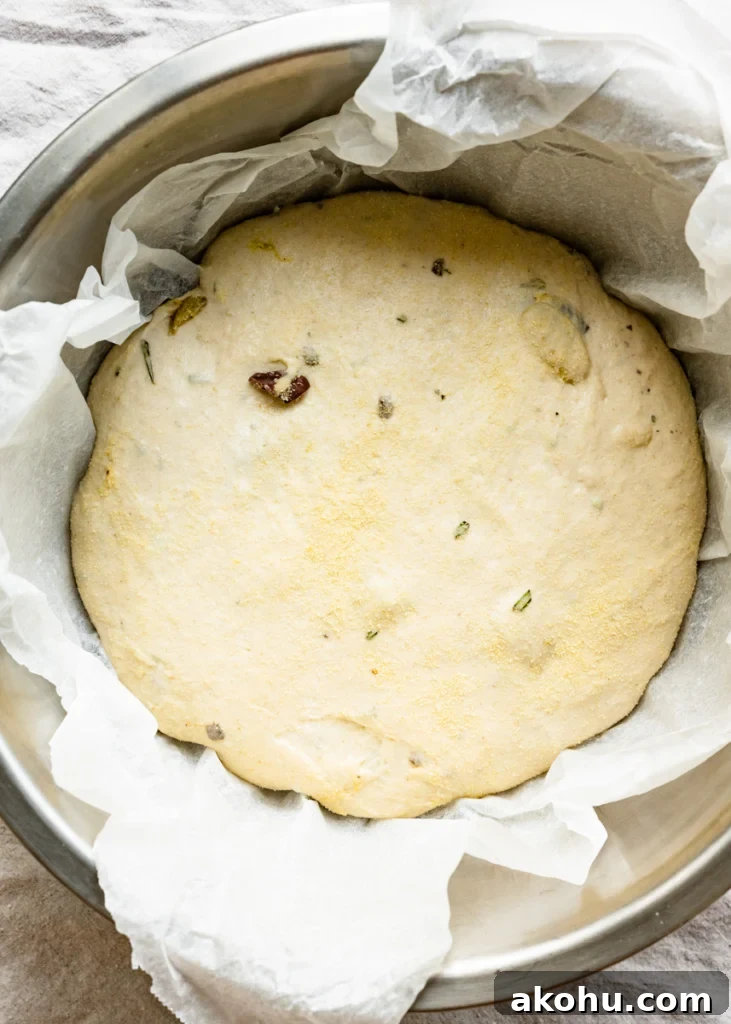
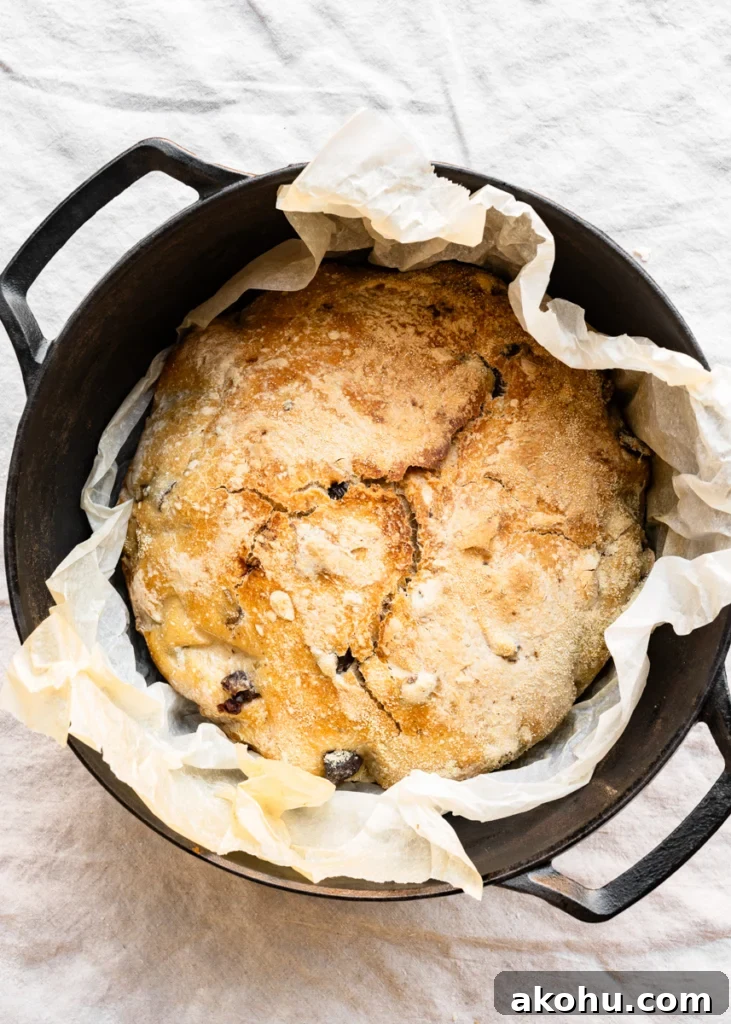
About an hour into the second rest, preheat your oven to 450℉ / 230℃ (210℃ fan) and place an empty 6–8 quart cast-iron Dutch oven inside on a low-to-middle rack to heat for 45–60 minutes. When the dough is ready, score the top with a sharp knife or lame. Using oven mitts, carefully lower the parchment with dough into the hot Dutch oven, cover, and bake.
Bake covered for about 35 minutes, then remove the lid and continue baking 15–20 minutes until the crust is deep golden brown. Remove the loaf from the Dutch oven, lift it by the parchment, and cool on a wire rack for 10–15 minutes before slicing.
How to Roast a Head of Garlic
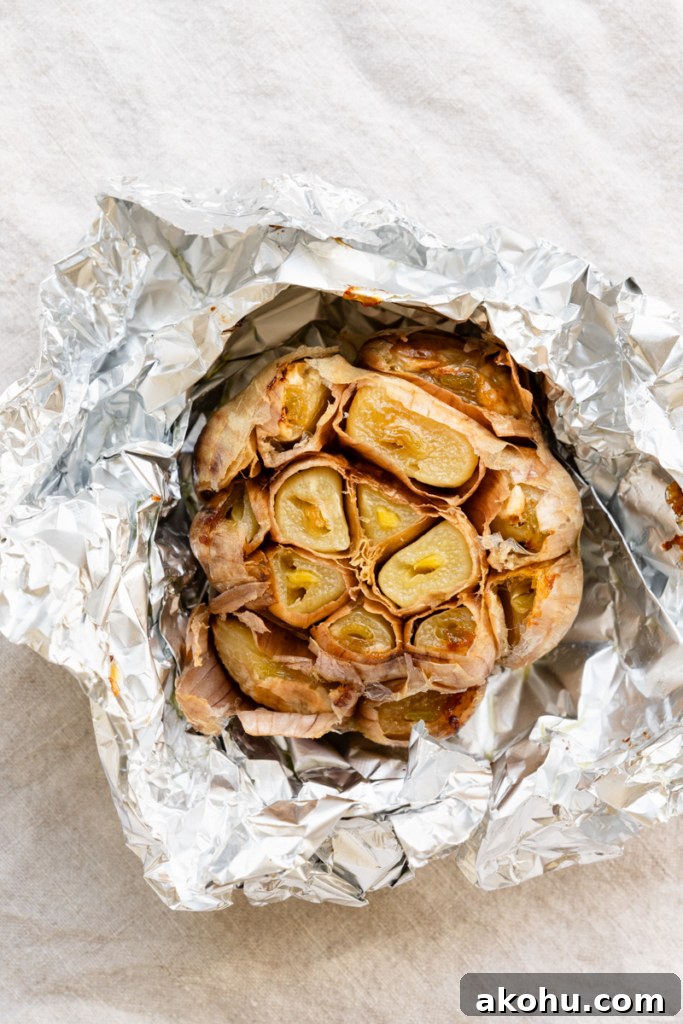
Roasted garlic adds sweetness and depth. Remove the outer papery skin of a whole head of garlic, keeping the cloves intact. Trim about 1/4 inch off the top to expose the cloves, place the head cut-side up on foil, drizzle generously with olive oil, and wrap into a small parcel.
Bake the wrapped garlic at 400℉ / 200℃ (180℃ fan) for about 30 minutes, until the cloves are soft and golden. Let cool, then squeeze or mash the roasted cloves from their skins and fold into the dough.
Jenn’s Tips
- Adjust the Flavor: Swap or add fresh herbs, try a teaspoon of za’atar, or a touch of orange zest (start with 1 teaspoon) to brighten the flavors.
- Working with Sticky Dough: High-hydration dough will be wet and tacky — resist adding too much extra flour. Flour your hands or use a bench scraper to shape and fold.
- Make Ahead: After mixing, the dough can be refrigerated for up to three days before baking for flexible timing and deeper flavor.
Leftovers & Storage
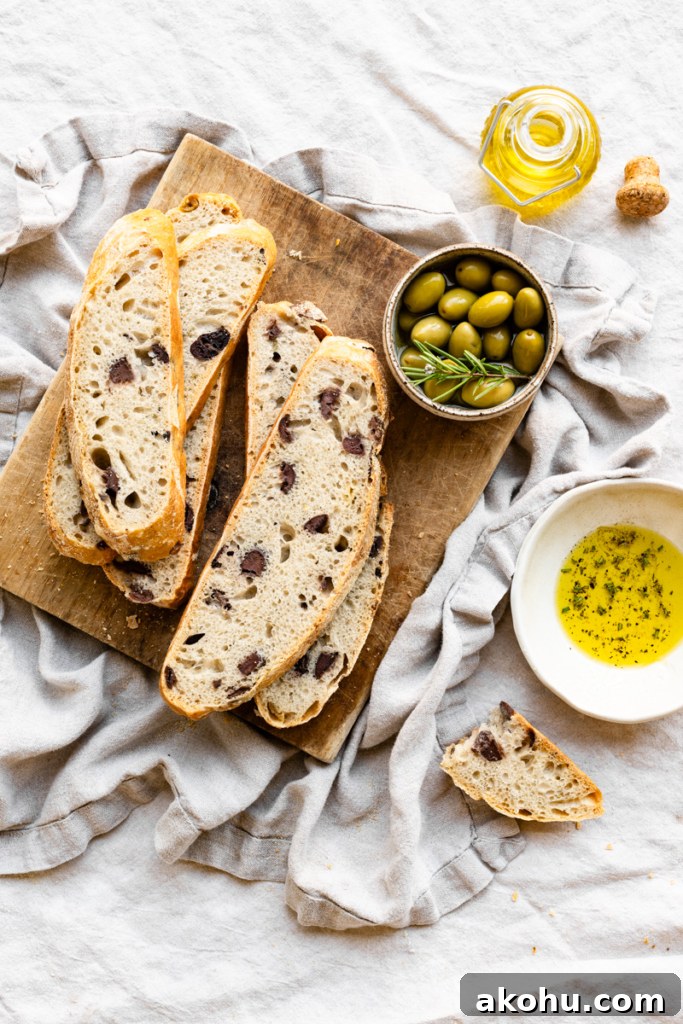
- Room temperature: Store the loaf in a paper bag or wrapped in parchment for 3–5 days.
- Freeze: Wrap tightly in plastic or foil; freeze up to 3 months. Thaw at room temperature before slicing.
★★★★★ If you make this recipe, please leave a star rating and review — thank you!
No Knead Herb and Olive Bread
Equipment
- 6–8 quart cast iron Dutch oven
Ingredients
- 1 large head of garlic (optional)
- 416 g (3 1/4 cups) bread flour, plus more for dusting
- 6 g (2 tsp) active dry yeast
- 1 tsp fine sea salt
- 300 g (1 1/4 cups) warm water (about 110℉ / 45℃)
- 150 g (1 cup) mixed kalamata and green olives, pitted and chopped
- 2 tbsp fresh rosemary, finely chopped
- Cornmeal or semolina flour for dusting
Instructions
Roasted Garlic Head
- Preheat oven to 400℉ / 200℃ (180℃ fan). Prepare a small baking dish or sheet.
- Trim the top 1/4 from the garlic head to expose the cloves. Place cut-side up on foil.
- Drizzle generously with olive oil, wrap tightly, and bake for about 30 minutes until soft. Let cool, unwrap, and squeeze out the roasted cloves.
Make the Dough and 1st Rest
- Whisk flour, salt, and yeast in a large bowl. Sprinkle the chopped olives, mashed roasted garlic, and rosemary over the flour.
- Add warm water and stir until a wet, sticky dough forms and all flour is absorbed, about 1–2 minutes.
- Cover the bowl with plastic wrap and let rest in a draft-free area at room temperature for 12–14 hours (overnight).
Shape the Dough and 2nd Rest
- Turn the doubled dough out onto a generously floured surface. You’ll notice many air bubbles and a web-like structure.
- Flour your hands, fold the dough gently 2–3 times to shape into a round loaf.
- Place the loaf on parchment inside a large bowl, dust lightly with semolina or cornmeal, cover with a towel, and rest for 2 hours until doubled.
Heat Dutch Oven and Bake
- About an hour into the second rest, preheat oven to 450℉ / 230℃ (210℃ fan) and place the empty Dutch oven inside to heat for 45–60 minutes.
- When the dough has doubled, score the top with a sharp knife or lame.
- Carefully remove the hot Dutch oven, lower the dough on its parchment into the pot, and cover with the lid.
- Bake covered for ~35 minutes, then remove the lid and bake an additional 15–20 minutes until deep golden brown.
- Remove the loaf by lifting the parchment and cool on a wire rack for 10–15 minutes before slicing.
Notes
Storage: Wrap leftover bread in parchment and keep at room temperature for up to 3 days. For longer storage, wrap tightly and freeze up to 3 months; thaw before slicing.