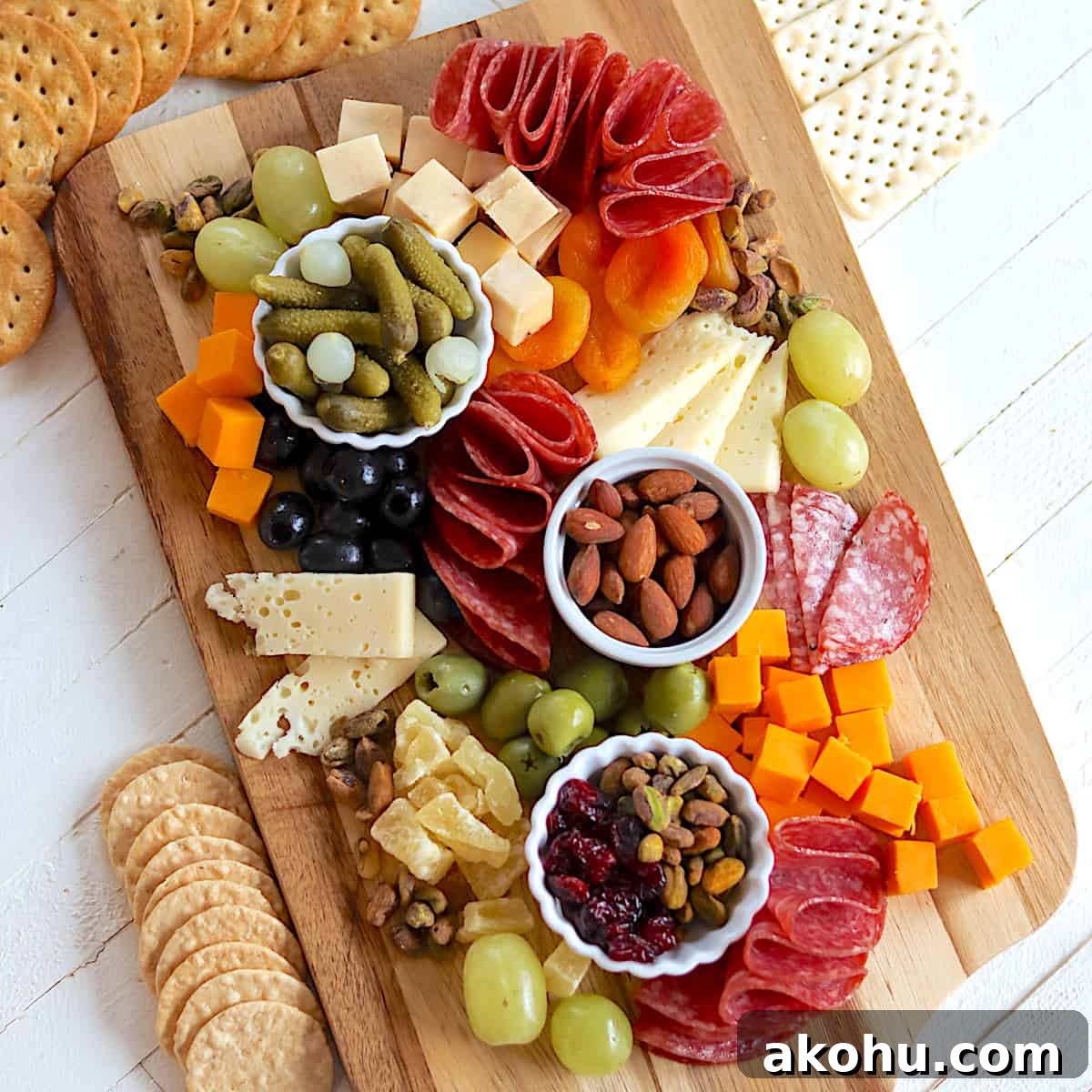
Learn how to create an easy charcuterie board for any gathering. These boards are simple to assemble and always spark conversation—who can resist colorful fresh and dried fruits, crunchy nuts, tangy pickles, savory cured meats, and a selection of cheeses? Here are straightforward tips and ideas to help you build a beautiful, balanced board every time.
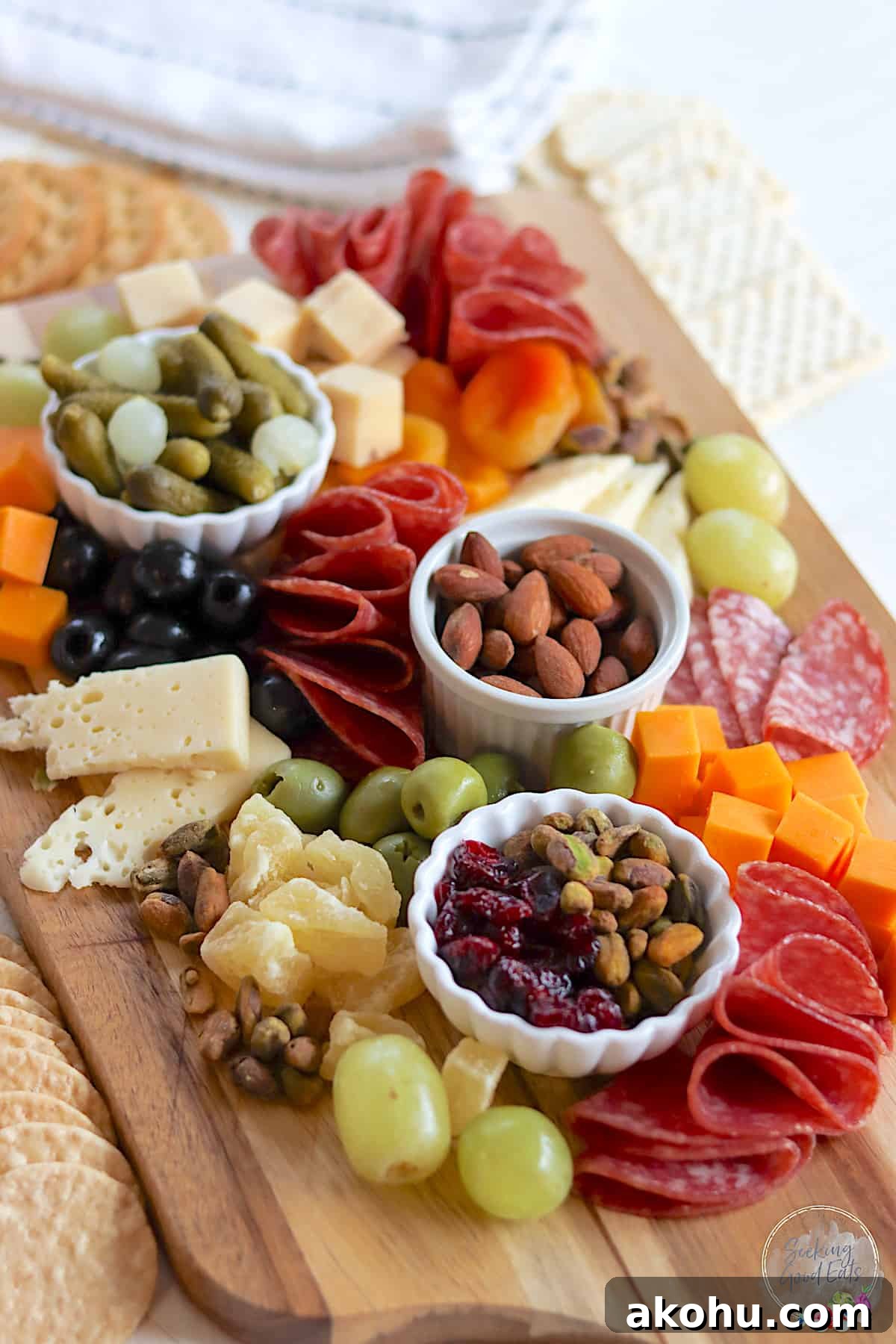
Create a large or small spread to suit your occasion. I use themed picks and seasonal colors for holidays, but the same basic approach works year-round. Think about color, texture, and complementary flavors as you choose items to fill the board.
You’ll Love These Easy Charcuterie Board Ideas
Start with the basics. A handful of well-chosen ingredients arranged thoughtfully is all you need. Stick to items available at your local grocery store and buy pre-packed or pre-sliced when possible to save time.
Quick and simple. Once you have your ingredients, assembly takes minutes. Keep small bowls and picks handy for wet items and easy serving.
Impress guests effortlessly. Charcuterie boards naturally draw people together to graze while you socialize, making them a great appetizer for parties and casual get-togethers.
What is a Charcuterie Board?
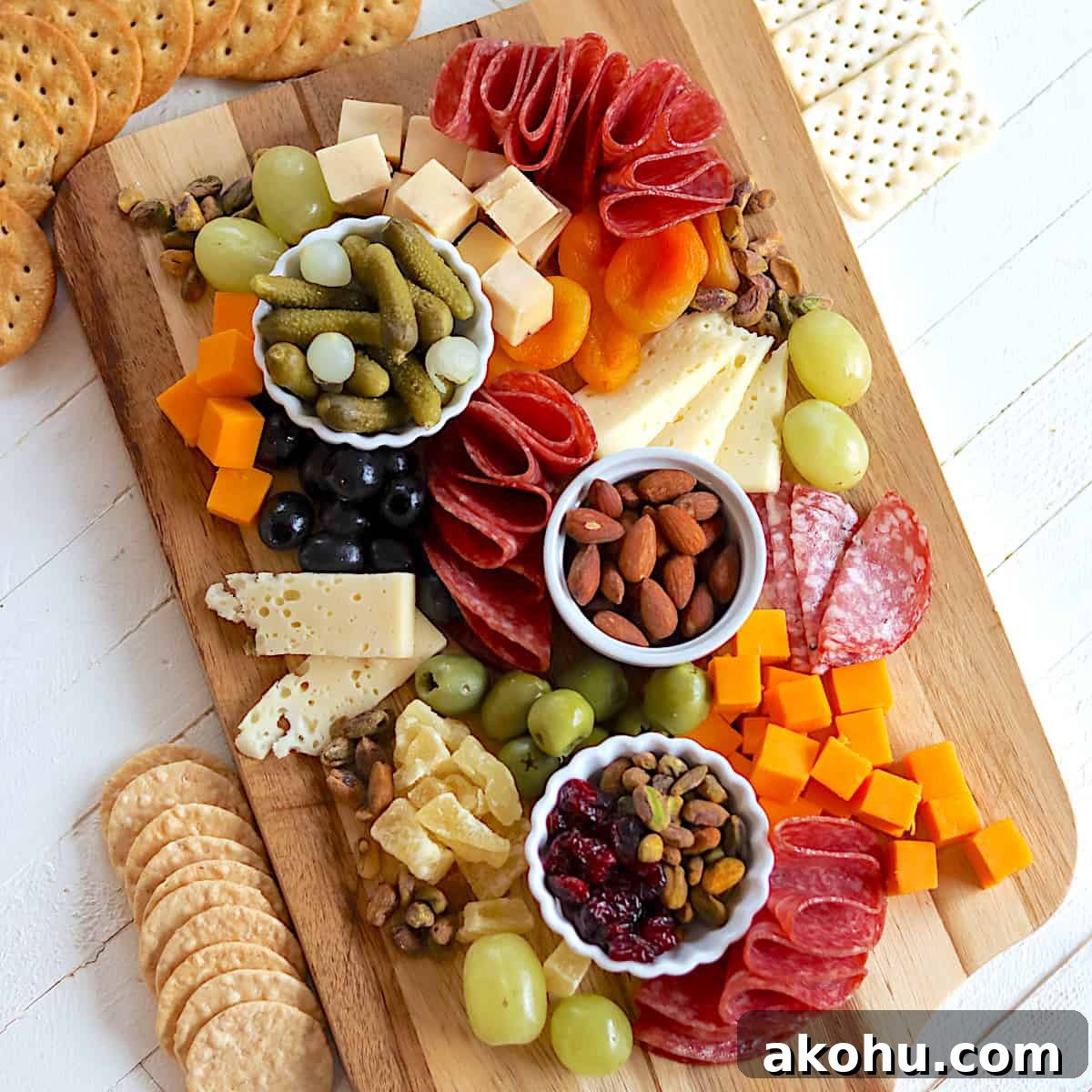
A charcuterie board is a curated arrangement of cured meats, cheeses, and accompaniments—nuts, fruits, crackers, olives, and sometimes sweets—arranged on a wooden or stone board. Use small bowls for wet or loose items to keep the presentation tidy and festive.
Basic Charcuterie Board Ingredients
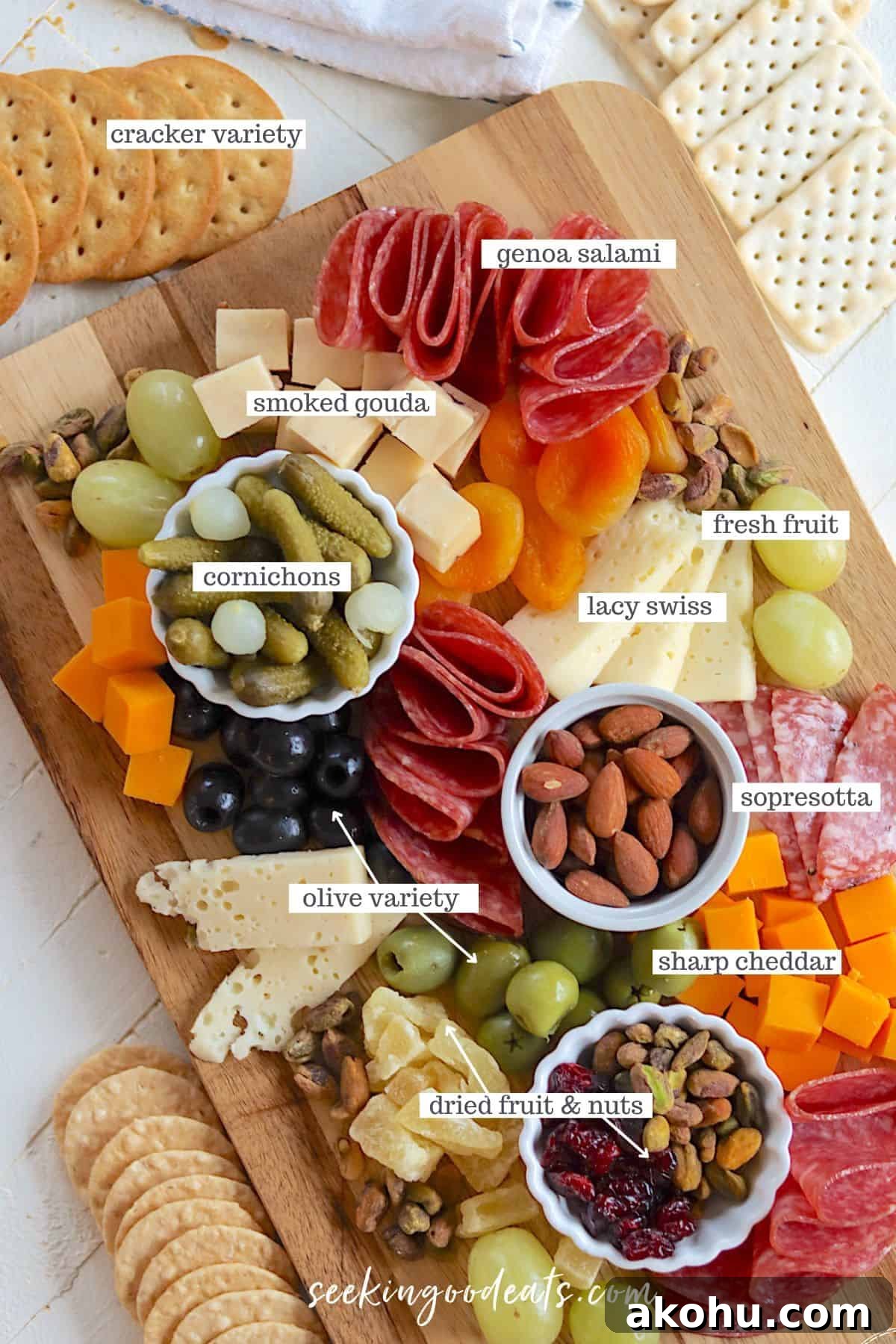
Use these ingredient categories to assemble a balanced board:
- Dried fruit: Dried pineapple, apricots, and cranberries work well and add bright color and chewiness.
- Nuts: Offer a mix—raw, roasted, salted, or candied. Almonds and pistachios are great choices.
- Fresh fruit: Choose easy-to-grab items that hold up, like seedless grapes or berries. Green grapes are a classic choice.
- Assorted cheese: Include a variety of textures and flavors—sharp cheddar, smoked gouda, lacy Swiss, soft spreads, or goat cheese. Cut cheeses into different shapes for visual interest.
- Cured meats: Salami, sopressata, prosciutto, or chorizo are popular. Fold, roll, or fan slices to add dimension—meat “roses” are a pretty touch.
- Pickled items: Cornichons, olives, pickled onions, or beets add acidity and contrast.
- Crackers and bread: Provide a variety of crackers or crostini so guests can pair textures and flavors.
Save this idea for later and use it as a template for your next party.
Substitutions and Variations
- Offer at least three cheeses for variety. Include soft (spreadable), semi-soft, and hard cheeses for different textures.
- Use seasonal produce where possible—berries in summer, pears and figs in autumn.
- Add sweet elements like chocolate-covered nuts, truffles, or small confections.
- Include a range of pickled vegetables—cornichons, gherkins, pepperoncini, or pickled beets—for acidity and crunch.
- Mix olive varieties, including stuffed olives, for different brine notes.
- Try different dried fruits—mango, dates, figs, or banana chips—for variety.
- Choose two to three cured meats such as prosciutto, salami, chorizo, or capicola to create flavor contrast.
- Use a range of nuts—walnuts, pecans, macadamia, or candied nuts—to add sweet and savory balance.
How To Make A Simple Charcuterie Board
Follow these steps for a balanced, attractive board:
- Pick a board or platter that fits the amount of food you plan to serve.
- Place 2–3 small bowls on the board for wet or loose items—pickles, olives, jams—so juices don’t spread.
- Arrange larger items like cheeses and meats in clusters around the bowls. Fold, roll, or fan meats and cut cheeses into different shapes.
- Add smaller items—fruits, nuts, and olives—in smaller clusters, allowing pieces to spill naturally for a rustic look.
- Fill gaps with sweets or other small items for balance.
- Optional: use cookie cutters to create seasonal shapes from cheeses or fruit for extra visual interest.
- Position crackers along the edge of the board or on a separate platter to keep them crisp.
Charcuterie Board Top Tips
- Shop for ingredients you can easily find locally to keep assembly stress-free.
- Cluster like items in two or three places for a pleasing, balanced look.
- Balance textures, flavors, and colors—large with small, soft with crunchy, salty with sweet.
- Use small dishes for wet items and allow nuts or dried fruit to spill slightly for a natural look.
- Cut cheeses into cubes, wedges, or shapes to make the board more inviting.
FAQs
Store items in their original packaging or in airtight containers. Refrigerate cheeses and cured meats, while nuts, dried fruit, and crackers can be kept in a pantry or airtight containers to preserve crispness.
Aim for variety: crackers, cheeses, cured meats, fruits, nuts, and pickled items. For a simple board, choose two to three options in each category to offer contrast without overwhelming guests.
A helpful guideline is to include three different meats, three cheeses, three starches (crackers or bread), and three accompaniments (nuts, olives, pickles) to ensure balance and variety.
If you tried this board, let me know!
I love hearing feedback—leave a rating and comment if you try this idea. Subscribe to newsletters or follow the creator on social accounts to get more recipe inspiration and seasonal board ideas.
📖 The recipe.
Easy Food Board (Basic Charcuterie)
Equipment
- wooden board or platter (our example board is about 18″ x 14″)
- small picks
- cheese spreader for soft cheeses
- small spoons for nuts or chutney
- small bowls for wet items
- small serving plates
Ingredients
- 2–3 cheese varieties (4–6 oz packages each). Use different tastes and textures—sharp cheddar, smoked gouda, lacy Swiss, or a soft spread.
- 2–3 salami or cured meat varieties (6–12 oz packages). Genoa salami and sopressata are good options.
- 1–2 nut varieties (raw, roasted, or candied). Almonds and pistachios work well.
- 1–2 fruit varieties (fresh and/or dried). Seedless grapes, dried pineapple, cranberries, and apricots are great choices.
- 2–3 cracker varieties for texture and crunch.
- 2 olive varieties (pitted and well-drained).
- Optional: raw vegetables like cherry tomatoes, cauliflower, or radishes for color.
Instructions
- Choose a board that fits the quantity of food you plan to serve.
- Place 2–3 small bowls on the board for wet or loose items to keep the rest of the board dry.
- Arrange cheeses and meats in two to three clusters around the bowls. Fold, roll, or fan meats for visual appeal.
- Add smaller items—fruits, nuts, olives—into gaps and create small piles that can naturally spill over for a relaxed look.
- Add finishing touches like chocolates, preserves, or wrapped candies.
- Optional: use small cookie cutters to create shapes from cheese or fruit for extra charm.
- Place crackers around the board’s edge or on a separate platter so they stay crisp.
Kori’s Tips
- Buy ingredients you can easily find locally to simplify planning.
- Arrange items in clusters and odd numbers (2s and 3s) to create balance and visual interest.
- Balance textures and flavors—soft and hard, salty and sweet, large and small.
- Let small items spill slightly from bowls to create a natural, rustic presentation.
- If serving spreadable cheese, remove it from the refrigerator about 30 minutes before serving so it softens.
Nutrition
Calories: 612 kcal
Share your creation on social media and tag the creator or use the suggested hashtag. Subscribe to recipe updates to receive more ideas and seasonal variations.
© 2025 Seeking Good Eats™
More Recipes You’ll Love
- Christmas Charcuterie Board
- Ham and Cheese Roll Ups
- Guacamole Avocado Dip
- Buffalo Chicken Wing Dip
- Pepperoni Pizza Dip
- BBQ Wings (Baked, Grilled, Air Fryer)
- Dry Rub Chicken Wings
- 50+ Memorial Day Party Recipes
- Low Carb Cold Shrimp Dip with Cream Cheese
- Pomegranate Maple Bacon Cream Cheese Dip
- Dill Pickle Salsa
- Buffalo Chicken Wings
- Lemon Pepper Wings (Air Fryer)
- Homemade Dill Pickle Hummus
- 25+ 4th of July Food Ideas