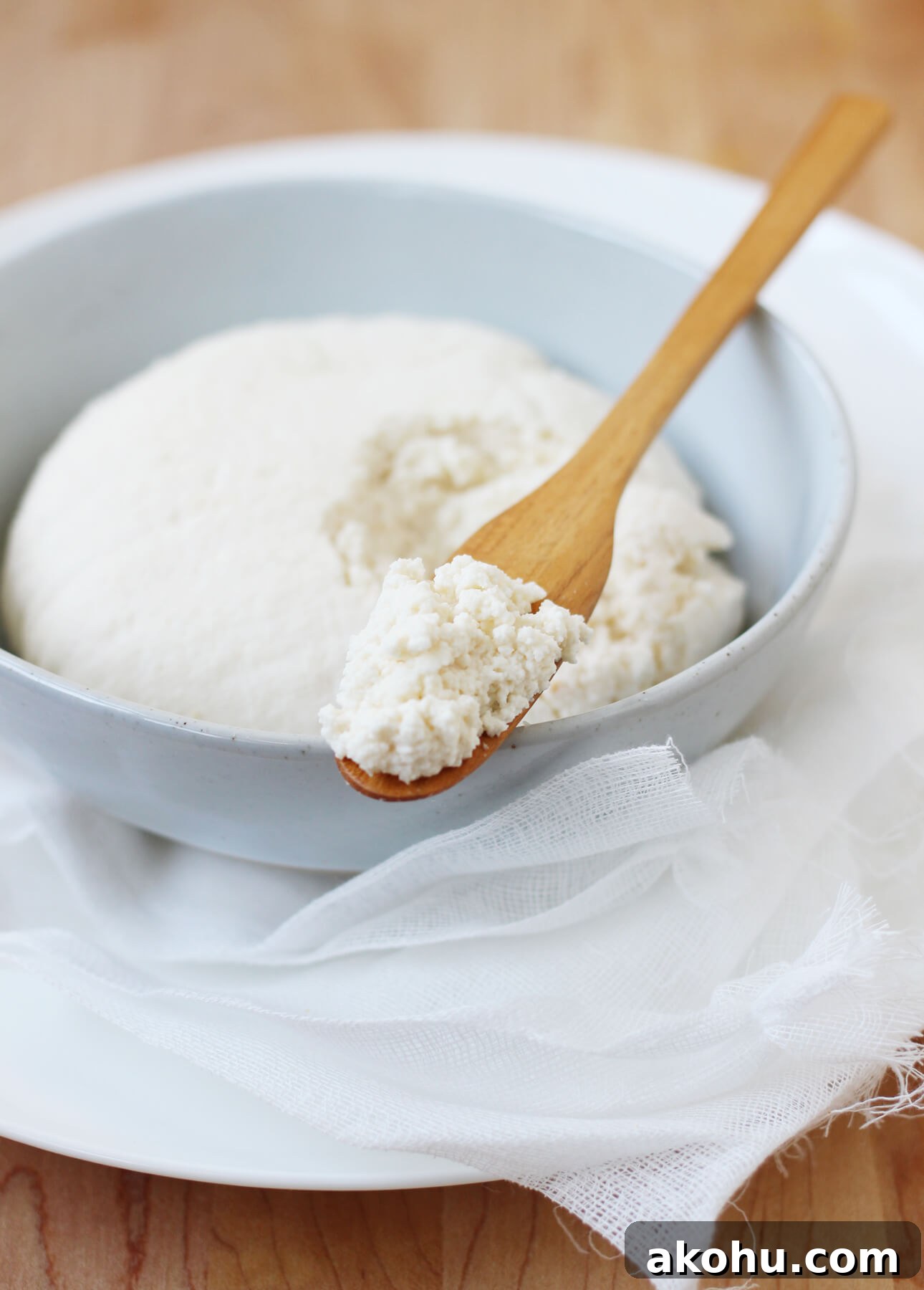
Learn how to make homemade ricotta cheese: it’s quick and easy, needs no complicated techniques, and yields a fresher, tastier result than most store-bought ricotta.
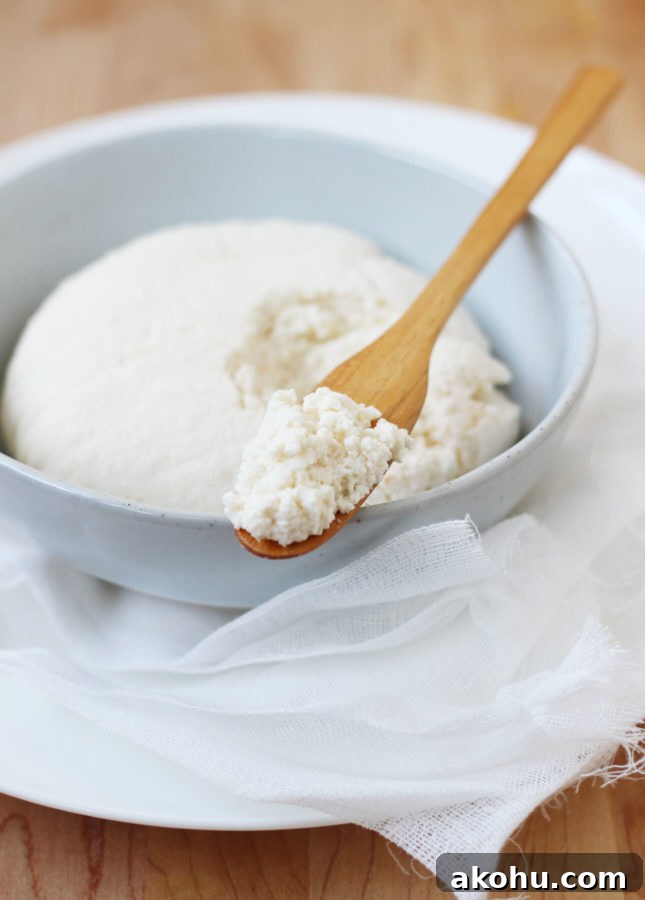
Cheese making feels like an art to me. Growing up in Québec exposed me to an incredible variety of artisan cheeses, and my family always enjoyed aged and high-quality cheeses on special occasions and everyday meals alike. That upbringing shaped my appreciation for good cheese and inspired me to continue the tradition.
Surprisingly, I discovered many classic Italian cheeses later in life. At home we kept a few staples—grated parmesan and block mozzarella—but I hadn’t tasted the fresh, unprocessed Italian cheeses until I visited Italy. I still remember my first bite of mozzarella di bufala on a Tuscan agriturismo terrace and the warm, nutty aroma of Parmigiano-Reggiano in the aging caves of Parma. Those experiences changed how I think about cheese, and I’ve sought out authentic Italian varieties ever since.
Many Italian cheeses require special techniques, specific ingredients, or even a particular region to achieve their traditional character. But ricotta is one Italian cheese you can easily make at home. Before I made it myself I used ricotta mainly in lasagna and tarts, and I never craved it. Being lactose-intolerant, I tend to indulge only in cheeses I truly love. Making ricotta from scratch changed my mind—and allowed me to make lactose-free batches using lactose-free milk and cream when needed.
Commercial ricotta often tastes bland and dry. Ricotta forms when milk (or whey) is heated and acid is introduced, causing the milk proteins to coagulate into soft, white curds. Those curds are gently scooped and drained until the desired texture is reached. Industrial producers frequently speed up this process and add stabilizers, which can compromise texture and flavor. When you make ricotta at home, you control the milk type and how long the curds drain—resulting in a fresh, milky, and much richer-tasting cheese.
Homemade ricotta is versatile, quick, and simple: it uses basic ingredients—milk, cultured buttermilk, cream, and salt—and takes about 30 minutes from start to finish if your ingredients are ready. You can leave more whey in for a soft, spreadable ricotta, or drain it longer for baking and firmer textures.
I used to make ricotta with whole milk, lemon juice, and salt, which worked but produced a slightly drier result better suited for recipes. A recent discovery in Aimée Wimbush-Bourque’s cookbook The Simple Bites Kitchen introduced a superior approach: combine reduced-fat milk (2%), half-and-half (about 10% fat), and cultured buttermilk. The cultured buttermilk acts as the acid to form curds while contributing a silky richness without adding a lot of fat. This method delivers a wonderfully creamy ricotta with moderate fat content—rich enough to be indulgent but light enough to use often.
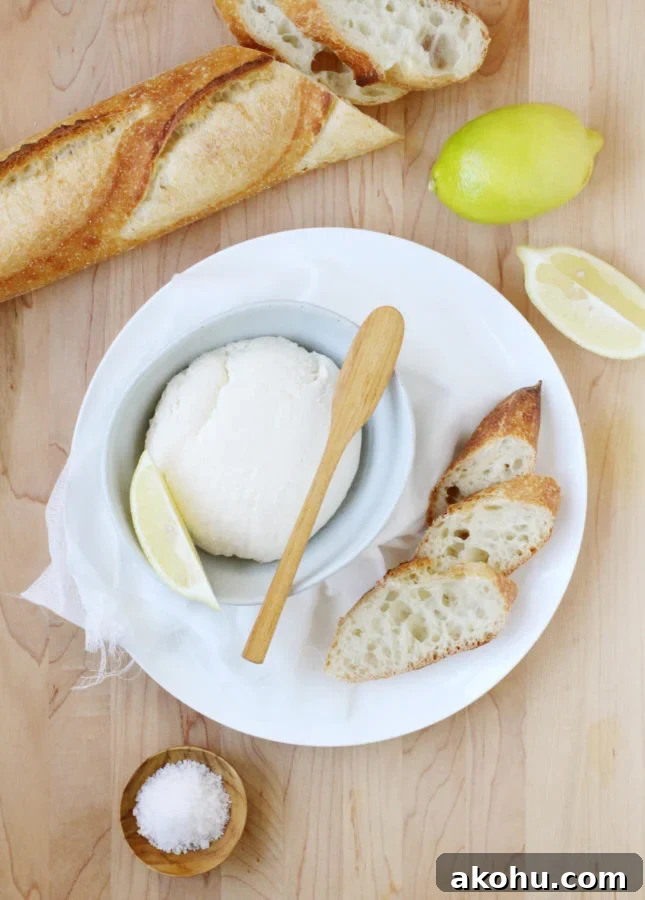
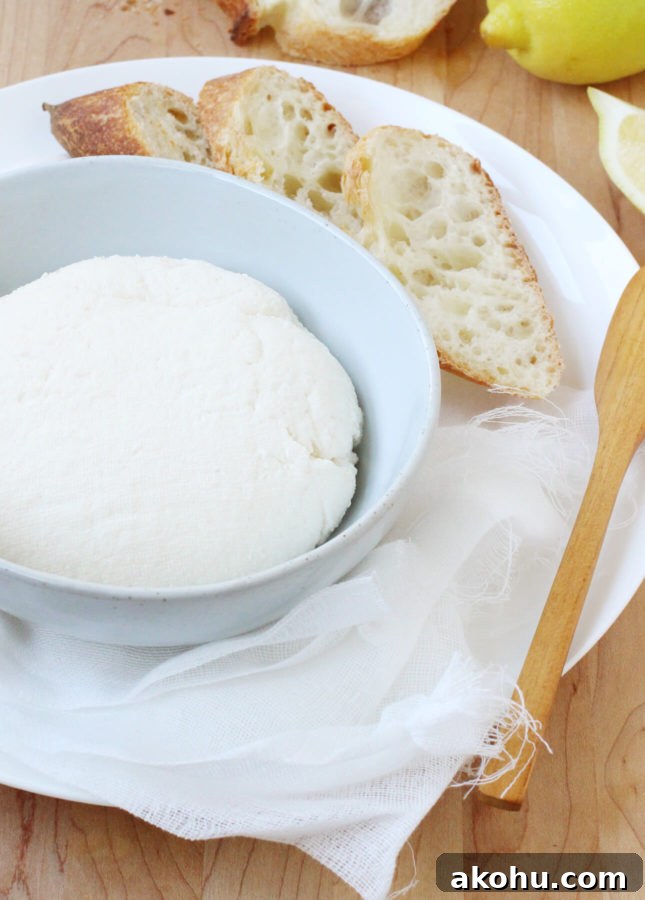
After testing several batches, I found this ricotta far more flavorful and adaptable than any store-bought version. Use it in lasagna, tarts, pancakes, or simply spread on toasted baguette slices. If you’ve never made cheese at home, ricotta is the ideal place to start.
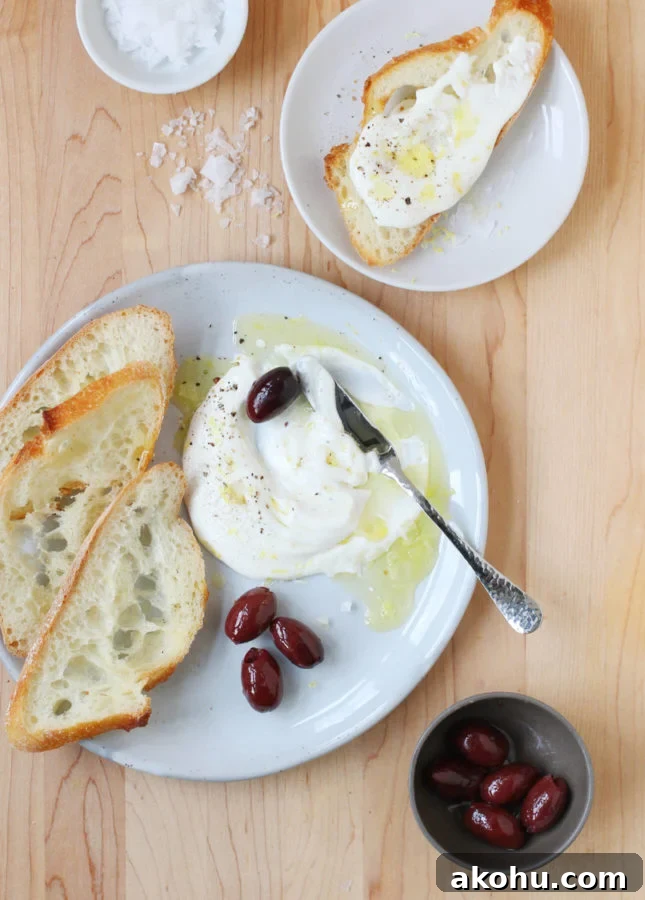
A quick serving idea: Lemony Whipped Ricotta. The recipe follows the how-to instructions below.
Helpful Tips for Making Homemade Ricotta Cheese
- Using buttermilk: Cultured buttermilk is key to this method. If you don’t keep it in the fridge, freeze store-bought buttermilk in 1/2- or 1-cup portions and thaw when needed. Instant buttermilk made by adding lemon juice to milk will not reliably produce curds; use cultured buttermilk or make a 24-hour cultured buttermilk (instructions below).
- Fat content: This recipe uses 1 cup of half-and-half to enrich texture. To make a leaner ricotta, substitute an extra cup of whole milk (5 cups total milk, no cream). The result will still surpass most light commercial ricottas.
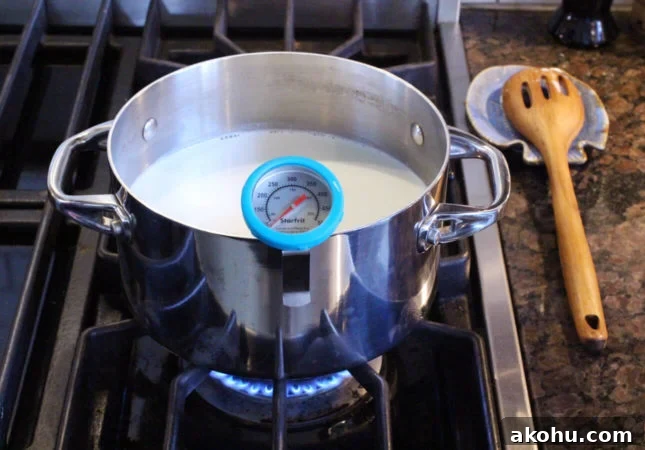
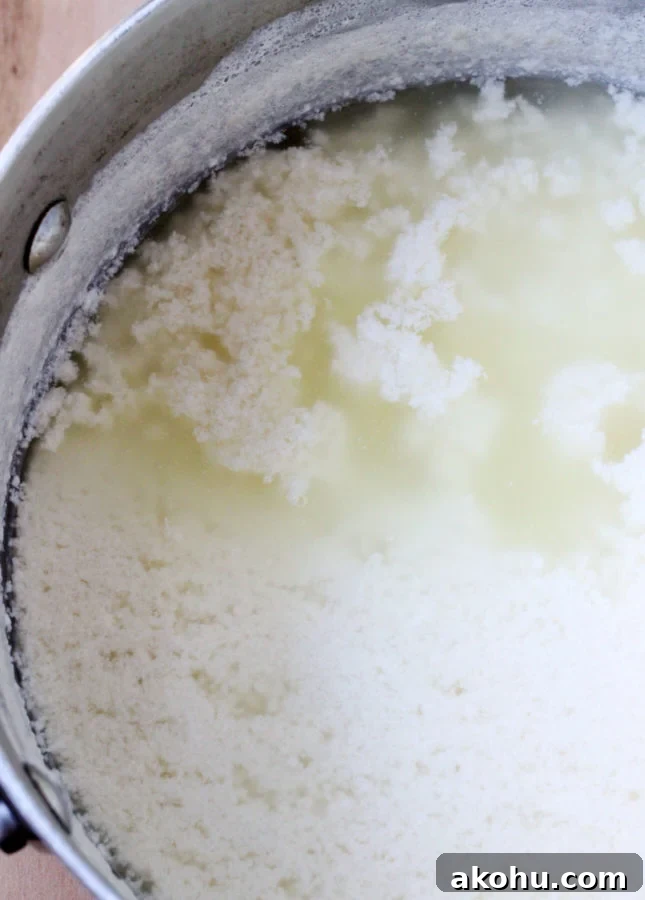
- Heating and monitoring: A thermometer is helpful but not required. Heat the milk mixture over medium-low and watch closely: when small bubbles form and you see curds separating from pale whey (near a simmer), remove from heat and let sit 5 minutes.
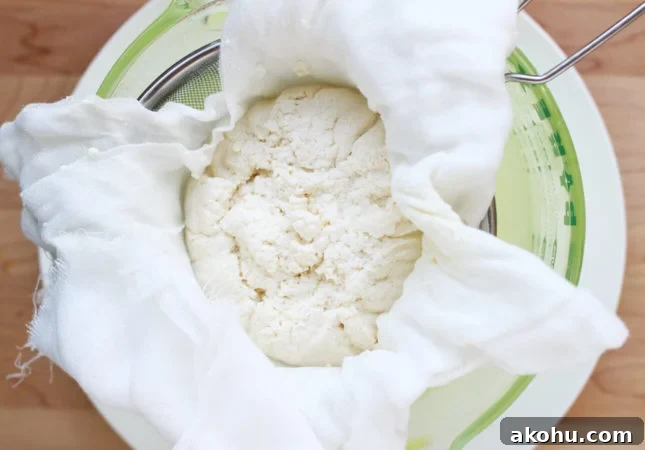
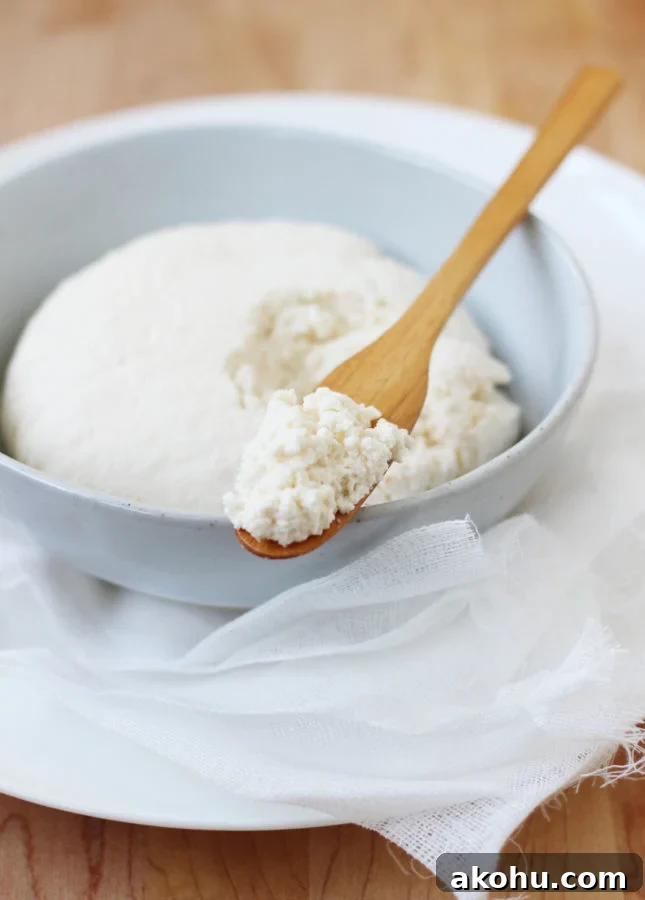
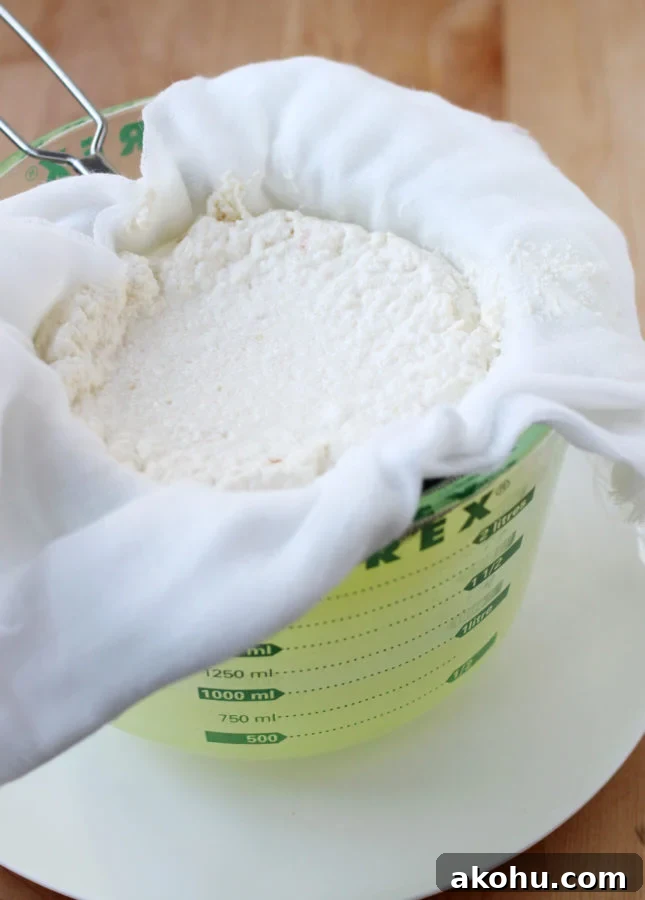
- Draining the curds: Line a fine-mesh sieve or colander with two layers of cheesecloth (or paper towels) set over a bowl. Gently transfer curds with a slotted spoon and drain 3–5 minutes for a milky, spreadable ricotta, 20 minutes for a thicker but still moist cheese, or up to 2 hours for a drier, crumbly texture.
- Storing ricotta and whey: Homemade ricotta keeps in an airtight container in the refrigerator for up to four days and can be frozen up to six months. Save the whey and refrigerate it up to two weeks for use in smoothies, soups, or recipes that call for milk.
Homemade Ricotta Cheese Recipe
Ingredients
- 4 cups whole milk (3.25% m.f.) or partly skimmed milk (2% m.f.)
- 1 cup cultured buttermilk or 24-hour buttermilk (see notes)
- 1 cup half-and-half cream (about 10% m.f.)
- ¾ tsp kosher or fine sea salt
Instructions
- Place a fine-mesh sieve or colander over a large bowl and line it with two layers of cheesecloth or paper towels.
-
In a medium pot, combine the milk, cultured buttermilk, half-and-half, and salt. If you have a thermometer, clip it to the pot without touching the bottom. Heat over medium-low, stirring gently a couple of times as the mixture slowly comes to a simmer (10–15 minutes).

-
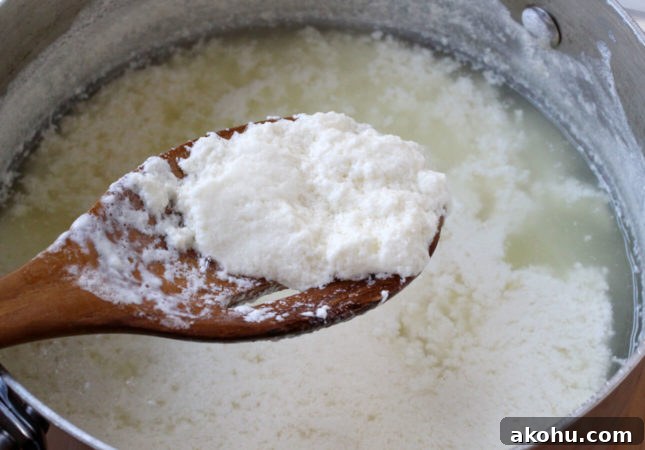
As the mixture heats it will become grainy, then separate into curds and whey (around 195–205°F / 90–96°C). When you see small curds surrounded by pale beige whey, remove the pot from the heat and let it rest for 5 minutes.
-
Use a slotted spoon or large spoon to gently transfer the curds into the prepared sieve.
-
Drain the curds for 3–5 minutes for a milky, spreadable ricotta, about 20 minutes for thicker but still moist ricotta, or up to 2 hours for a drier, crumbly texture. Paper towels will slow draining compared with cheesecloth.
- Transfer the drained ricotta to an airtight container or glass jar. Rinse the cheesecloth if you plan to reuse it. Pour the remaining whey through an unlined sieve to catch any solids and add those back to the ricotta; store the whey separately.
-
Use the ricotta warm or refrigerate until needed. Fresh, warm ricotta is especially delightful.
Storage
- Keep homemade ricotta in an airtight container in the refrigerator up to 4 days. Freeze for up to 6 months. Save the whey for smoothies, soups, or baking; refrigerate whey up to two weeks.
Notes
Warm a 1-quart (1 L) jar by filling it with hot water, then discard the water. Combine 2 cups (500 ml) whole milk and 2 tablespoons (30 ml) cultured buttermilk or sour cream in the jar and stir. Cover the jar and leave it in a warm spot for 12–24 hours; it will thicken slightly and develop a tangy flavor. Refrigerate and use as needed.
Quick appetizer — Lemony Whipped Ricotta:
Place 1/2 cup (125 ml) ricotta in a small food processor with 1 tablespoon (15 ml) heavy cream and 1 tablespoon (15 ml) extra-virgin olive oil. Process until smooth (or whisk by hand until combined). Chill for 1 hour. To serve, spread on a plate, drizzle with olive oil, sprinkle flaky sea salt and black pepper, and finish with finely grated lemon zest. Serve with toasted baguette slices.
Recipe adapted from The Simple Bites Kitchen by Aimée Wimbush-Bourque. Copyright © 2017. Reproduced by arrangement with the publisher.
Disclosure: This site participates in affiliate programs and may earn fees from qualifying purchases at no extra cost to you.