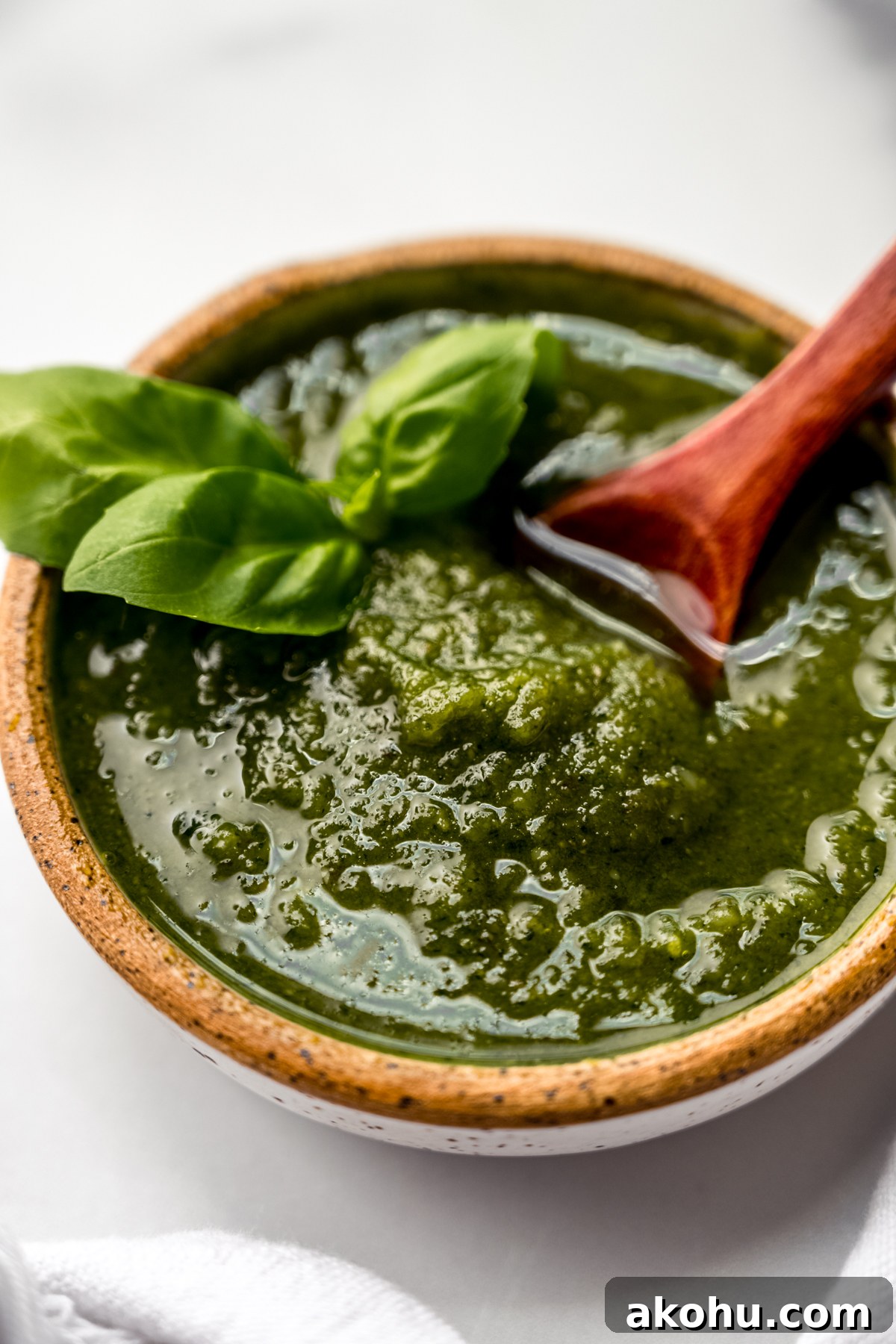
This bright, flavorful homemade pesto uses just five simple ingredients and makes a perfect topping for pasta, sandwiches, bread, or roasted vegetables.
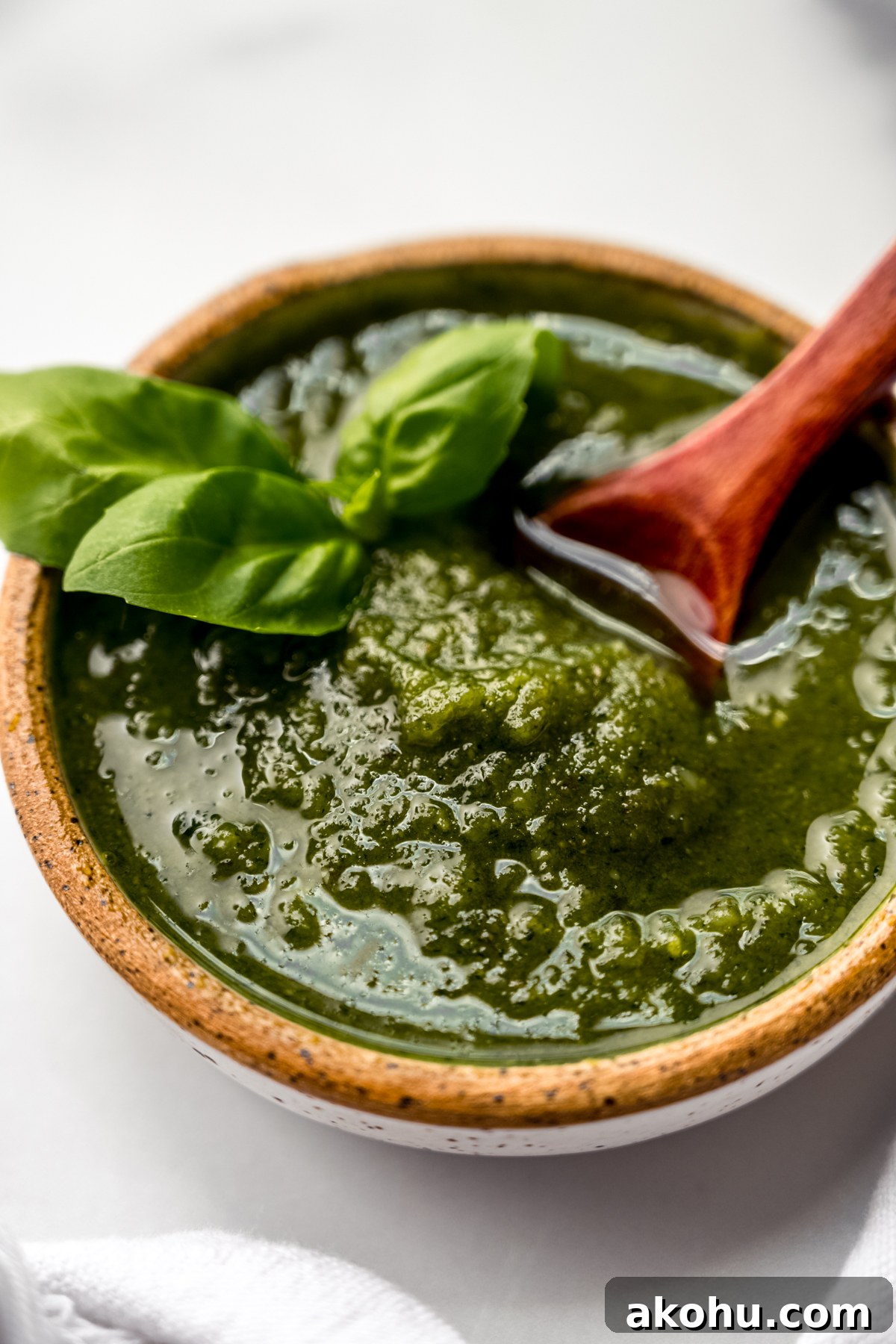
You will love this simple homemade pesto
Bright, herby, and endlessly useful — this pesto is easy to customize and even easier to make.
I’m not much of a gardener, but I do love the rush of summer basil whenever someone shares their excess harvest. Pesto is one of the easiest ways to use fresh herbs — it’s quick, versatile, and better homemade than store-bought.
What I especially like about making pesto at home is how flexible it is: leave out the cheese to make it dairy-free, swap nuts depending on what you have, or replace nuts entirely for allergies. The base recipe is the same and easy to adapt.
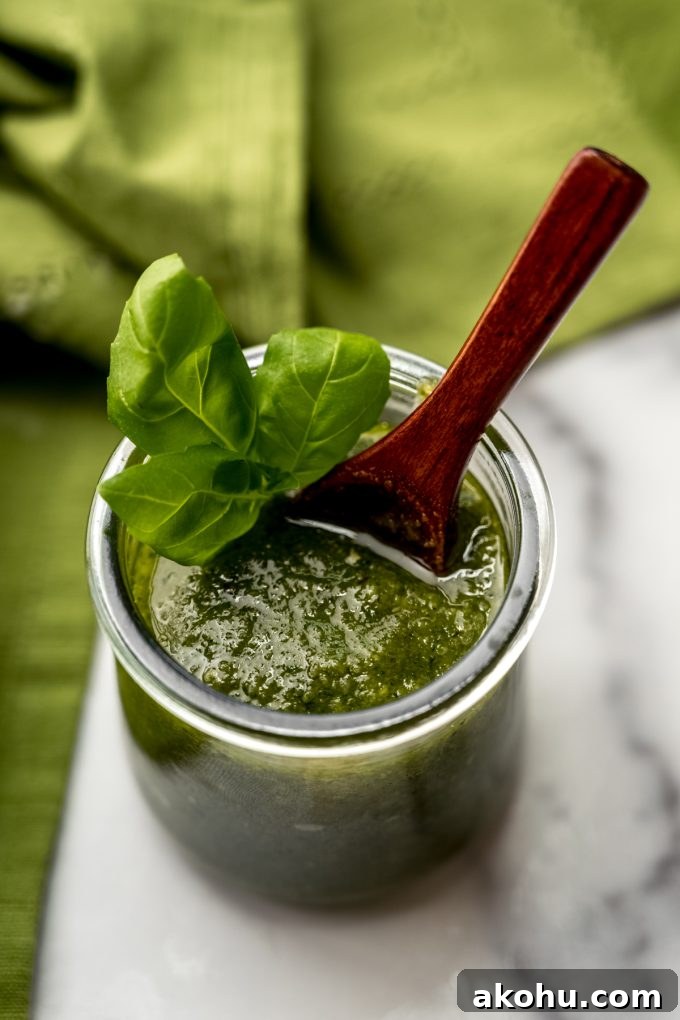
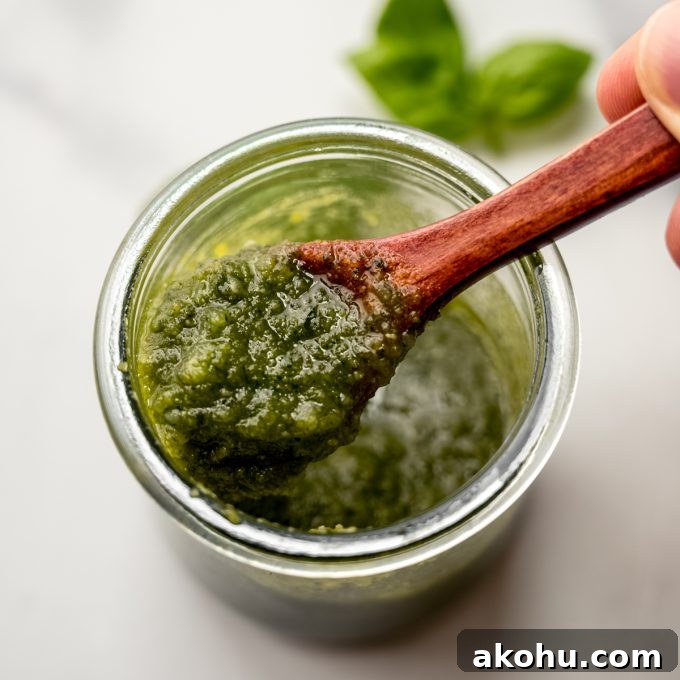
What is pesto?
Pesto is a classic Italian sauce made from fresh basil, garlic, nuts (traditionally pine nuts), olive oil, salt, and a hard cheese like Parmesan or Pecorino. It’s blended to a spreadable consistency and used as a sauce, dip, spread, or topping.
Those ingredients are a starting point — pesto can be adapted in many ways, which is why it’s such a useful staple. Below is a straightforward recipe and tips for variations and storage.
Homemade pesto ingredients
Five main ingredients make a classic, fresh pesto: basil, nuts, garlic, olive oil, and Parmesan (salt counts as a sixth if you like).
Basil provides the herbaceous flavor, while the nuts and olive oil give pesto its silky texture and body. Pine nuts are traditional, but walnuts work beautifully and are often more economical.
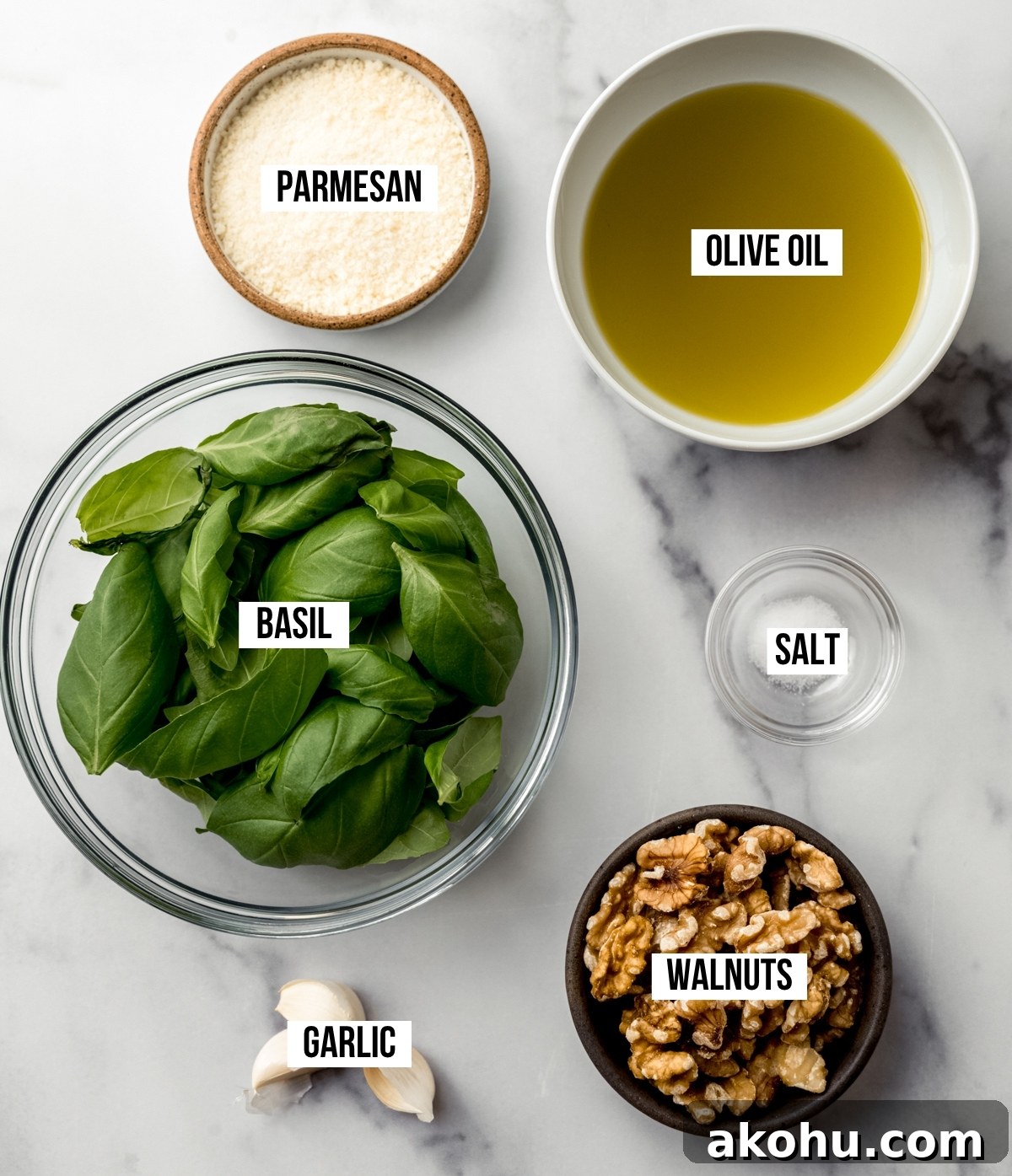
In summary: fresh basil leaves, pine nuts or walnuts, garlic, extra-virgin olive oil, a pinch of salt, and grated Parmesan (optional) are all you need. Grated Parmesan blends more smoothly, but shredded works too.
Pesto variations and allergy-friendly swaps
If someone has a nut allergy, try sunflower seeds as a substitute — they add the same oily texture and richness. Omitting the cheese makes the pesto dairy-free and vegan.
Olive oil and garlic round out the flavor profile: the oil gives creaminess and body while garlic adds a pleasant bite. Parmesan adds tang and depth, but the pesto still shines without it.
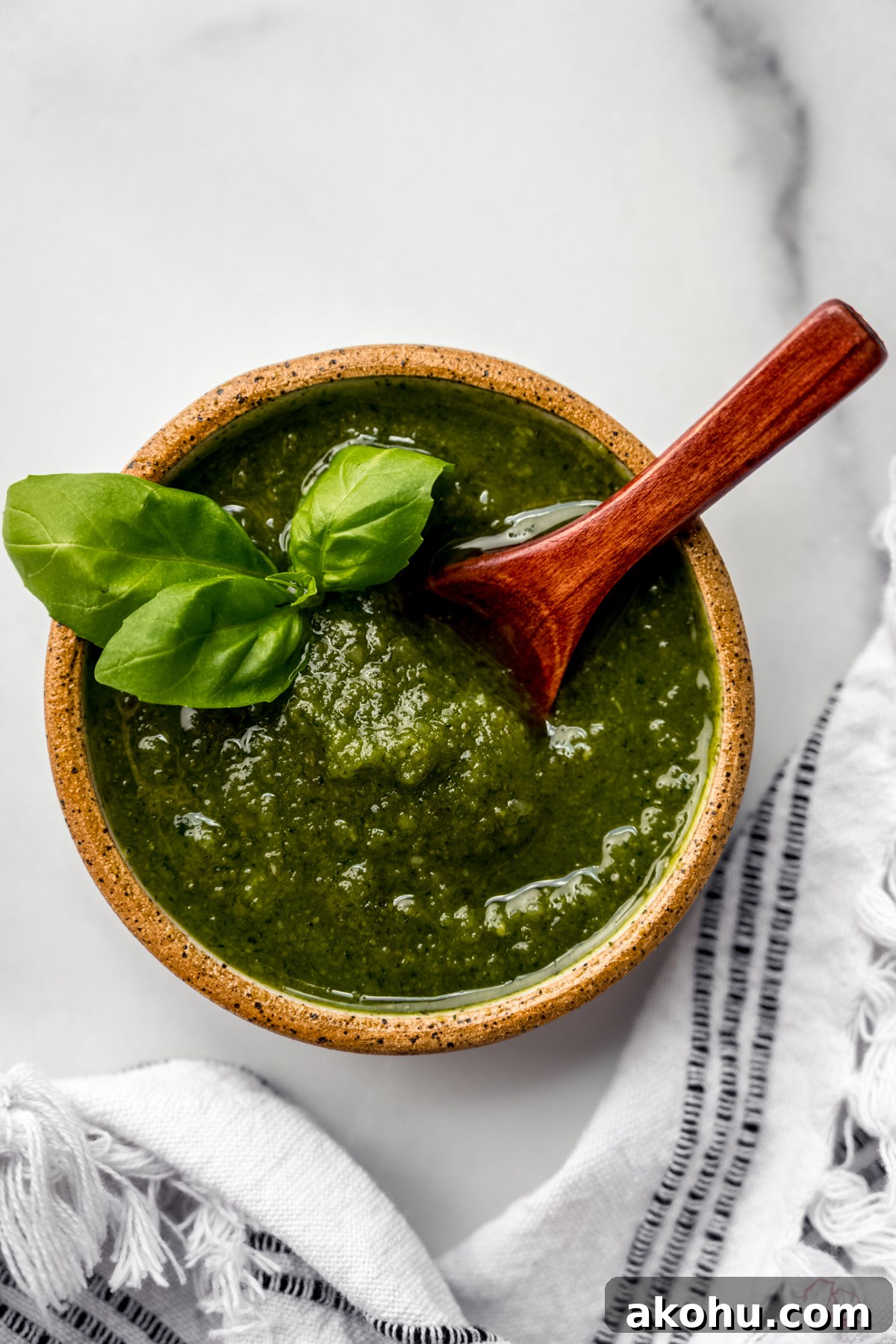
How to make basil pesto
A sturdy food processor works best to achieve a smooth, even pesto; a powerful blender can work if that’s what you have.
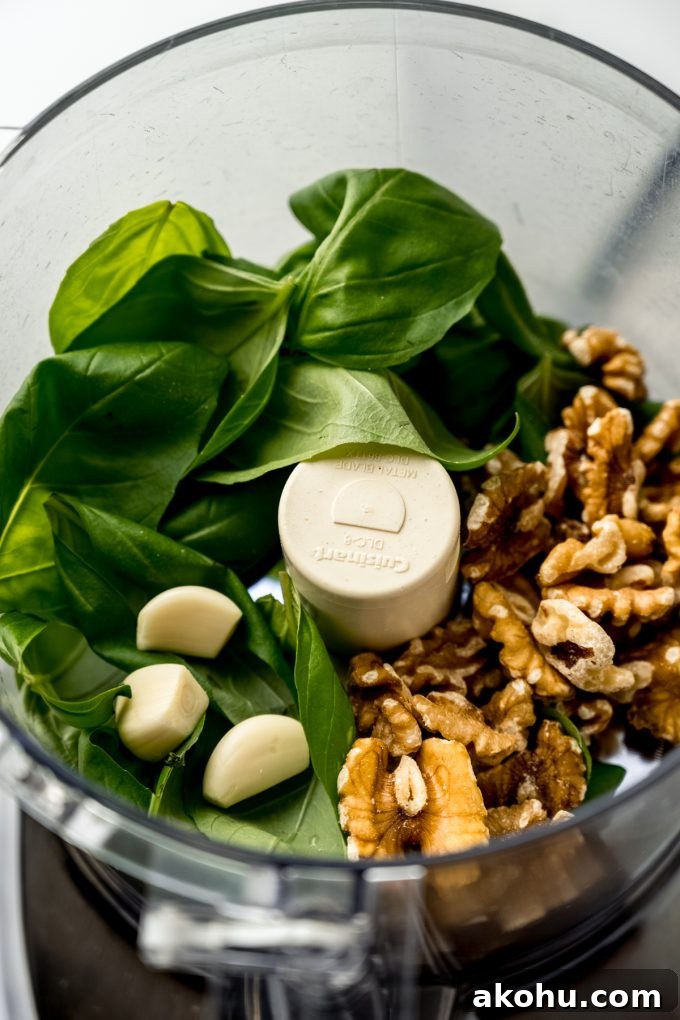
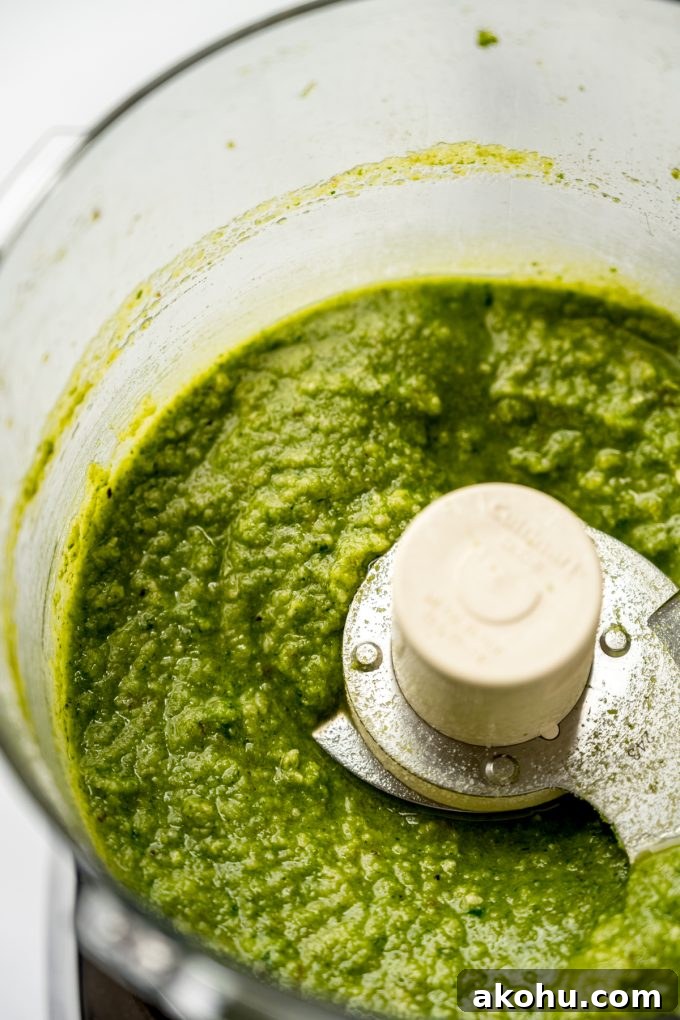
Step 1: In the bowl of a food processor combine the basil leaves, nuts (pine nuts or walnuts), and garlic. Pulse until combined but still slightly chunky. Stop and scrape down the sides.
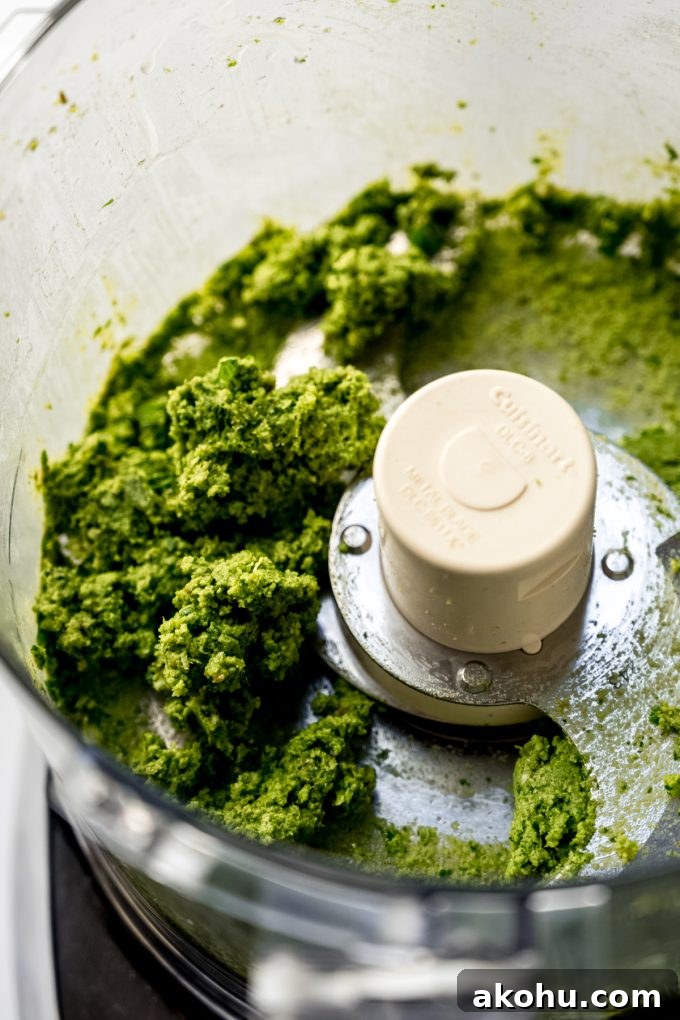
Step 2: With the lid on, slowly drizzle the olive oil into the processor while it runs until the mixture is smooth and emulsified.
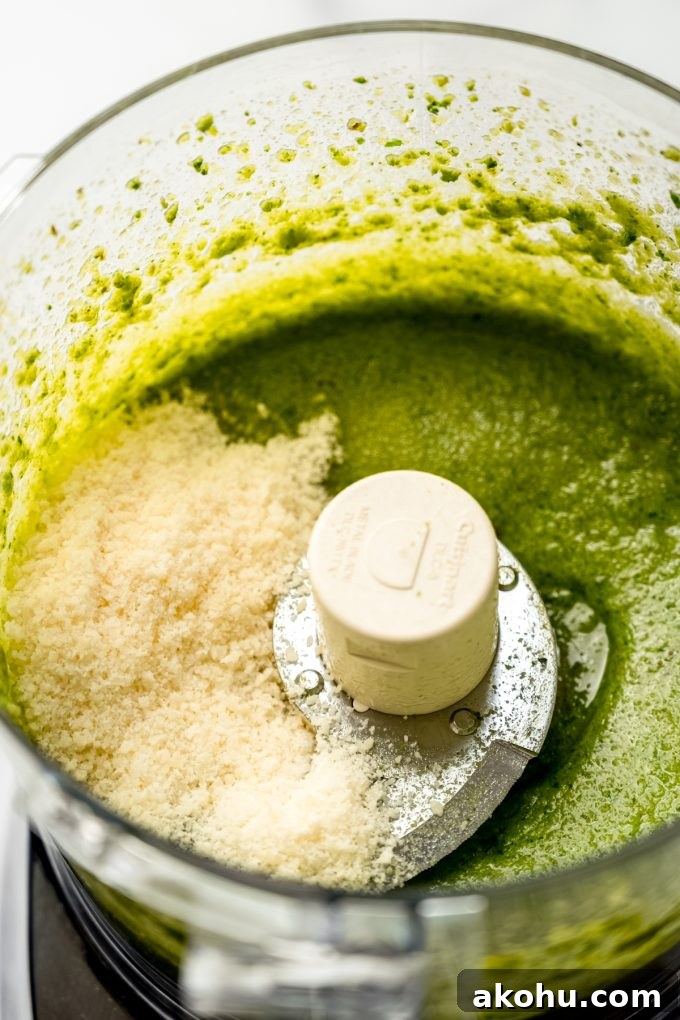
Step 3: Stop the processor, add salt and Parmesan if using, and pulse a few times to combine. Taste and adjust seasoning. Use immediately or store as directed below.
How to use fresh basil pesto
Pesto is extremely versatile. A few ideas:
Pull-apart bread: Spread pesto between rolls before baking for a crowd-pleasing pull-apart loaf.
Focaccia or grilled cheese: Spread pesto on focaccia, or use it in place of butter for a flavorful grilled cheese.
Pasta: Toss cooked pasta with a few spoonfuls of pesto and a splash of pasta water for a quick sauce.
Pizza: Swap pesto for tomato sauce on pizza crusts or flatbreads for a bright alternative.
Bruschetta and dips: Spoon pesto over crostini, pair with cheese and fruit, or serve as a dip for breadsticks and rolls.
Sandwich spread: Use pesto instead of mayo on sandwiches for instant flavor.
Topping: Dollop pesto on roasted vegetables, fish, chicken, or eggs to finish a dish.
How to store fresh basil pesto
Pesto freezes very well. Press plastic wrap directly onto the surface to minimize air contact and store in an airtight container. It will keep in the refrigerator for up to 4 days and in the freezer for up to 3 months.
For convenient portions, spoon pesto into a greased ice cube tray, freeze, then transfer cubes to a sealed bag so you can thaw only what you need.
Enjoy making and sharing this simple pesto — it’s a quick way to brighten many meals and makes a small batch of basil feel like a bounty.
Fresh Basil Pesto Recipe
10 mins
10 mins
Ingredients
- 2 cups fresh basil leaves
- ½ cup (60g) pine nuts or walnuts
- 3 cloves garlic
- ½ cup (120 mL) extra virgin olive oil
- ¼ teaspoon salt
- ⅓ cup (60g) grated Parmesan cheese (optional)
Instructions
- In a food processor combine basil, nuts, and garlic. Pulse until combined but still slightly chunky. Scrape down the sides.
- With the processor running, slowly drizzle in the olive oil until emulsified and smooth.
- Stop the processor, add salt and Parmesan if using, and pulse a few times to combine. Taste and adjust seasoning. Use immediately or store as directed below.
Notes
- Parmesan cheese: Traditional in pesto, but omitting it makes the recipe vegan and dairy-free.
- Make it ahead: Pesto freezes well; press plastic wrap to the surface and freeze in an airtight container for up to 3 months.
Nutrition Disclosure
All nutritional values are approximate and provided as a courtesy. Changing ingredients or quantities will alter the estimates.
| Calories: 99 kcal
| Carbohydrates: 1 g
| Protein: 1 g
| Fat: 10 g