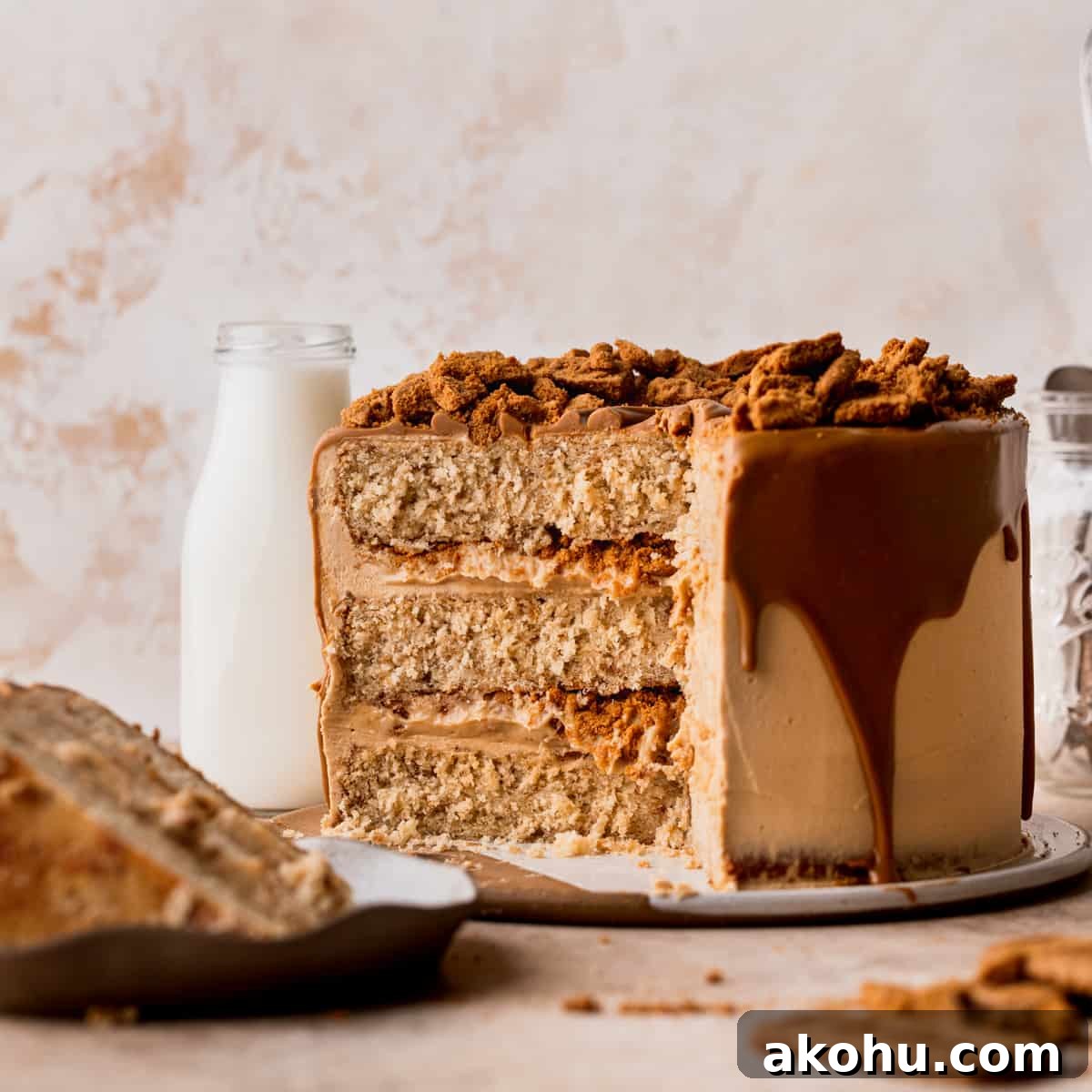
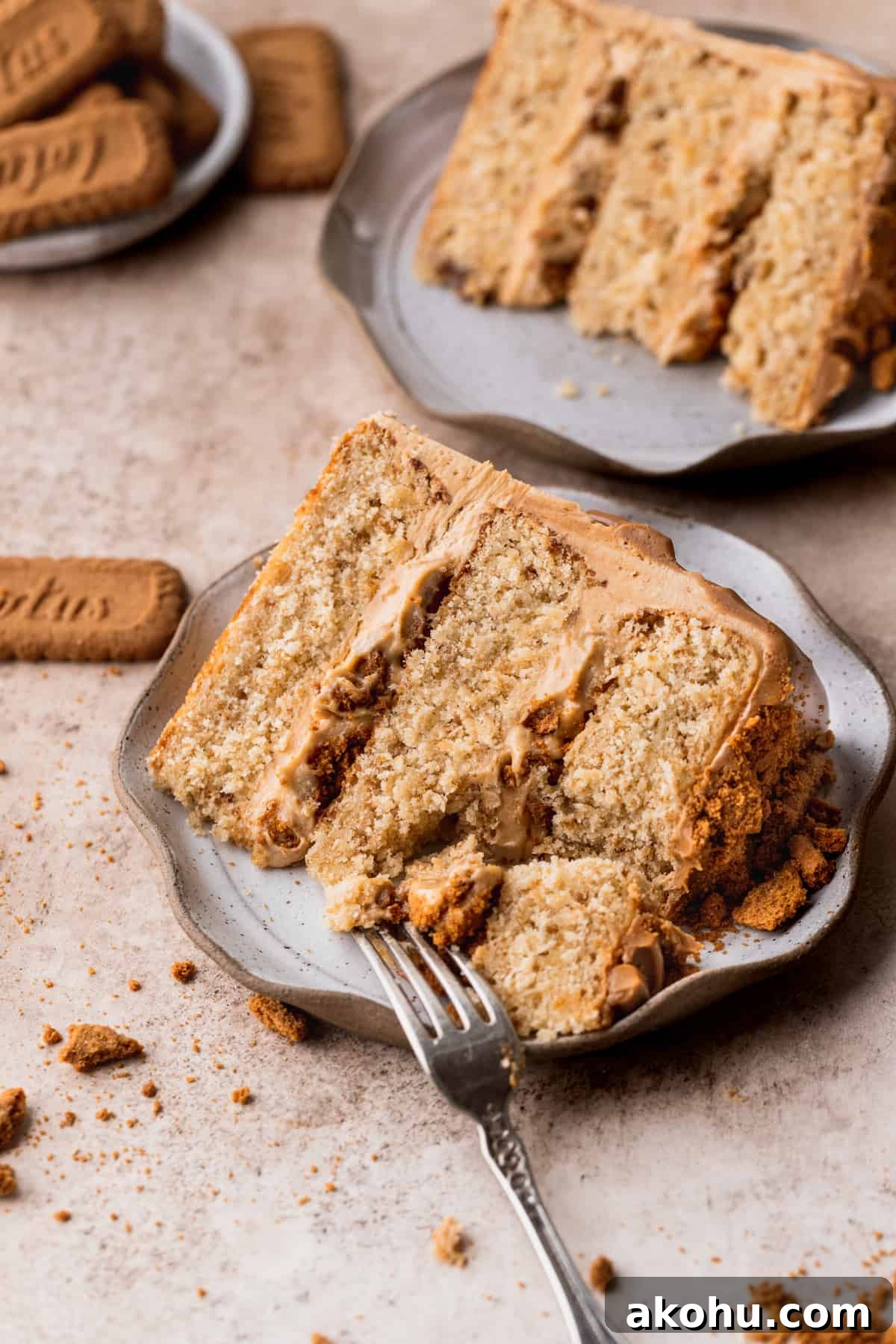
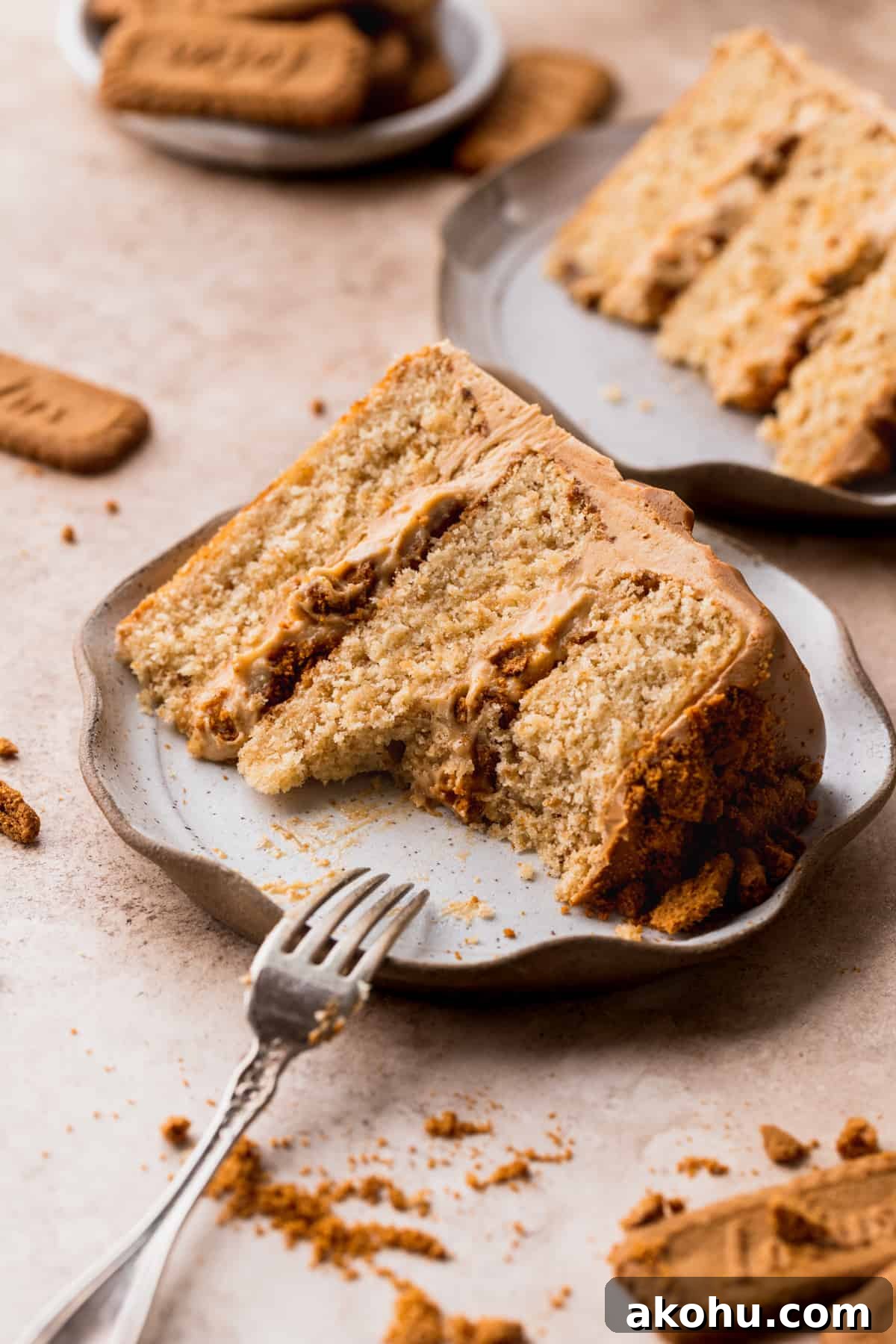
This layered Biscoff cake features Lotus Biscoff cookies in every component: three moist cake layers studded with cookie crumbs, a whipped cookie butter filling with extra chopped cookies, a cookie butter buttercream, and a glossy cookie butter drip. It’s designed for anyone who loves the deep caramelized spice and crunch of Biscoff.
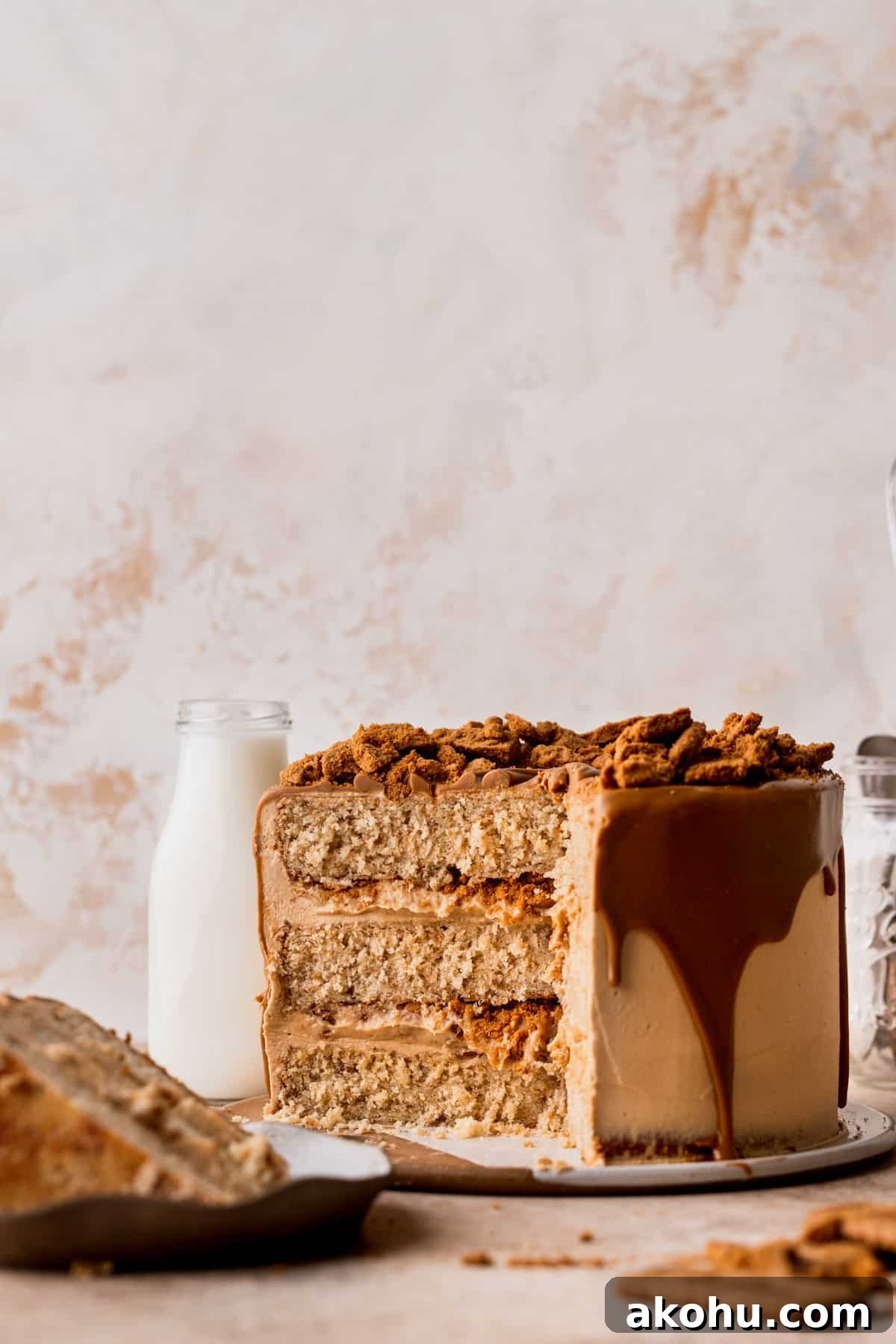
Each bite of this cake delivers pronounced Biscoff flavor. The combination of cookie crumbs folded into the cake, chopped cookies between layers, and both a cookie butter filling and frosting creates contrast in texture and an indulgent mouthfeel. It’s an excellent celebration cake or a special treat for cookie butter fans.
If you want more layered cake ideas, consider trying apple toffee layered cake, chocolate cookie brownie cake, or a Butterfinger cake for different flavors and textures.
Why You Will Love This Lotus Biscoff Cake
- Biscoff cookie cake layers: The cake batter includes fine Biscoff cookie crumbs, adding a delicate cookie flavor and a slightly textured crumb.
- Cookie butter filling: A whipped cream cheese and cookie butter filling is light, tangy, and rich — finished with chopped cookies for crunch.
- Cookie butter frosting: Vanilla buttercream is enriched with cookie butter for a creamy, spreadable frosting that complements the filling.
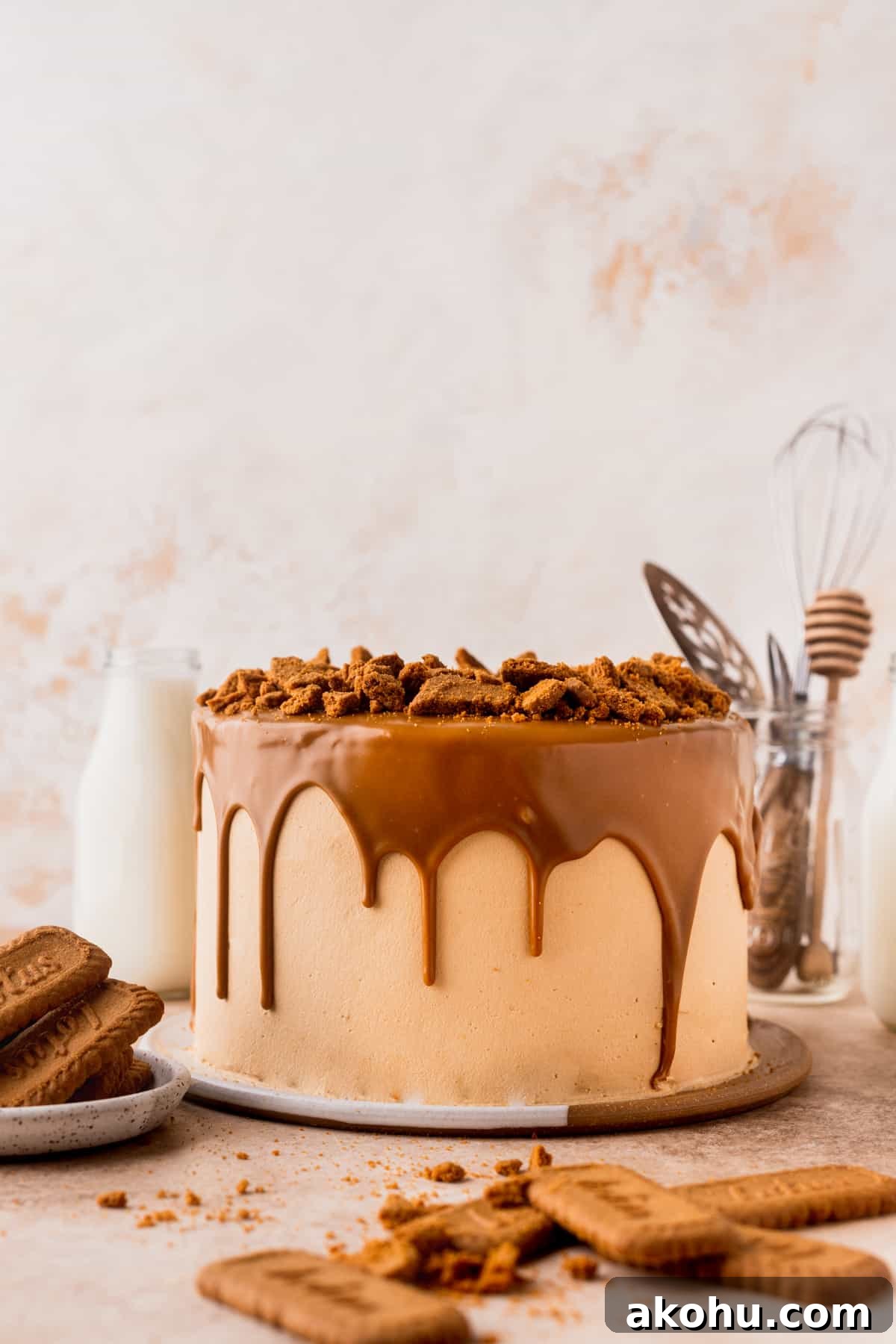
- Cookie butter drip: Melted cookie butter creates a glossy drip that seals the flavor theme and adds visual appeal.
Ingredient Notes
- Lotus Biscoff cookies: About 1½ packages total are used across the cake and decorations.
- Lotus Biscoff spread: Expect to use around 2 jars for the filling, frosting, and drip.
- Unsalted butter: Bring to room temperature for the cake; slightly cold for the frosting.
- Oil: Canola or vegetable oil both work well and keep the cake tender.
- Sour cream: Use full-fat and bring to room temperature for best texture.
- Eggs: Room temperature eggs produce a lighter, more even crumb.
- Buttermilk: Low-fat buttermilk from the grocery store works fine; you can make a substitute with milk and vinegar if needed.
- Cream cheese: Full-fat cream cheese gives the best texture for the filling.
- Powdered sugar: Sift to avoid any grit in the filling or frosting.
- Baking powder: Ensure it is fresh for reliable rise.
Ingredient Substitutions
- Dairy-free: Substitute dairy-free butter, cream cheese, and cream options to make this cake dairy-free; results may vary.
- Gluten-free: This recipe has not been tested with gluten-free flours; proceed with GF blends and binder adjustments if desired.
- Buttermilk substitute: Use 1 cup milk plus 1 tablespoon white vinegar or lemon juice, let sit 10 minutes.
- Sour cream substitute: Full-fat Greek yogurt can be used in place of sour cream.
Step By Step Instructions for Biscoff Cake
Overview: make the cake layers, prepare the cookie butter filling, make the cookie butter buttercream, then assemble and decorate with a cookie butter drip and chopped cookies.
STEP 1: Preheat oven to 350°F (176°C). Beat unsalted butter, granulated sugar, and oil on high in a stand mixer until light and fluffy, about 3 minutes. Add vanilla, room-temperature sour cream, and eggs. Beat on high 2 more minutes until well incorporated and airy.
STEP 2: Combine dry ingredients (all-purpose flour, baking powder, salt) with finely ground Biscoff cookie crumbs. Alternate adding dry ingredients and buttermilk to the wet mixture, beginning and ending with dry ingredients. Mix on low and scrape the bowl to ensure even incorporation.
STEP 3: Divide batter evenly among three prepared 8-inch cake pans lined with parchment circles and sprayed with nonstick spray. Smooth the tops.
STEP 4: Bake for 28–35 minutes or until a toothpick inserted in the centers comes out clean. Cool in pans 10 minutes, then transfer to a wire rack to cool completely before decorating.
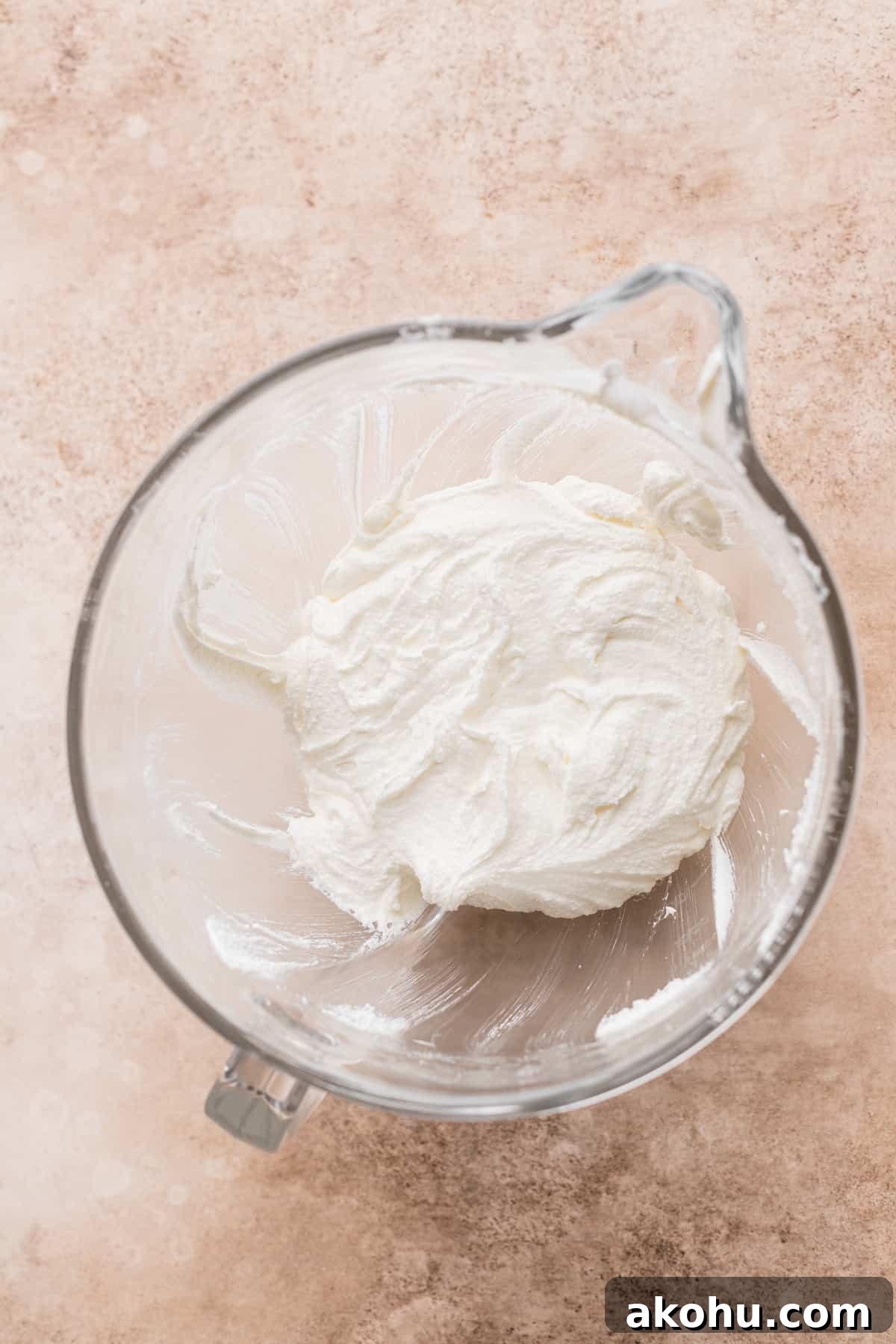
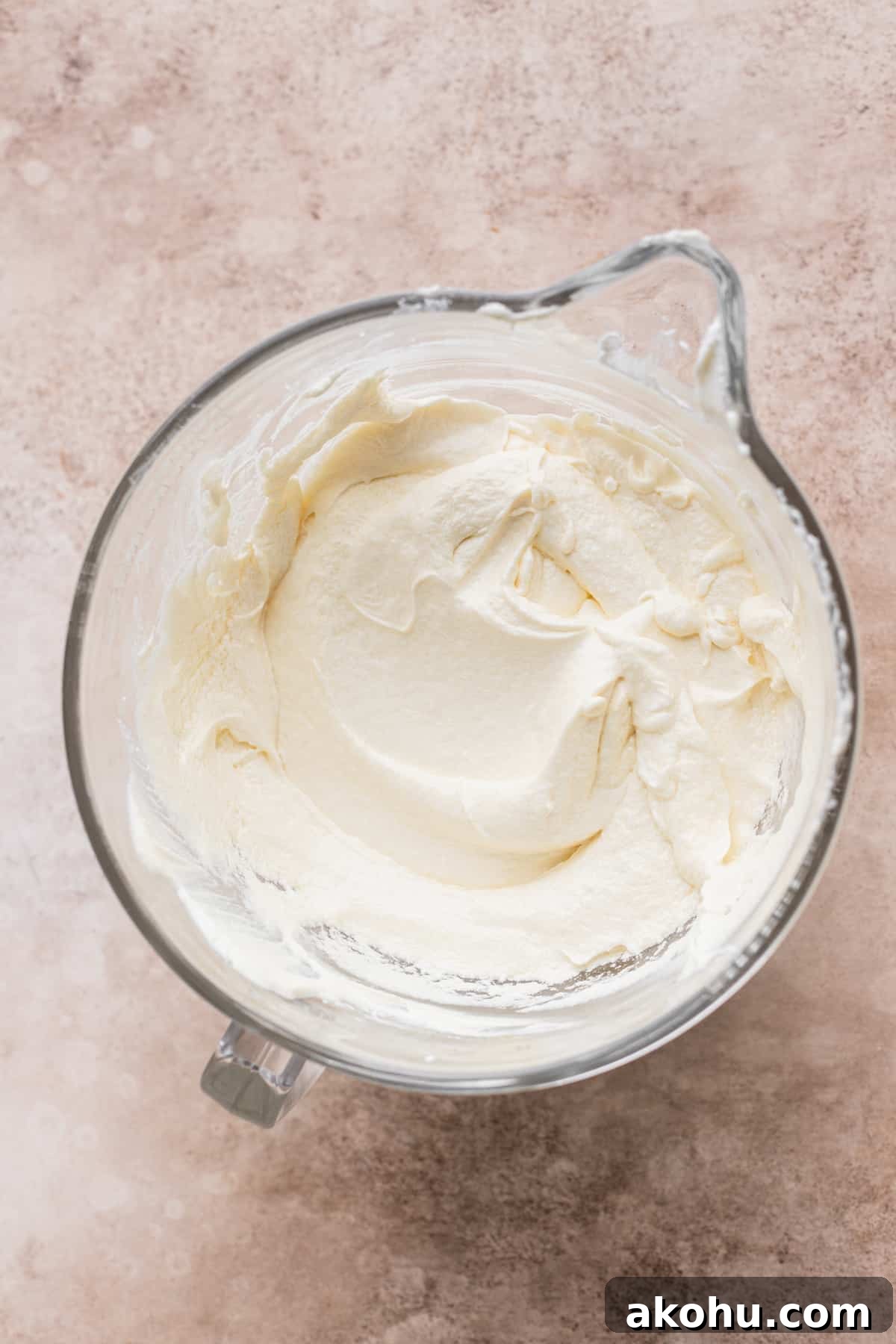
STEP 5: To make the cookie butter filling, beat room-temperature cream cheese until smooth. Add cookie butter and sifted powdered sugar; mix until combined. In a chilled bowl, whip heavy cream to stiff peaks and then fold it gently into the cream cheese mixture. Chill until set, at least one hour.
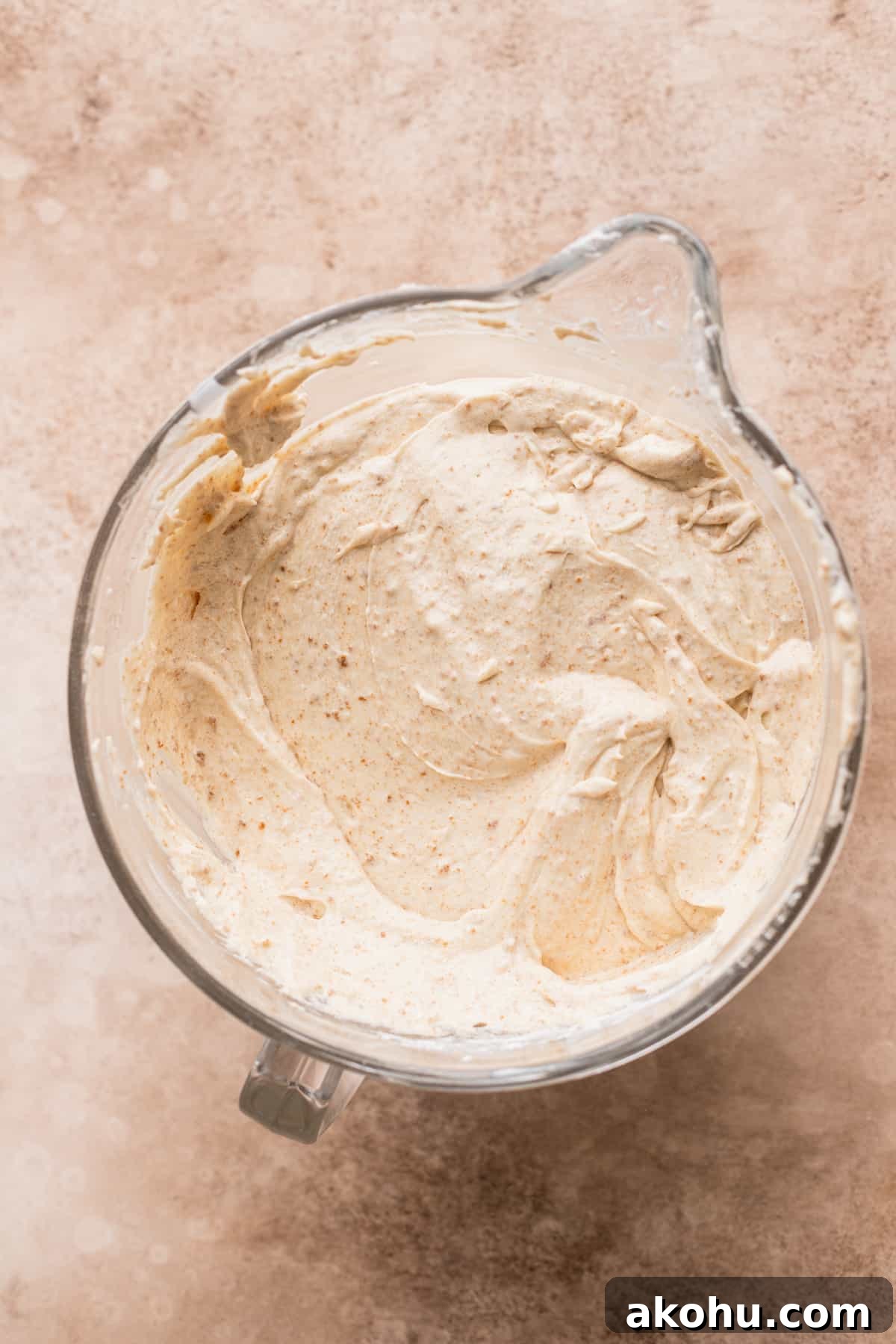
STEP 6: For the cookie butter buttercream, beat slightly cold unsalted butter and cookie butter together. Gradually add sifted powdered sugar, then vanilla, heavy cream, and a pinch of salt. Beat until light and spreadable.
Assembling the Cake Tips
Chill the cake layers: freeze layers 30 minutes before assembly to make trimming and decorating easier. Put a small dab of buttercream on the cake board to secure the bottom layer.
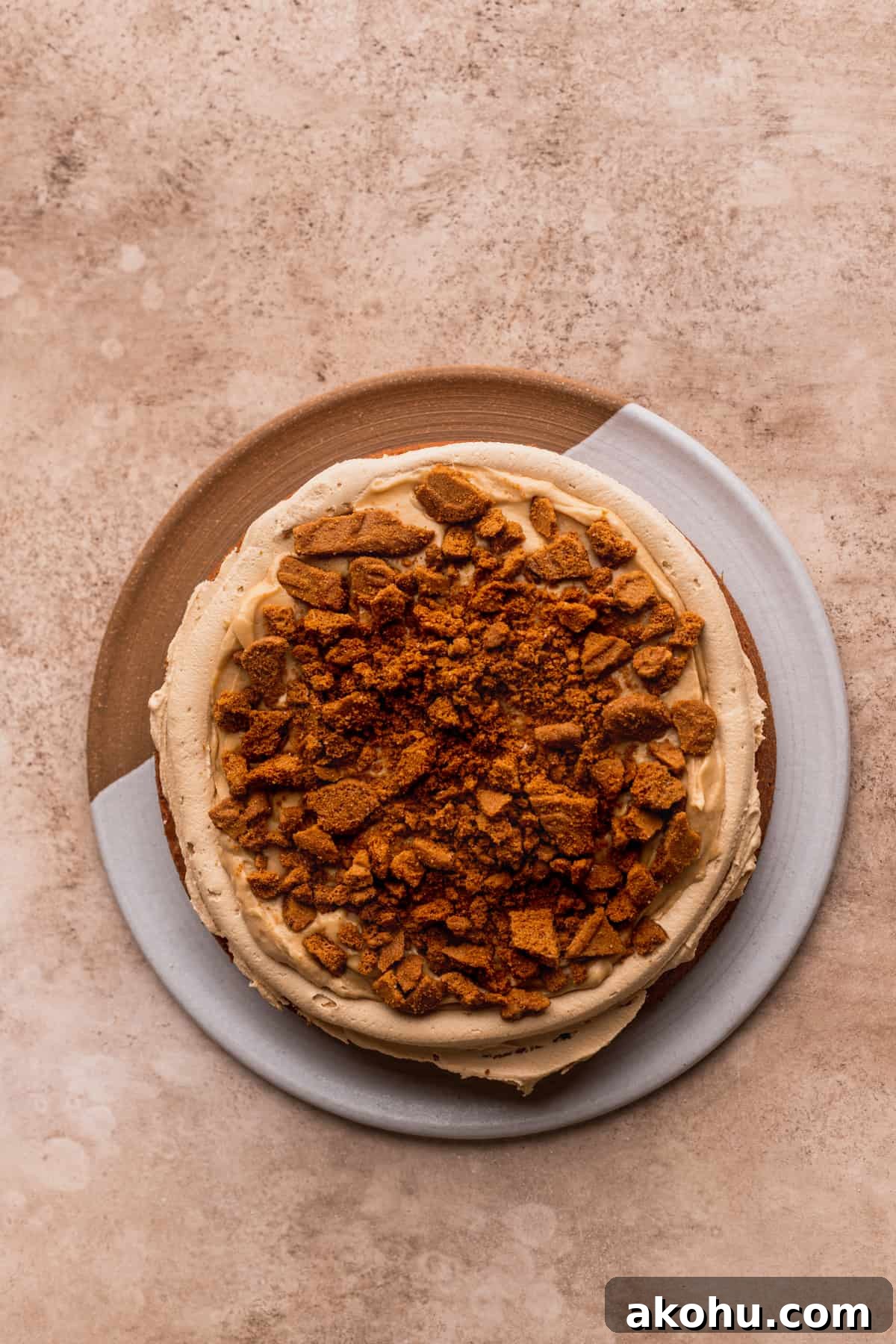
Pipe a frosting border on each layer before adding the filling; this keeps the filling from spilling out. After stacking the first two layers with filling and chopped Biscoff cookies, chill the cake for 10 minutes to set the filling.
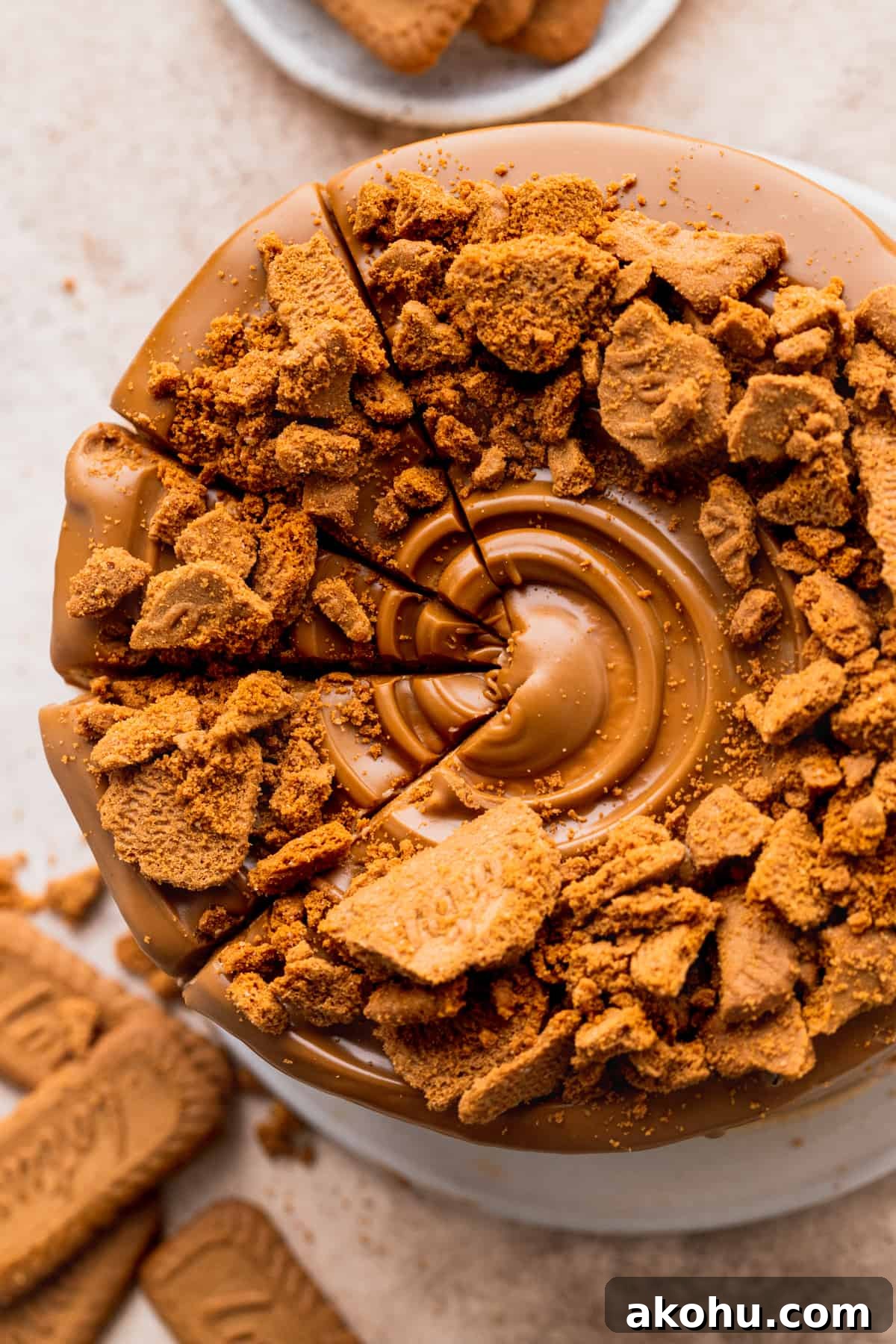
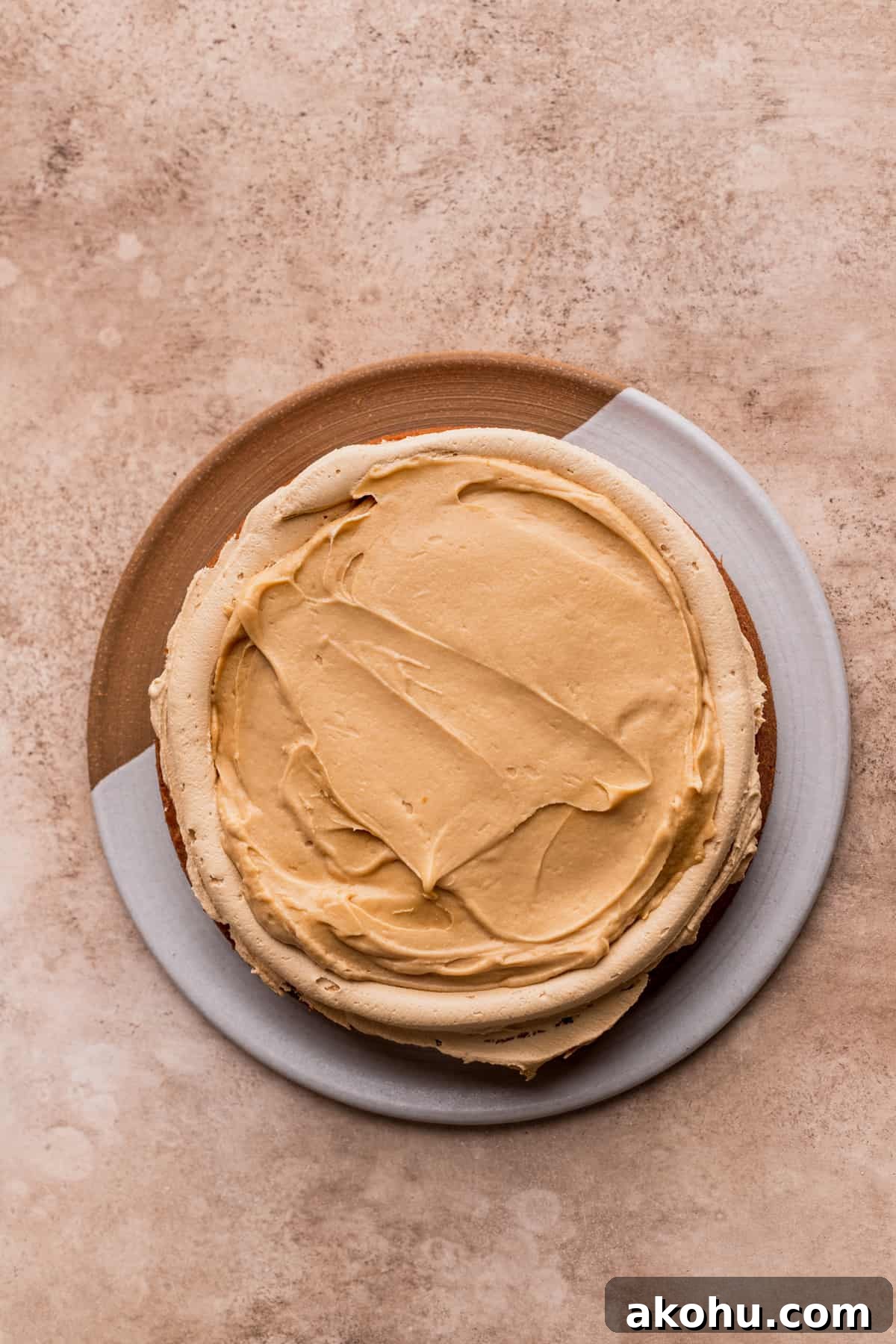
Apply a thin crumb coat of frosting and freeze 15 minutes to lock crumbs in place. Then finish with a final layer of buttercream. Chill the cake 10 minutes before adding the drip so the drip sets as it runs down the sides. Warm cookie butter briefly to a pourable consistency, pour onto the center, and gently push to the edges to create drips. Finish with whole or chopped Biscoff cookies on top.
FAQ
Yes. Halve the cake and filling recipes and keep the frosting quantity the same; you should get about 12 cupcakes from the halved batch.
For a 9×13 pan, keep the cake recipe the same but omit the filling and halve the frosting. For 8×8 or 9×9 pans, halve both the cake and frosting recipes.
Yes. The recipe will also work in 6-inch pans for tall layers, 7-inch pans for slightly thicker layers, or 9-inch pans if you prefer a two-layer cake instead of three.
Peanut butter can be used in place of the cookie spread, though the final flavor will differ from Lotus Biscoff.
Recipe Variations
- Use only the buttercream as the filling for a simpler assembly; increase the frosting by 50% to have enough filling.
- Skip the cookie butter drip to save time and keep the cake cleaner for transport.
Special Tools
- Cake pans: Three 8-inch cake pans are recommended for this three-layer cake.
- Parchment paper circles: Pre-cut 8-inch circles speed up pan prep and prevent sticking.
- Baking spray: A nonstick spray with flour content helps release the layers cleanly.
- Offset spatula and cake scraper: Helpful for smooth frosting application.
- Cake turntable: Makes frosting and decorating far easier by providing smooth rotation.
- Piping bags and tip: Useful for piping the filling border and decorative frosting details.
Storing and Freezing
Store the finished Biscoff layered cake covered and refrigerated for up to 5 days. The cake tastes best at room temperature, so remove slices from the fridge 20–30 minutes before serving.
Freezing
Wrap individual slices tightly in plastic wrap and freeze up to 30 days. Thaw for about 1 hour before eating. You can also freeze unfilled, fully cooled cake layers wrapped well; thaw about 1 hour before decorating.
Other Cakes to Try
- S’mores Cake
- Ding Dong Cake
- Brownie Cake
- Chocolate Raspberry Cake
- Chocolate Peanut Butter Cake
If you make this recipe, please consider leaving a rating and review where you found it and tag the creator on social channels to share your creation and feedback.
Layered Lotus Biscoff Cake
Ingredients
Cake
- 15 Biscoff cookies, blended to 1 cup fine crumbs
- 2 3/4 cups all-purpose flour
- 2 1/4 tsp baking powder
- 1 1/2 tsp salt
- 1 cup unsalted butter, room temperature
- 1/3 cup oil (canola or vegetable)
- 1 3/4 cups granulated sugar
- 1 tbsp pure vanilla extract
- 1/3 cup sour cream, room temperature
- 4 large eggs, room temperature
- 1 1/4 cups buttermilk, room temperature
Cookie Butter Filling
- 4 oz cream cheese, room temperature
- 1/2 cup Biscoff cookie butter
- 1 1/2 cups powdered sugar, sifted
- 1 tsp pure vanilla extract
- 1/2 cup heavy cream
- 1 1/2 cups Biscoff cookies, chopped
Cookie Butter Frosting & Drip
- 1 cup unsalted butter, slightly cold
- 3/4 cup Biscoff cookie butter (plus 3/4 cup melted for drip)
- 3 cups powdered sugar, sifted
- 1 tsp pure vanilla extract
- 1/4 cup heavy cream
- 1/2 tsp salt
- Biscoff cookies for decoration
Instructions
Cake
- Preheat oven to 350°F. Prepare three 8-inch pans with parchment and nonstick spray.
- Blend 15 Biscoff cookies to fine crumbs. Whisk flour, cookie crumbs, baking powder, and salt.
- Cream butter, oil, and sugar until light and fluffy. Add vanilla, sour cream, and eggs; beat until fluffy.
- Alternate adding dry ingredients and buttermilk in thirds, beginning and ending with dry ingredients. Mix just until combined.
- Divide batter into pans and bake 28–35 minutes or until a toothpick comes out clean. Cool completely before assembling.
Cookie Butter Filling
- Beat cream cheese until smooth. Add cookie butter and powdered sugar; mix until combined. Stir in vanilla.
- Chill a metal bowl and whisk, whip heavy cream to stiff peaks, then fold into the cream cheese mixture gently. Chill until set.
Cookie Butter Frosting
- Beat slightly cold butter, then add cookie butter and beat until smooth. Gradually add powdered sugar.
- Add heavy cream, vanilla, and salt. Beat until light and spreadable. Adjust consistency with more cream or sugar as needed.
Assembly
- Chill cake layers 30 minutes before assembly. Place a small amount of frosting on the cake board to secure the first layer.
- Spread 1/2 cup frosting on the first layer, pipe a border, add half the cookie butter filling, and sprinkle half the chopped cookies. Repeat with the second layer.
- Place the top layer bottom-side-up for a flat finish. Freeze 10 minutes to set the filling.
- Apply a thin crumb coat, freeze 15 minutes, then finish frosting. Chill 10 minutes before drip.
- Melt 3/4 cup cookie butter to a pourable consistency, let cool slightly, then pour in the center and push to the edges to create drips. Decorate with cookies.
Notes
Flour: Spoon and level or weigh flour to avoid a dry cake from compacted flour.
High altitude: Add an extra 2 tablespoons of flour if baking at high altitude.