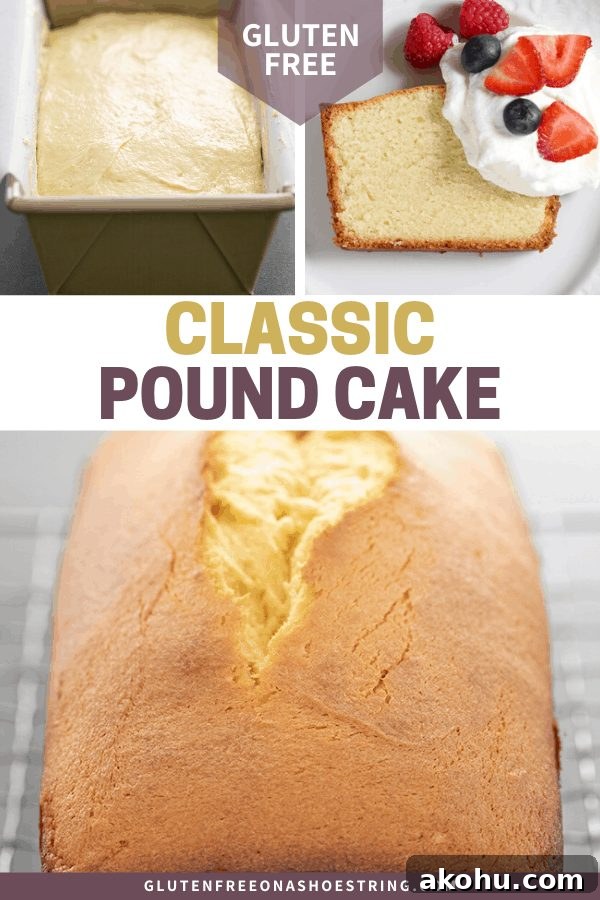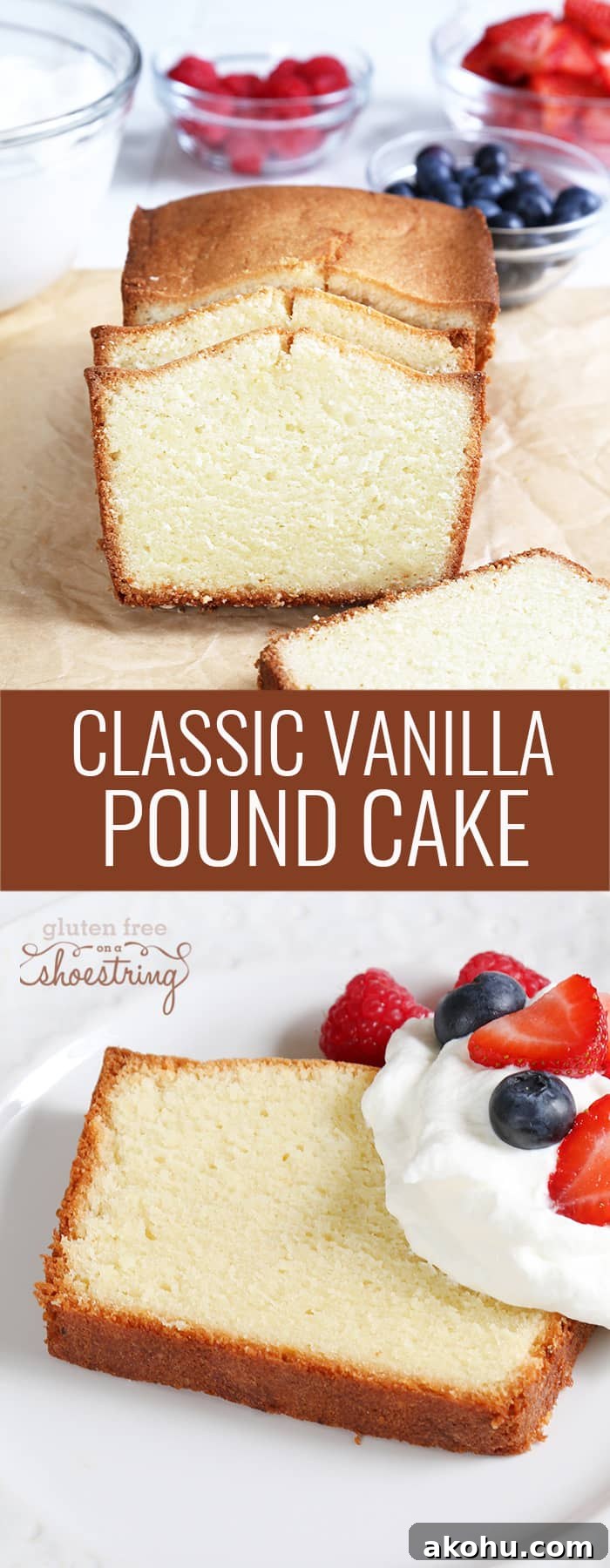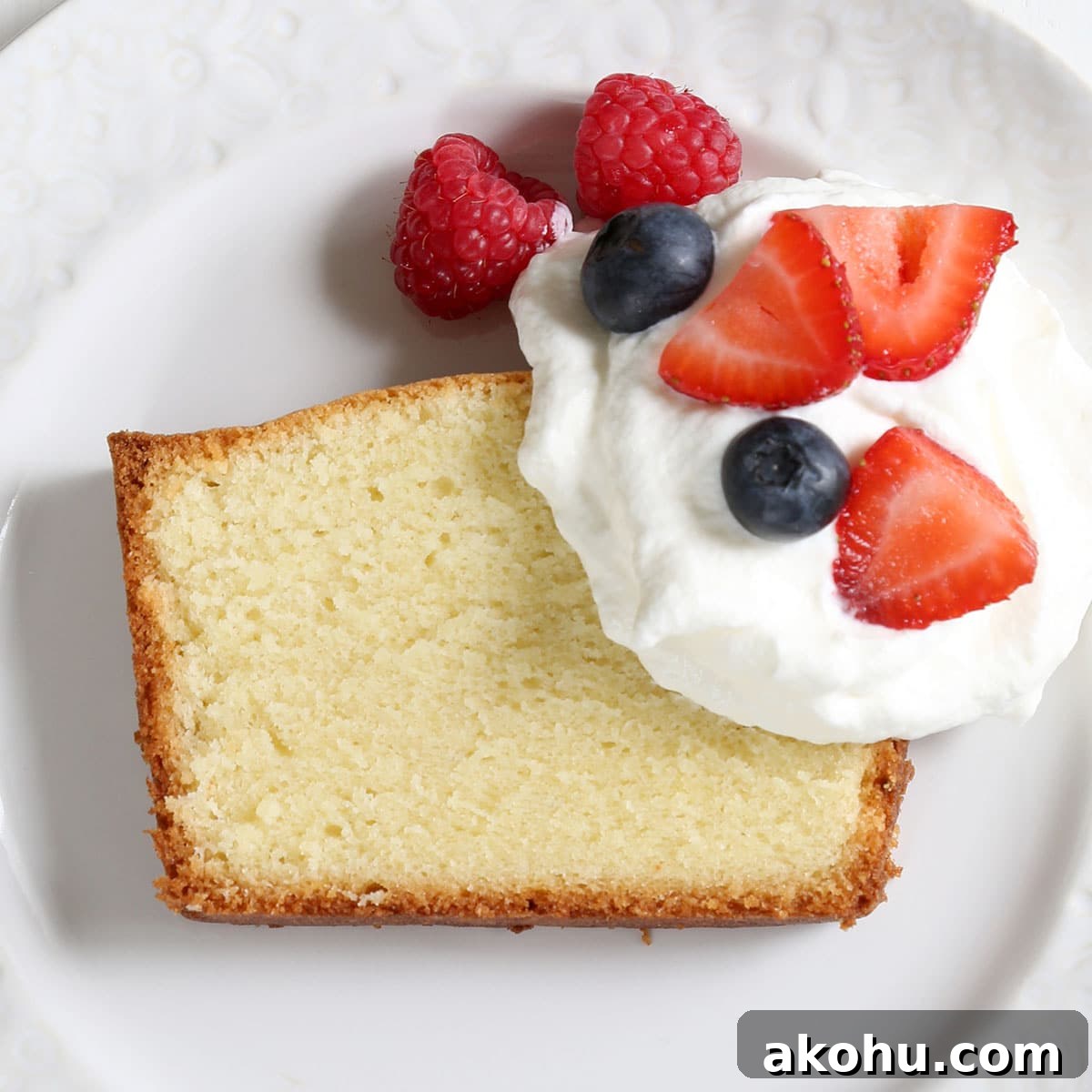
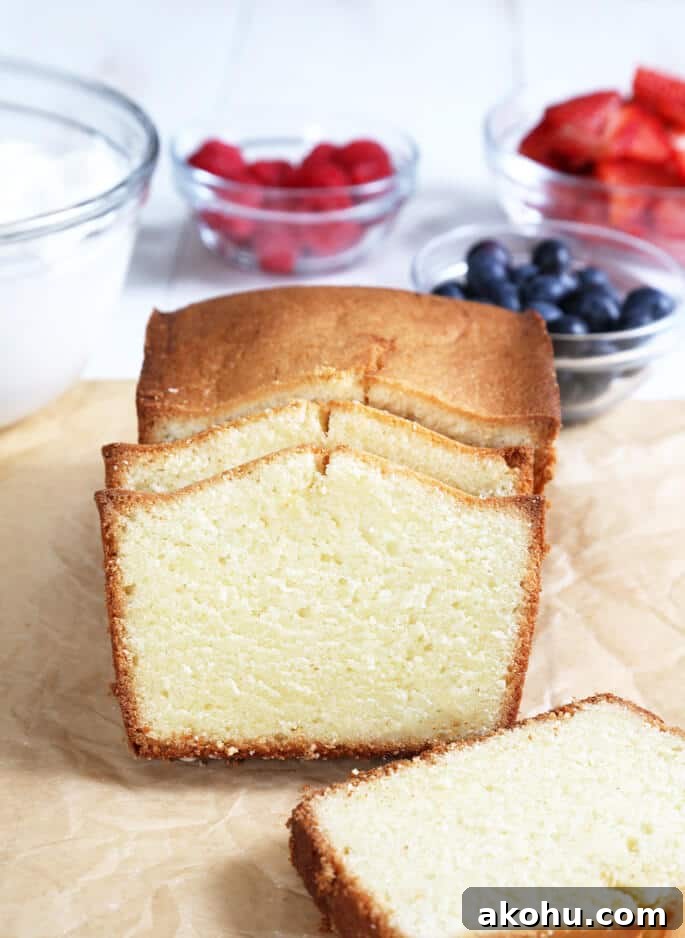
This tried-and-true gluten-free pound cake is moist, tender, dense and buttery—the classic you remember. It bakes up with a fine crumb and a golden, slightly crisp crust. People always rave about it.
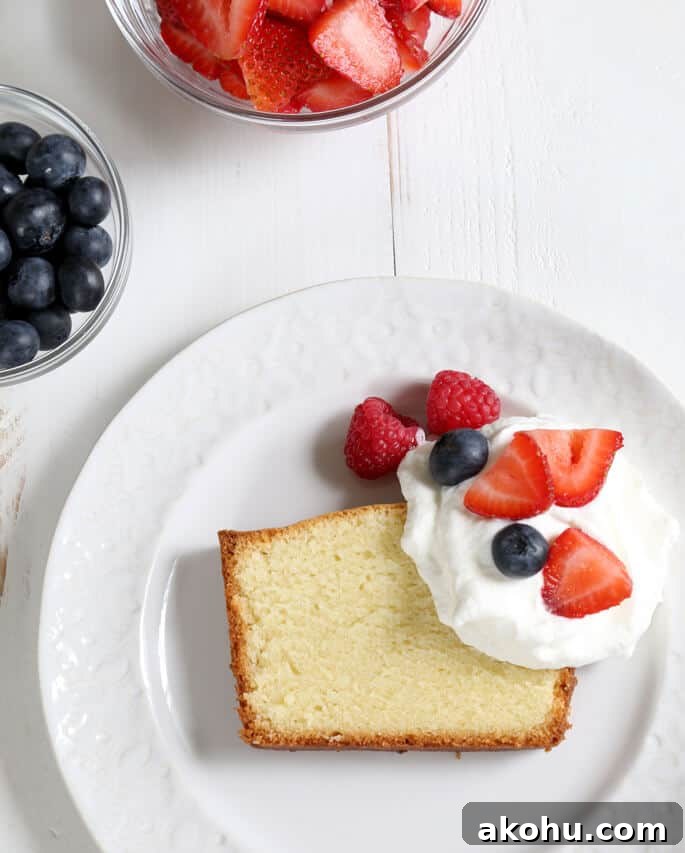
Why is it called a pound cake?
A traditional pound cake gets its name from an old formula: a pound each of flour, butter, sugar and eggs. Modern versions often adjust that ratio for texture and flavor—some add cream cheese or use different proportions—but the spirit is the same: a rich, buttery loaf with a tight, tender crumb.
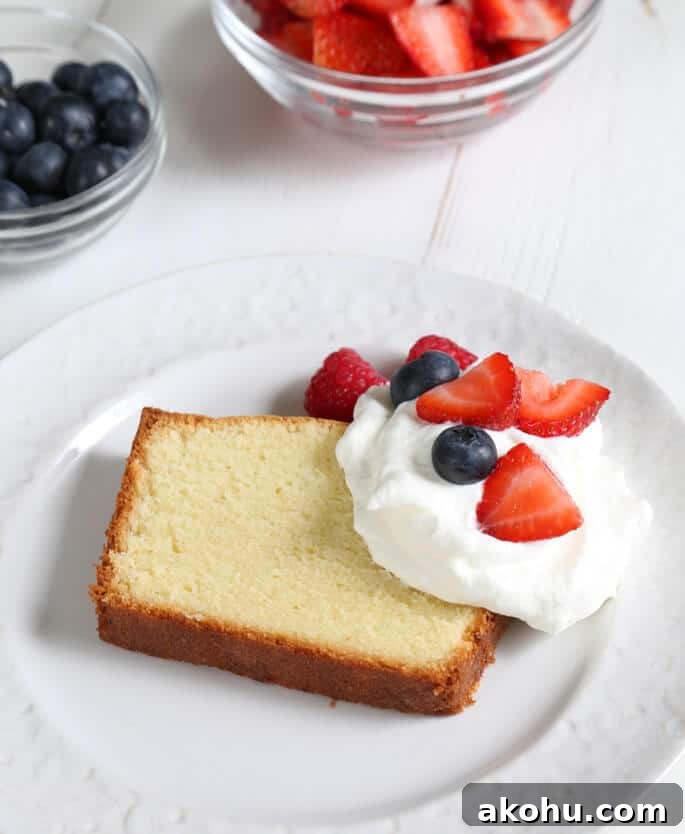
This gluten-free version honors the classic texture while adapting the ingredients and technique so it performs reliably without gluten. It’s especially lovely sliced and layered into a summer trifle or served with fresh berries and whipped cream.
Gluten-free pound cake requires tweaking the original formula
Gluten-free baking is not a direct one-to-one swap from wheat-based recipes. The structure that gluten provides must be replaced by careful balance of ingredients, correct flour blends, and the right techniques. This pound cake recipe is written specifically for gluten-free flour blends and is calibrated to produce a dense, tender loaf that isn’t dry.
The recipe yields one standard loaf, so while it mirrors the traditional pound-cake spirit, the ingredient amounts are scaled appropriately. You can double the recipe if you need two loaves or adapt it for a bundt pan—just watch the baking time if you change pans.
What makes this a great gluten-free pound cake
This loaf delivers the hallmark contrast of a slightly crisp, browned exterior and a smooth, dense interior. The crumb is fine and tight—exactly what you want from a pound cake—while remaining moist. The recipe is leavened entirely by eggs; there is no baking powder or baking soda, which keeps the crumb rich and compact. If you prefer a slightly lighter rise, some bakers will add a small amount of baking powder, but I favor the classic, buttery density.
Because gluten-free flour blends vary widely, this recipe specifically calls for a reliable all-purpose gluten-free blend and suggests substituting part of the blend with cornstarch to mimic cake flour for extra tenderness. Accurate weighing of ingredients is important for consistent results.
What you need for a basic gluten-free pound cake
Overview of key ingredients and why they matter:
- Butter – Use unsalted butter at room temperature (soft but not oily). Properly softened butter whips to incorporate air, contributing to texture and structure.
- Sugar – Provides sweetness and helps tenderize the crumb.
- Eggs – This recipe relies on eggs for structure and lift. Measure to obtain the required weight rather than counting eggs alone.
- Vanilla extract – Pure vanilla adds flavor; a small portion can be swapped for almond extract for a bakery-style note.
- Gluten-free flour blend – A dependable all-purpose gluten-free blend is essential. Replacing part of the blend with cornstarch creates a cake-flour effect and improves tenderness.
- Salt – Balances and enhances the other flavors. Kosher salt or a similar coarse salt is fine.
Tips for making the perfect gluten-free pound cake
Choose a reliable gluten-free flour blend
Not all gluten-free blends behave the same. For best results use a blend you trust. If you want a cake-like texture, replace about 18% of the blend by weight with cornstarch to simulate cake flour.
Measure by weight
Always weigh dry ingredients. Measuring gluten-free flour by volume can lead to inconsistent results. A digital kitchen scale is the simplest way to get accurate, repeatable cakes.
Bring ingredients to room temperature
Butter and eggs should be at room temperature so they combine smoothly. Cold eggs added to soft butter can cause the batter to curdle. If eggs are cold, sit them in warm water for about 15 minutes. If butter is slightly too firm, cut it into small pieces and briefly warm—no more than a few seconds in the microwave—so it becomes soft but not melted.
Expect the batter to change texture
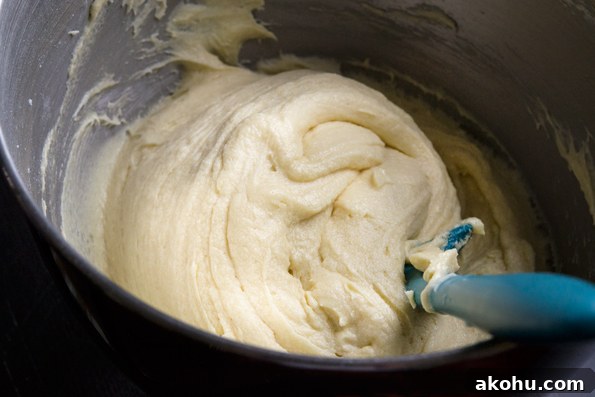
When you add eggs to the creamed butter and sugar, the mixture may appear curdled at first. Once you incorporate the flour, the batter will come together into a thick, silky, pourable batter.
Scrape the bowl
Scrape the sides and bottom of the mixing bowl regularly so all ingredients are incorporated evenly. This ensures consistent texture throughout the loaf.
Cool completely before slicing
Allow the cake to cool fully before slicing. Cooling stabilizes the crumb and prevents gumming. If you prefer a warm slice, toast a thick slice and top with berries and whipped cream.
Serving suggestions
Pound cake is a versatile dessert base. Try one of these toppings:
- Freshly whipped cream
- Vanilla ice cream
- Fresh berries or other seasonal fruit
- Warm sauces like hot fudge, caramel or fruit compotes
- Lemon curd for a bright contrast
Storing your gluten-free pound cake
To keep the cake at its best, avoid refrigerating where it can dry out. Wrap slices tightly and freeze for longer storage. Toast frozen slices to refresh them before serving.
Substitutions and special-diet notes
Dairy-free option
You can try replacing the butter with a very high-quality vegan butter that behaves similarly in baking. Avoid soft margarines with high water content, which can cause fat to separate during baking.
Vegan adaptations
Converting this recipe to fully vegan is difficult because it depends on the structure and lift provided by nine ounces of whole eggs. Egg replacements rarely replicate that volume and structure in a pound-cake style loaf, so a vegan version would need a different recipe.
Other pound-cake style variations
If you like this classic loaf, consider trying variations that add cream cheese, citrus glaze, chocolate, or warm spices. Each yields a different but equally satisfying pound-cake experience.
FAQs
Is pound cake gluten-free?
Not by default. Traditional pound cake uses wheat flour and is not gluten-free. This recipe is written specifically as a gluten-free version.
Can I make this with almond flour?
Almond flour behaves differently and requires its own recipes. This pound cake relies on an all-purpose gluten-free blend for structure; almond flour would need a specially designed recipe.
Can I make this without a stand mixer?
Yes. A handheld mixer will work, though it may take longer to achieve the same lightness when creaming the butter and sugar.
How do I know when the cake is done?
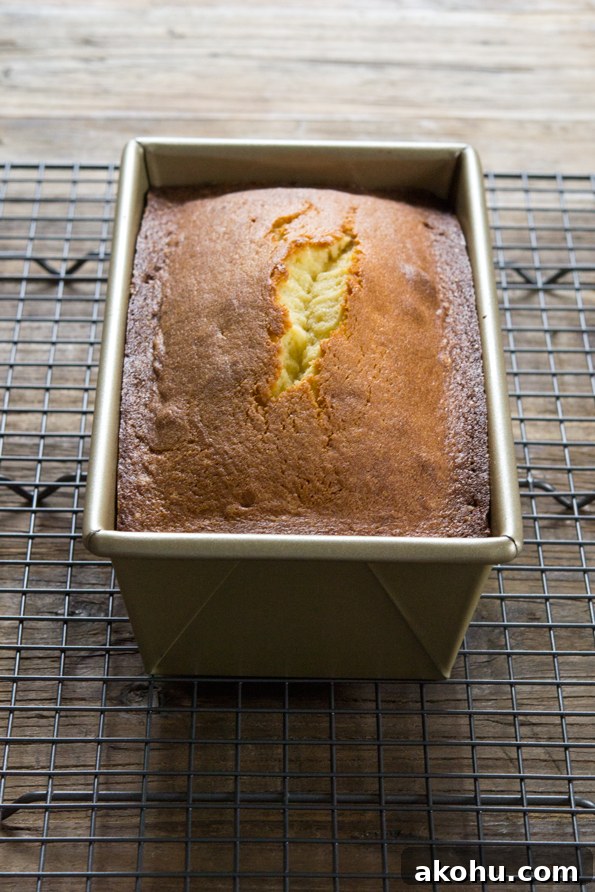
Bake until the loaf is golden brown, has domed slightly in the center, and a toothpick inserted into the center comes out clean. The cake may sink if removed before the center is fully baked.
Classic Gluten-Free Pound Cake Recipe (From Scratch)
Ingredients
- 16 tablespoons (224 g) unsalted butter, at room temperature
- 1 cup (200 g) granulated sugar
- 5 eggs (about 9 ounces) at room temperature, beaten (see notes)
- 2 teaspoons pure vanilla extract (or 1½ tsp vanilla + ½ tsp almond extract)
- 1.57 cups (220 g) all-purpose gluten-free flour blend (see notes)
- ½ teaspoon xanthan gum, omit if your blend already contains it
- 1 teaspoon kosher salt
Instructions
- Preheat the oven to 325°F (163°C). Grease a standard loaf pan (about 9 x 5 inches) and line with parchment if desired.
- In a stand mixer fitted with the paddle attachment (or using a handheld mixer), cream the room-temperature butter on medium-high speed until light and fluffy.
- Add the sugar, then add the beaten eggs slowly while mixing on low. Add vanilla and beat after each addition until fully incorporated. Increase speed to medium-high and beat until smooth.
- In a small bowl whisk together the gluten-free flour blend, xanthan gum (if using) and salt. Add the dry mixture to the wet ingredients about 1/4 cup at a time, mixing just until combined after each addition.
- The batter will be thick, soft and smooth. Scrape the bowl, transfer the batter to the prepared loaf pan, and smooth the top with a wet spatula. Tap the pan gently on the counter to release any large air bubbles.
- Bake in the center of the oven, rotating once during baking, until the cake is evenly golden and a toothpick inserted in the center comes out clean, about 50 minutes.
- Remove from the oven and cool on a wire rack for at least 30 minutes in the pan. Then remove the loaf and cool completely before slicing.
Notes
Measure eggs by weight for accuracy. Beat 4 eggs, weigh them, and if you need more, beat a 5th egg and add only enough to reach 9 ounces total.
If you want a cake-flour effect, use 180 g of your all-purpose gluten-free blend plus 40 g cornstarch (this yields a finer, more tender crumb).
Use a reliable gluten-free all-purpose blend. Results vary greatly with different commercial blends, so use one you trust for consistent baking.
Nutrition (approximate per slice)
Calories: 493 kcal • Carbohydrates: 38 g • Protein: 16 g • Fat: 30 g