Avoid a common genealogy mistake. Learn how to locate ancestors, build a reliable family tree, and skip costly research errors.
Confession time: I made a genealogy mistake that cost me years of time and effort.
I missed a crucial clue while searching for my fourth great-grandmother and spent a long time following the wrong leads or getting stuck.
I’ll share what happened and what I learned.
When I began researching my family, I asked relatives for any information they remembered. Oral history filled in a lot. I quickly traced the Talbott line back to my fourth great-grandparents: Sarah Blanks and Langley Talbott. A family Bible provided birth and death dates that seemed to confirm the line.
At first it seemed almost too easy.
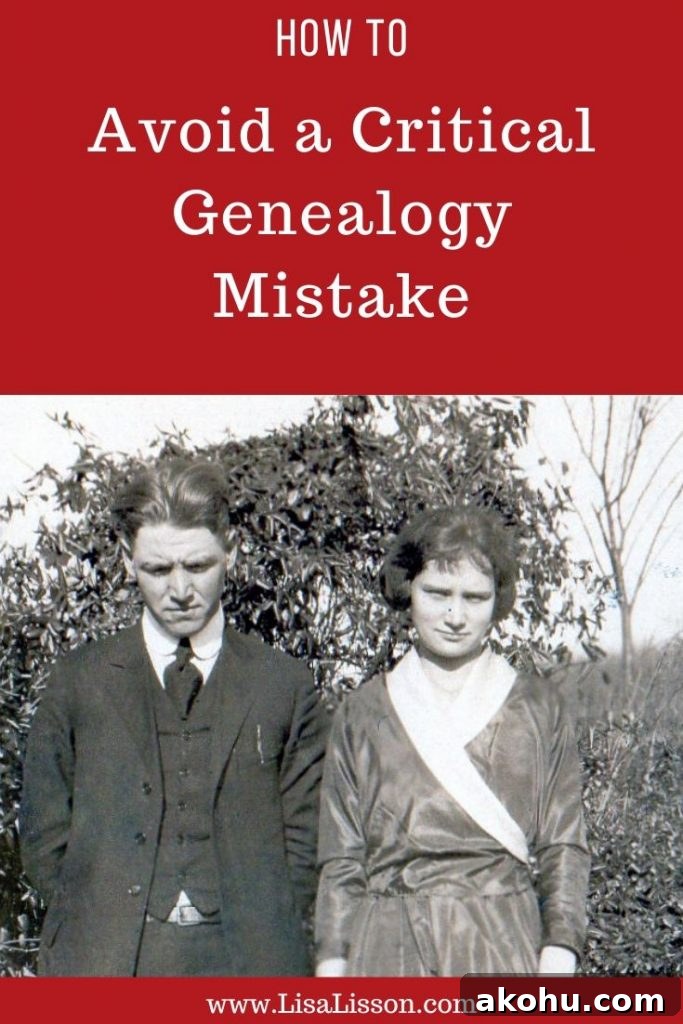
The Genealogy Mistake I Made
A false assumption early in my research kept me from identifying my fourth great-grandmother for years.
I assumed Langley Talbott and Sarah Blanks had been formally married.
That seemed reasonable at the time. I was new to genealogical research and relied on a few convincing pieces of evidence:
- Sarah Blanks’s birth and death dates appeared in the family Bible.
- Sarah used the surname Talbott in census records.
- Sarah was mentioned in what appeared to be David Talbot’s will as the mother of Langley’s children.
- All of Sarah and Langley’s children used the surname Talbott.
Years later, with more experience, I returned to the problem and re-examined the records.
The Best Thing You Can Do for a Brick Wall Ancestor
Go back to the beginning and start your research over.
Set aside what you think you already know and re-evaluate original records with fresh eyes. As you gain skill, you’ll spot details you missed before. That often breaks long-standing brick walls.
When I restarted my work on Sarah Blanks, I uncovered an important line in the 1850 will of David G. Talbot of Campbell County, VA, Langley Talbot’s father. The will named Langley as David’s son and referred to a provision for “Langley’s children by Sarah Blanks born after 1823.” That phrasing stood out immediately.

Why would David Talbot identify Sarah as the mother of Langley’s children in that way and use a surname that differed from Talbott? The answer was that Langley and Sarah were not formally married. I had missed that detail early on.
Further clues emerged: David’s will hinted that Langley had gambling problems. That prompted me to search Campbell and Halifax county court records.
There I found an 1841 grand jury summons from Halifax County charging Langley Talbot and Sally Blanks with “living together in open adultery.”
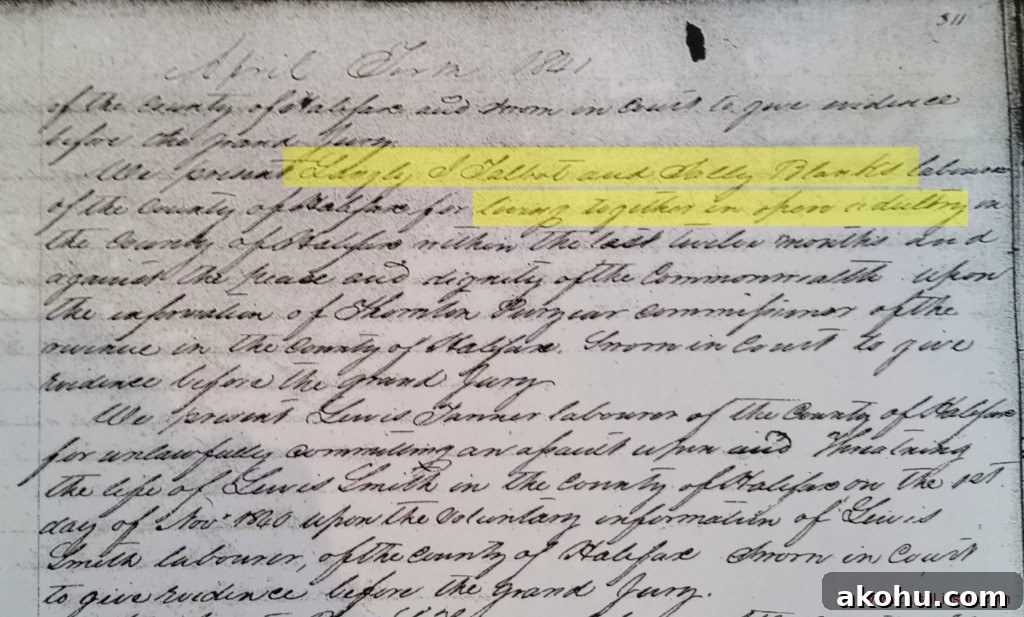
The 1841 indictment and the will’s reference to children born after 1823 aligned: Sarah’s first child with Langley was born about 1823. Their relationship was long-standing and resembled a common-law union rather than a formal marriage.
The full picture: Sarah Blanks had previously been married to Thomas Blanks and was the mother of their son, Alfred Blanks. Her maiden name was Talley. After Thomas’s death, she and Langley formed a long-term relationship.
How to Avoid Genealogy Mistakes in Your Research

To reduce false assumptions, take your time with records. Read documents carefully and consider what each one is really saying beyond names and dates. Look for subtle clues about relationships, social standing, and behavior.
When researching female ancestors, learn about women’s roles and legal status in the relevant time and place. Cultural context often explains naming conventions, living arrangements, and why records describe people in certain ways.
Use less commonly consulted sources: court records, grand jury minutes, tax lists, and other local records often reveal details missing from standard indexes. Read every page related to your ancestor rather than just extracting a single line.
Finally, trust your instincts. If something in a record feels off, follow up. That uneasy feeling is often a signal that deeper investigation will pay off. Avoid the costly assumption I made.
In the end, making that mistake taught me important lessons. I became a better researcher and stopped making quick assumptions about relationships and names.
Other posts of interest:
- How To Use WorldCat For Your Genealogy Research
- Genealogy For Beginners – Start Finding Your Ancestors!
- How to Create Your Genealogy Research Plan
- How To Research Genealogy in 20 Minutes a Day
***Note: If you research the Talbott family, get in touch — there’s more to the story.
*This post previously included affiliate links; I may earn a commission from qualifying purchases at no extra cost to you. I recommend only products and services I use and trust. Read my disclosure and privacy policy on my site.